

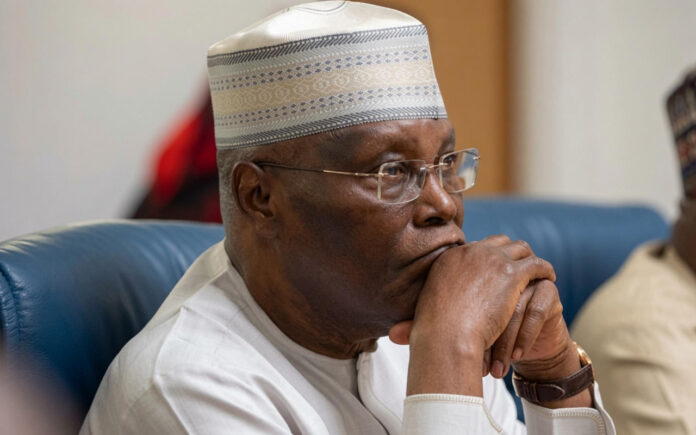
Special Adviser to the President on Information and Strategy, Bayo Onanuga, has criticised former Vice President Atiku Abubakar over his proposal to restore petrol subsidy, describing the policy as a desperate political move that could reverse Nigeria’s economic and petroleum-sector reforms.
Onanuga, in a statement made available to The News Chronicle on Thursday, said Atiku’s proposal represented a sharp departure from his previous position that the subsidy regime should be scrapped, arguing that the former vice president was now seeking to revive a system that had imposed huge financial burdens on the country.
According to him, Atiku’s proposal is coming only months before the 2027 general elections and appears designed to appeal to Nigerians struggling with the rising cost of living, rather than provide a fiscally sustainable solution to the economic challenges facing the country.
“We respect Alhaji Atiku Abubakar’s constitutional right to propose alternative policies,” Onanuga said.
“However, Nigerians also deserve to understand what the proposed restoration of subsidy would actually mean, how it would be funded, and whether it is compatible with the legal and structural changes that have taken place in the petroleum sector.”
He argued that subsidy was not simply money sitting in government coffers to be used to make petrol cheaper, but the government’s absorption of the difference between the actual cost of supplying petrol and the regulated pump price.
Onanuga dismissed claims that the subsidy reforms had created a N30 trillion windfall available for distribution, saying such funds did not exist as a government reserve.
He noted that the Petroleum Industry Act had already provided a framework for ending the subsidy regime by the end of June 2023, adding that President Bola Tinubu merely accelerated the process by a few weeks.
“Restoring the old arrangement therefore cannot simply be presented as a matter of announcing that government will once again pay part of the cost of petrol,” he said, stressing that any such policy would require a clear legal, fiscal and administrative framework.
The presidential aide also argued that Nigeria’s petroleum industry had changed significantly since the subsidy was removed, particularly with the emergence of substantial domestic refining capacity.
He cited the Dangote Refinery as a major development that has altered the country’s dependence on imported refined petroleum products, while also creating opportunities for greater energy security, foreign-exchange conservation and industrial growth.
Onanuga warned that returning to the old subsidy regime could undermine investments in local refining and place smaller domestic refineries under pressure.
He further questioned who would ultimately bear the cost of subsidising petrol if the government decided to sell it below its economic cost.
“If petrol is sold below its economic cost, which is about N1,200 to N1,300, someone must absorb the difference,” he said.
According to him, the burden would eventually fall on public finances through reduced funding for infrastructure and social services, lower allocations to states and local governments, increased borrowing or higher public debt.
Onanuga also highlighted the increased revenue available to the three tiers of government following the removal of petrol subsidy and reforms to the foreign-exchange system.
He said the three tiers shared about N3 trillion from the Federation Account in July, describing the development as evidence of the fiscal space created by the reforms.
The presidential aide acknowledged the hardship caused by higher petrol and transportation costs but argued that sustainable relief should focus on reducing energy costs rather than reviving an expensive subsidy system.
He pointed to the government’s promotion of Compressed Natural Gas as a cheaper alternative to petrol, noting that major businesses, including Dangote and BUA, have deployed CNG-powered trucks.
Onanuga challenged Atiku to provide Nigerians with clear answers on the financial and legal implications of his proposal.
“How much will the programme cost annually? What revenue source will finance it? Will the government borrow to fund it?” he asked.
He also questioned whether the National Assembly would need to amend existing petroleum-sector laws and how a renewed subsidy regime would be protected from the abuses associated with the previous system.
Onanuga maintained that Nigeria could not afford to return to policies whose costs were eventually transferred to citizens through debt, reduced public spending and pressure on the naira.
“Political promises must be backed by fiscal arithmetic,” he said, urging political actors to anchor the debate over the economy and cost of living in Nigeria’s present realities rather than the petroleum economy of the past.


