

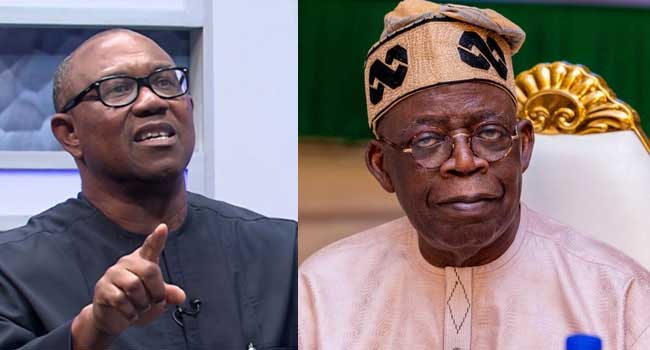
The presidential candidate of the Nigeria Democratic Congress (NDC), Peter Obi, has criticised President Bola Tinubu’s recent remark that hunger had existed in Nigeria even before he was born, describing the comment as insensitive to the worsening hardship facing millions of Nigerians.
In a statement made available to The News Chronicle on Friday, Obi said although hunger had long been a challenge in Nigeria, the current reality demanded empathy and decisive leadership rather than dismissive rhetoric.
He argued that governance should be judged by measurable outcomes, insisting that key economic and social indicators had deteriorated significantly since the Tinubu administration assumed office in 2023.
According to him, about 17 million Nigerians were facing acute food insecurity before the current administration took office, largely due to insecurity, armed conflict, banditry and devastating floods. He, however, claimed that the figure has now risen to about 35 million, saying the food crisis has nearly doubled instead of improving.
Obi also expressed concern over rising poverty levels, alleging that Nigeria’s population living in extreme poverty had increased from an estimated 87 million people in 2023 to nearly 140 million under the current administration.
He warned that the trend could make Nigeria home to the world’s largest population of people living in extreme poverty.
While acknowledging that the Tinubu government inherited significant economic and security challenges, Obi maintained that leadership should ultimately be assessed by its ability to deliver results.
“No one disputes that this administration inherited serious challenges. However, leadership is measured not by the challenges inherited but by the results achieved,” he said.
The former Anambra State governor blamed the worsening hardship on what he described as persistent insecurity, poor economic management, fiscal indiscipline, wasteful public spending and inadequate investment in productive sectors of the economy.
He urged the Federal Government to prioritise investment in education, healthcare, agriculture, security and small businesses while implementing policies capable of creating jobs, boosting production and lifting millions of Nigerians out of poverty.
Obi reaffirmed that such people-centred policies remain his commitment to Nigerians, insisting that the country deserves leadership focused on delivering tangible improvements in citizens’ welfare.


