


Sustainable Research and Action for Environmental Development (SRADeV Nigeria) has called on governments at all levels to strengthen enforcement against activities driving the rapid destruction of Nigeria’s mangrove ecosystems.
In a statement issued on Monday to mark World Mangrove Day, SRADeV’s Executive Director, Dr. Leslie Adogame, warned that protecting mangrove forests is critical to reducing flooding and safeguarding millions of Nigerians whose livelihoods depend on coastal ecosystems.
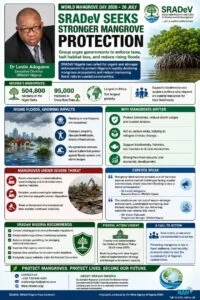
According to the organization, Nigeria boasts one of Africa’s largest mangrove ecosystems, spanning about 504,800 hectares in the Niger Delta and 95,000 hectares in Cross River State, making it the third-largest mangrove reserve in the world.
SRADeV noted that mangrove forests play a vital role in shielding coastlines from flooding, erosion and storm surges while also absorbing carbon emissions, conserving biodiversity and supporting fisheries, tourism and local economies.
The organization, however, expressed concern over the increasing destruction of mangrove habitats caused by rapid urbanization, industrial expansion, sand dredging and land reclamation, particularly in Lagos and Port Harcourt.
It added that pollution, indiscriminate fuelwood harvesting, the spread of invasive nipa palms and weak enforcement of environmental regulations have accelerated mangrove loss across the Niger Delta.
Adogame described the degradation of mangrove forests as one of the most pressing environmental challenges facing Nigeria’s coastal communities, warning that recurring floods are a direct consequence of the continued destruction of the ecosystems.
He urged authorities to prioritize the enforcement of environmental laws protecting wetlands and other fragile coastal habitats.
Also speaking, SRADeV’s Programs Manager, Victor Fabunmi, said stronger enforcement, backed by coordinated monitoring, could help reverse the alarming trend.
Fabunmi called for the designation of Lagos wetlands under the Ramsar Convention to strengthen their legal protection and improve conservation efforts.
The organization also urged governments to deploy technology-driven monitoring systems, tighten approval processes for dredging and land reclamation projects, enhance collaboration among relevant agencies, and impose stiffer penalties on environmental offenders.
SRADeV further appealed to the Federal Government to finalize and implement the National Wetland Policy, which has remained in draft form since 2001, stressing that the framework should contain clear implementation targets and stronger enforcement measures.
The organization urged governments, businesses and local communities to work together to preserve Nigeria’s mangrove forests, describing them as critical to flood resilience, food security, economic stability and sustainable coastal development.


 has called on governments at all levels to strengthen enforcement against activities driving the rapid destruction of Nigeria's mangrove ecosystems.)