

The Federal Government has reaffirmed its resolve to work hand in hand with relevant stakeholders to preserve Nigeria’s mangrove ecosystem while unlocking the vast opportunities within the nation’s blue economy through the promotion of climate-resilient livelihoods.
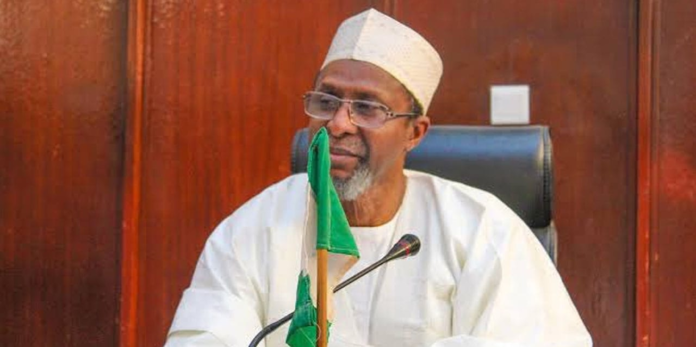
Minister of Environment, Balarabe Lawal, made the commitment on Tuesday in Abuja during a workshop held to evaluate and formally close the UK PACT-UN Food and Agriculture Organisation (FAO) project.
The workshop, themed “Sustaining Integrated Mangrove Ecosystem Management in Nigeria: From Achievements to Future Pathways,” signalled the conclusion of a project dedicated to the integrated management of mangrove ecosystems and the expansion of social protection initiatives for fisheries and forest-dependent communities in Cross River State.
Lawal lauded the partnership with the United Kingdom, noting that the initiative had served as fertile ground for advancing climate resilience, biodiversity conservation and sustainable livelihoods across affected communities.
“As this project comes to a close, our focus must shift to sustaining and scaling its achievements. We must strengthen community ownership, expand restoration efforts, promote climate-resilient livelihoods.
“We must leverage emerging opportunities in the blue economy and carbon markets.
“Our ministry remains steadfast working with all stakeholders; to consolidate and scale up the gains achieved under this project,” he said.
The minister added that Nigeria would continue to deepen implementation of its Nationally Determined Contributions, National Adaptation Plan, commitments under the Ramsar Convention on Wetlands, as well as obligations under the Paris Agreement and Sustainable Development Goals.
Governor Bassey Otu of Cross River, represented by Deputy Governor Dr Peter Odey, praised the far-reaching impact of the project on different sectors of the state’s economy.
He, however, warned that rising environmental pressures, unsustainable exploitation of natural resources and climate-related threats continue to cast a shadow over the ecosystem.
According to him, the project proved that environmental sustainability and socio-economic development can move in lockstep rather than on parallel tracks.
“The project paved the way for mangrove restoration and sustainable management initiative, capacity building, promotion of alternative land use, strengthening of community institutions, and support for biodiversity-free and forest-dependent households.
“The Government of Cross River recognises that achievements recorded under this project provide a strong foundation for future intervention. We remain committed to sustaining this policy,” he said.
Also speaking, Dr Hussein Gadain, UN FAO Representative to Nigeria and ECOWAS, said the initiative underscored the power of collective action, demonstrating that transformative progress becomes achievable when communities, governments and development partners pull in the same direction.
“The project has laid a strong foundation for sustainability through the registration of 50 cooperatives, thereby strengthening local institutions and supporting alignment with national climate, environmental, and social protection priorities,” Gadain said.
The project, which commenced in 2023 and officially ended on June 16, recorded 4,827 beneficiaries, with women accounting for 66 percent of participants trained in climate-smart agriculture, forestry and fisheries.
Funded by the governments of the United Kingdom and Northern Ireland, the initiative was implemented by FAO in collaboration with the British High Commission in Nigeria and the Cross River State Government.
Designed to strengthen climate resilience and improve sustainable livelihoods, the project reached 50 coastal communities across Akpabuyo, Bakassi, Calabar Municipality, Calabar South and Odukpani Local Government Areas, leaving behind a blueprint for future environmental interventions.


