

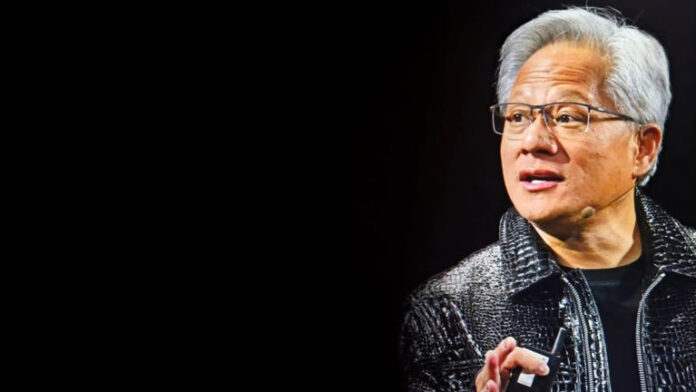
Jensen Huang, chief executive of Nvidia, is telling parents not to focus on selecting “safe” subjects for their children in response to the rise of AI.
Speaking in an interview with Channel NewsAsia, he said:
“I think that it won’t matter. All the things that used to matter are still things that are going to matter in the future.”
He added that fields such as journalism, design, and the arts will continue to remain relevant even as AI systems take on more technical and routine tasks.
“The ability to tell a story for an audience will remain just as important in the future as it is today,” he said.
Huang described modern jobs as collections of tasks, many of which are now suitable for automation.
“A job is like a basket of tasks. Many of those tasks will be automated.”
He said the effect of AI will be to reduce the time spent on routine work while increasing the share of work that requires judgment, interpretation, and creativity.
He also warned that career risk may come less from AI itself and more from people who use AI tools more effectively.
“AI won’t replace you. Someone using AI better than you will.”
Huang has repeatedly advised students and parents not to focus on identifying “AI-proof” degrees. Instead, he argued that the priority should be learning how to work with AI systems as they become common across industries.
He said adaptability and communication skills will remain important because they are central to how humans coordinate, explain ideas, and make decisions in complex environments.
These comments sit alongside global discussions involving governments, educators, and institutions such as the Vatican on how AI should be governed.
According to Huang and other technology executives, it is not that education is becoming less important, but that its focus is shifting. Instead of preparing for a fixed career path, students are being encouraged to build flexible skills that allow them to adapt as technology changes the way work is structured.


