

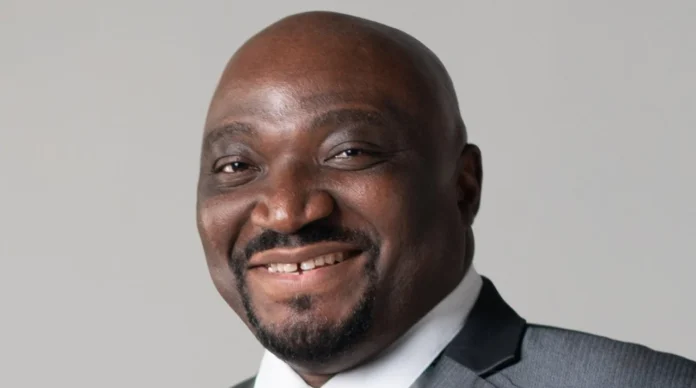
The Director of the Government Advancement Initiative for Nigeria (GAIN), Dr. Malcolm Fabiyi, said the results of their recent polling revealed growing dissatisfaction among Nigerians with the state of security in the country, with even a significant portion of President Bola Ahmed Tinubu’s supporters expressing concern.
Speaking in an interview with Rudolf Okonkwo on 90MinutesAfrica, the public policy expert disclosed that approximately 80% of Nigerians feel less safe today than five years ago.
More striking, however, is that about 60% of individuals who voted for President Tinubu in the 2023 election also report feeling less secure since he assumed office.
Dr. Fabiyi emphasized that security has become a critical issue that the government cannot afford to overlook, warning that it could play a decisive role in shaping the outcome of the 2027 general elections.
According to him, any opposition seeking to connect with voters must prioritize security alongside the economy, as both issues now dominate public discourse.
The polling data further highlights a shift in voter behavior, suggesting that Nigerians are increasingly focused on individual candidates rather than political parties.
For instance, 75% of those who supported Peter Obi in 2023 indicated they would vote for him again regardless of his party affiliation.
In contrast, only about 35% of Atiku Abubakar’s supporters expressed similar loyalty.
Dr. Fabiyi noted that this trend could significantly influence future electoral dynamics, particularly if opposition parties succeed in presenting a unified candidate. Such a development, he argued, would make the 2027 election highly competitive and less predictable.
In addition to security concerns, economic challenges are emerging as major factors likely to drive voter turnout. “Historically, voter participation in Nigeria’s presidential elections has hovered around 21 to 22 million,” Fabiyi said. “However, current conditions may alter this pattern.”
Dr. Fabiyi explained that for the first time in recent history, middle and upper-class Nigerians are showing increased political engagement, largely due to policies that directly affect their finances. He further pointed out that discussions around taxation have intensified, drawing more citizens into political conversations, which may motivate greater electoral participation.
He also observed that insecurity, once perceived as a problem affecting mainly certain regions or demographics, has now become widespread. “Previously, affluent Nigerians relied on private security and police escorts for protection.
However, recent changes in government policy have reduced such privileges, making insecurity a shared concern across all social classes,” he stated.
He concluded that the convergence of economic strain and pervasive insecurity has created a strong desire for change among Nigerians.
This growing discontent, he suggested, could reshape the political landscape in the lead-up to the 2027 elections.


