

In August 2025, the Tinubu administration imposed a seven-year moratorium on the creation of new federal universities, polytechnics, and colleges of Education, and a six-year moratorium for private ones. In 1979, before it left office, the Obasanjo administration had imposed a similar moratorium on the establishment of universities and higher institutions in Nigeria. There were only thirteen universities in Nigeria then, following the establishment of seven new universities and polytechnics in the country. Yet there was a gap. Six states, including the federal capital territory, Abuja, had no universities, or any higher institution for that matter. The private sector was also barred from participating in the higher education project.
In 2025 alone, 33 new universities were approved by the present administration, not necessarily because of proven needs, but because of political pressures. Universities should not, ought not to be established just because of political or party affiliations. They should be established because of the perceived need for accelerated human capital development and sustainable development. Political institutions are established to win elections or as constituency projects for legislators, who usually appoint the contractors.
There are, without a doubt, avoidable gaps in the present policy directives in education, and they need to be addressed seriously before more harm is done to the country’s overall health.
All developed countries in the world give a premium on education, primary, secondary, and tertiary education. Typical examples are the United States of America, The United Kingdom, Canada, India, South Korea, Japan, China, The Netherlands, Singapore, name them. In the USA, 14% of total government spending goes to education. In Canada, 12-13% of the budget goes to education. In Brazil, about 16-18% of the budget goes to education. In 2024, the Federal education budget was N2.18 trillion naira, or 7.9% of the budget, but the actual amount spent is imprecise. In 2025, the federal budget was higher, but education got less, its share shrinking to 7.3 %.because of a policy choice that prioritized other sectors over education.
In Nigeria, the absolute budget for education remains imprecise because of the incongruous manner in which one budget year dovetails into the next, making them run together. This distorts budget execution and blurs clarity. PRIORITIZATION should determine the education budget. National interest, ideals of sovereignty, global standards and benchmarks, self-comprehension, and pride matter. They should determine where education sits on the priority list.
It is also correct to assert that a country’s wealth should not necessarily dictate the amount of spending it allocates to education. Stronger logic should drive a robust policy thrust in education financing. Examples abound of middle- or lower-income countries that budget more for education than richer countries do, for good reasons, including the need to catch up. Lagging behind is not a priority. Catching up and excelling is a positive culture.
Middle- to lower-income countries that prioritize education include South Africa, Costa Rica, and the Solomon Islands, to name a few. They exceed the UNESCO recommendation of an allocation above 20% to education, well above the 5-6% budget that is almost a constant in Nigeria. South Africa, our competitor on the African continent, for example, budgets about 6.5% of GDP of an economy of $380 billion on education. Contrast this with Nigeria’s 5.4 % of a $400 billion economy. (It is only recently, however, that South Africa’s economy slipped higher than Nigeria’s nominal GDP at $426 billion to Nigeria’s $285 billion). This is mainly due to Nigeria’s reliance on a mono-economy that is constantly fluctuating in response to changing global demands.
Nigeria’s education ecosystem, just like Nigeria itself, needs an immediate reset. This reset is not the function of the Federal Government alone. It should include the private sector and track multinational organizations that influence education outcomes. We did this in 1980, when I was the country’s Minister of Education, after identifying similar challenges in the system.
In 1979, when I was appointed Minister of Education (Cabinet Rank) by Alhaji Shehu Shagari, I was on a familiar turf. Education was the main subject I studied, its history, foundation, and philosophy. All the higher institutions I attended abroad were either privately owned or state-owned. The education landscape wasn’t quite the same in the immediate post –war Nigeria. The country had just then transitioned from a military junta administration—- which had a narrow view of education— to a nascent democracy that had to adjust to a new experiment on Presidentialism, the novel model of governance, chosen by a war-weary nation that followed the experience of the United States of America. It provided a fertile mind with an opportunity to chart a new course in favor of a populist and qualitative education.
There were nineteen states in the country at that time, and six had no university. There was also none in Abuja, the Federal Capital. We set up the Professors Ojo and Afigbo Committee on the Open University of Nigeria in May 1980 to increase access to education. A draft bill for its enactment into law was sent to the then National Assembly in January 1981. Council had approved the establishment of seven new universities of Science and Technology, located in states without universities. Three vice-chancellors were appointed for the universities in Imo, Gongola, and Benue, namely Professors Umaru Gomwalk, Ethelbert Chukwu, and Gaius Igboeli, respectively, to ensure the immediate take-off of the first three of the approved seven universities. Others would follow in due course.
And you might wish to know why these innovative approaches to education. Here are the reasons that compelled the reset:
- Anticipating the future: The regime we succeeded in had initiated the Universal Primary Education Scheme, which envisaged increased enrolment of school-age pupils across all levels of education. This would obviously have its implications for the tertiary level. Adequate arrangements had to be made for these future entrants.
- Equity and Social Inclusion: Seven of the 19 states (including the Federal Capital Territory, Abuja) had no universities to absorb the teeming number of qualified students seeking admission to our universities. Mission-oriented universities, such as we envisaged, would increase student enrolment, reduce the syndrome of out-of-school children due to restricted slot allocations, and enhance libertarian opportunities. Universities respond not only to national and international interests and objectives but also to specific local challenges. Equity, through the reasonable geographical spread of opportunities, addresses these local concerns without ignoring freedom-centered perspectives, through adaptations.
- The Need for Curriculum Reform: The introduction of specialist universities would also impel curriculum reforms and the expansion of the areas of episteme. The reforms would encourage skill acquisition and address the issue of nurturing students’ innate endowments and capabilities, with the consequential beneficial effects on the larger society.
- The Democracy Perspective: These reforms revealed a progressive mindset to restore the political and civil rights of the people through the agency of education, especially in a heterogeneous society with diverse capabilities and motivations. The reforms took into cognizance the fact that the war and the thirteen years of military dictatorship created destitution in all parts of the country with serious negative implications for the future.
Individual participation in social engineering was, therefore, central and foundational to restoring these rights. Indeed, education cannot thrive where there is no democracy, the agency to promote and protect the individual’s civil rights and powers. As rational beings, it is part of the responsibility of the individual to chart a remedial course to alleviate the myriad problems around him. The administration created opportunities for many to respond to that challenge, not minding the difficulties.
The gestation of privately owned universities in Nigeria suffered some setbacks. It was not a cakewalk, but it happened—our dreams have, happily, become realities. I need not bore you with the reasons for the false start, but the overthrow of the Shehu Shagari government and the consequential regression to anti-democratic tendencies by the successor regime were factors. But resilience sustains good policies. We should let them be, with proper regulations and appropriate charters. In the USA, private institutions outnumber public ones by a wide margin. According to Meta AI, “89% of Brazil’s 2666 higher -ed institutions are private, and 47% of private ones aim to make a profit.”
Following our innovation and approach to education in 1980 under President Shehu Shagari, an accomplished democrat and a compassionate leader, universities and higher institutions flourished in a free and democratic environment. Presently, Nigeria boasts 278 universities, both public and private. A random comparison with some countries with about the same population as Nigeria is apt. While Brazil, with nearly the same population as Nigeria, has 1,264 universities, Pakistan with a population of about 241 million ( a little above Nigeria’s) has 359 universities. We are comparing equals with equals, apples with apples. These countries are in the Southern hemisphere, the resilient, mobile global South. Bangladesh is not too far behind, with a university population of about 160-166. These are not mortar-and-brick universities. They are at full capacity, and you will not be surprised to find Nigerian students on their campuses.
It is, therefore, counterintuitive that qualified Nigerian youths cannot get admission slots in Nigerian universities. In 2024, about 1 million 900,000 students took the UTME. A little over 600,000 got admission slots, leaving about 1.3 million without slots. That means over 68% of the candidates who took the examination were not admitted to any of the 278 universities in the country.
The mathematics is indeed painful. It puts the students in double jeopardy, not necessarily of their own making, but because of system failure and myopia. They sit for a difficult examination, competing for limited spaces. Many are rejected not because they are unintelligent, but because of quota restrictions. It is not that the students are unqualified. It is that we are not yet prepared to meet the demands imposed by functional education, the best tool necessary for a country that wants to be reckoned with in the committee of nations. While you are rejecting them at home, using technicalities or opaque standards, many gain admission to more than six universities abroad with financial aid. And they excel there. The problem, therefore, is not about protecting quality. It is about a planning failure.
A policy of admission closure is not an option. It reduces capacity and tightens the squeeze further, pushing students into places they do not prefer. We can do better. The government must not encourage illiteracy. Its role is to widen access, not to shrink it.
It’s all about the poverty of ideas and hasty decisions that did not involve stakeholders in the decision-making process. Parents have their opinions too. Voices of conscience should not be treated as enemies of the state. Brazil is not richer than Nigeria. Our universities have no reason to be empty when thousands of our youths seek and gain admission outside the country, increasing the Japa syndrome, open doors to crimes of various kinds, and sowing multi-dimensional poverty. History is brutal because it does not forget; so also is mathematics. 1.3 million students denied admission for reasons not entirely of their own will will not forget their needless plight. The state must reset the button and get it right.
The Way Forward.
The government should review this obscurantist policy and realign the admission windows. It should upgrade existing institutions instead of freezing new ones. Emphasize technical education to match the job market needs. Psychological and market-need orientations for aspiring students are important counseling considerations. Degrees without skills don’t put food on the table anymore. I agree with Meta that the issue is not only one of demand. IT IS ONE OF ALIGNMENT. If the existing schools were well equipped and expanded to meet admission demands, many would not seek relief abroad, and capital flights would diminish.
It is crucial to upgrade infrastructure for distance education and to involve every local government in the open university system—the university without walls. It is becoming the norm to learn and work from home. At the same time, we should consider introducing night and weekend courses. Distance learning modules are low-cost tools that companies can use to upgrade the skills and competencies of their workers. Constituency projects need not be political, especially in the field of education. They should be based on a needs assessment. It is a mistake of values and resources to establish, for instance, a Federal Polytechnic in a community where there already exists a private one, offering the same courses that the existing one is offering, chasing the same applicants. It is becoming a pattern. For the sake of effectiveness, the policy should track complementarity and enforce boundaries.
The government should help to fund or expand capacities in areas of critical demand, like IT, Security, and Engineering in existing institutions, rather than be seen to be encouraging needless competition through asset duplication. Funding of all institutions -private or public- should be based on well-worked criteria that emphasize academic excellence, global recognition, learning environments that attract capable staff from within and outside Nigeria, and promote an equal opportunity learning ecosystem at all times.
Besides salaries, staff should be recognized financially or by mention when they go above and beyond in the interest of the institution. I was so honoured when I lectured abroad in the Universities in the USA. I also received small grants that helped me conduct research in my field of specialization and made me a better teacher. The disputes between academic unions and governments must stop. The learning process weeps each time these disputes rear their ugly heads. I never experienced such spats in my universities abroad.
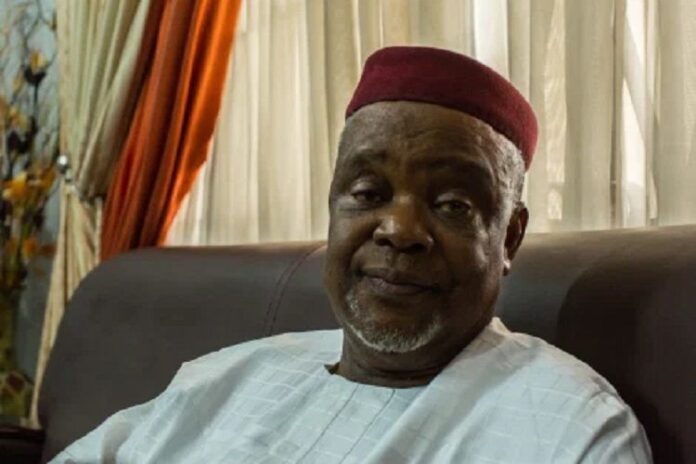
Prof Ihechukwu Madubuike,
Former Minister of Education, Nigeria.


