

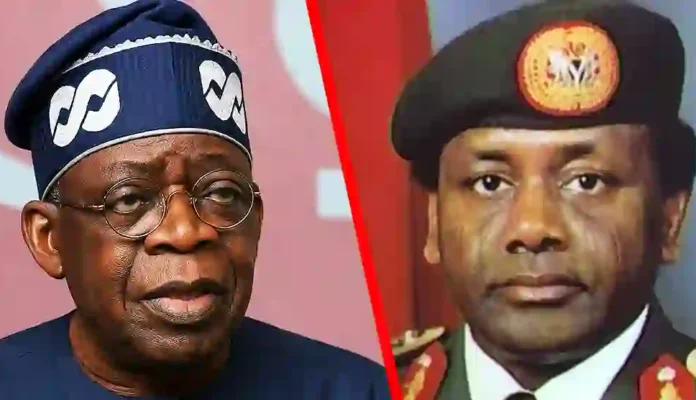
General Sani Abacha’s regime was one of the darkest in Nigeria’s history as it was characterized by widespread human rights abuses, gagging of the press, and many undemocratic tendencies. And, as we gradually approach the 2027 general election. Concern mounts as Nigeria’s democracy shows signs of return to ‘Abacha era’.
In the recent days, concerns about Nigeria returning to the “dark years” of General Sani Abacha (1993–1998) have been raised by many of our citizens, including the civil society organizations (CSOs), observers, and the intelligence community, as political tensions rise ahead of the 2027 general election.
While observers warn of troubling parallels between democratic manipulation and political control, the current situation is framed in civilian terms rather than as a direct military dictatorship. Below are some questions agitating the minds of millions of our citizens:
A noticeable parallel with the Abacha Era Weakening of Opposition: Nigerians and other observers warn of deliberate attempts to weaken opposition political parties and shrink the democratic space ahead of 2027, creating an environment similar to the “consensus candidate” strategies of the Abacha era.
Undemocratic One-Party Dominance: The ruling All Progressives Congress (APC) has gained control of a significant majority of states, raising fears of a return to one-party dominance reminiscent of the 1995-1998 political landscape.
Unimaginable Level of Insecurity and Human Rights: Concerns are frequently raised about the state of insecurity, with some citizens citing that the current administration’s security measures have worsened or left them feeling unsafe.
Hostility and Restriction of Freedom: Critics have alleged that current government responses to criticism show “paranoia” or “state of governance psychosis” similar to that of the Abacha regime, including alleged restrictions on public protests and media.
Excruciating Pain and Economic Distress: The current economic hardship, including high fuel prices and inflation, has led some to question if the country is facing a deeper crisis than previous, including the Abacha era, even though the structural causes differ.
In light of the above misgivings and based on the preceding information. Also, taking into account the connection and evidence-based activities of the electoral umpire’s infidelity. Sadly, Nigeria has had electoral umpires accused of partisanship before. … infidelity, neglect of their responsibilities, and bias.
In conclusion, I wish to place this on record and plead with our policy makers to change the name of Independent National Electoral Commission (INEC), to party in government electoral commission, because if it is independence she will not be manipulated and party members will not be nominated to mend the commission.
Finally, Nigerians are not going to accept another WURUWURU elections a return to the Maurice Iwu era. Because in a sane countries where the law actually works. What the INEC did on the instructions of Amupitan constitutes serious PERJURY, and lawyers get disbarred and go to jail for this.
@richardODUSANYA
Richard ODUSANYA
odusanyagold@gmail.com


