

Somewhere in Nigeria this morning, a girl is getting ready for school. She stands before a small mirror, gathers her hair into place, slips her books into a worn backpack, and steps out into a country that has long told its daughters they can become anything. It is a beautiful promise, one repeated in classrooms, on podiums, in campaign speeches, and in the comforting language of national aspiration. Yet promises are never tested by how often they are spoken. They are tested by whether power reflects them.
Too often, it does not.
For generations, the architecture of Nigerian politics has taught girls to imagine leadership without often allowing them to see women standing where decisions are made. Parliament, perhaps more than any other national theatre, has remained a space where the nation speaks loudly about representation while too often reproducing old absences.
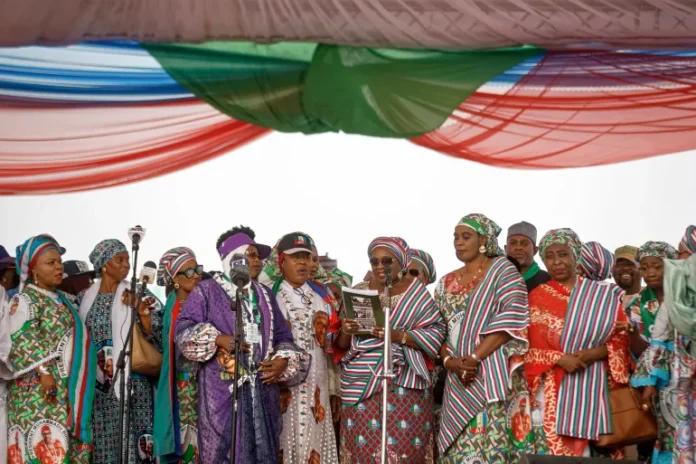
And yet, inside the House of Representatives today, among three hundred and sixty lawmakers, seventeen women sit and answer to the future. It is not a large number. No honest democracy would mistake it for balance. But neither is it a small story, because numbers in politics are never merely arithmetic. Sometimes they are symbols. Sometimes they are cracks in an old wall. Sometimes, they are doors that refuse to remain closed. In Nigeria’s 10th House, those seventeen women occupy a small minority of seats, but the meaning of their presence extends far beyond the chamber itself.
When the Clerk begins the roll call, the room responds in the ritual language of democracy. Name after name. Voice after voice. Papers shift. Conversations pause. The chamber fills itself with the sound of representation. Three hundred and sixty seats answer the republic.
But only seventeen of those voices belong to women.
Only seventeen say, Present, Clerk, in a parliament that for decades was more accustomed to women watching than legislating.
That is why this is not simply a statistic. It is a national moment disguised as a number.
Across Nigeria’s vast and uneven geography, from the creeks of the Niger Delta to the plains of the North, from Lagos markets to the farmlands of the Middle Belt, those seventeen names form a quiet but undeniable presence in a legislature long defined by male continuity. Each seat is more than a constituency. It is evidence. Evidence that the old exclusions are not permanent. Evidence that democratic space, however slowly, can still be forced wider.
There is Kafilat Ogbara from Lagos, whose presence speaks to the commercial nerve of women’s economic life in one of Africa’s busiest urban centres. There is Boma Goodhead from Rivers, carrying the voices of communities closest to the oil wealth that powers the federation. In Borno, Zainab Gimba stands for a constituency that understands reconstruction not as theory, but as daily life after insurgency. In Benue, Blessing Onuh and Regina Akume carry the anxieties and hopes of the nation’s food belt and rural communities.
From Plateau comes Beni Lar, long associated with environmental justice and social equity. From Oyo, Tolulope Akande-Sadipe represents a younger leadership current pressing for broader inclusion. In Anambra, voices such as Lilian Orogbu, Maureen Gwacham, and Clara Nnabuife signal the growing convergence of scholarship, enterprise, and grassroots representation inside parliament.
Taken one by one, they are legislators with individual mandates. Taken together, they are something larger. They are a civic mirror held up to a nation still struggling to reconcile its democratic ideals with its democratic composition.
Seventeen women in a chamber of three hundred and sixty is not balanced. It is not parity. It is not even close.
But representation rarely arrives in one sweeping historical gesture. It grows the way most democratic corrections grow, gradually, voice by voice, seat by seat, election by election, until what once looked exceptional begins to feel ordinary.
That may be the most important meaning of these seventeen.
Somewhere in Nigeria tonight, another girl will watch the news and see a woman rise in parliament, speak with authority, challenge a bill, defend a constituency, or shape the language of national policy. She may not remember the motion debated that day. She may not fully understand the procedure. But she will remember something deeper than procedure.
She will remember that a woman stood there.
And sometimes that is how history begins, not with revolutions, but with recognition.
Tomorrow, when the Clerk calls the House to order again, three hundred and sixty voices will answer.
Among them, seventeen will belong to women.
For now.
But across Nigeria, millions of girls are already listening carefully to that roll call, learning the music of democracy, and preparing, one day, to add their own names to it.
Stephanie Shaakaa shaakaastephanie@yahoo.com
08034861434


