

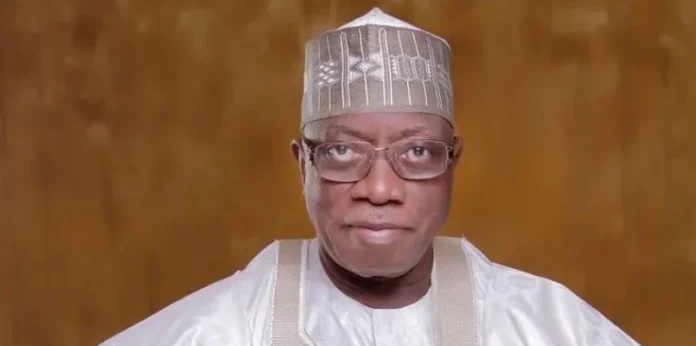
The death of Yakubu Mohammed, co-founder of Newswatch newsmagazine, coming only weeks after the passing of Dan Agbese, feels less like coincidence and more like a solemn punctuation mark in the long, turbulent sentence that is the history of Nigerian journalism. It is as though an entire generation of journalistic giants—men who did not merely report history but wrestled with it—are quietly taking their final bow, leaving behind a legacy that today’s Nigeria is in danger of forgetting.
Yakubu Mohammed belonged to that rare breed of journalists for whom the profession was not a career but a calling. At a time when the Nigerian media landscape was suffocating under military dictatorship, censorship, and the ever-present threat of detention, he and his colleagues at Newswatch chose courage over comfort, truth over safety. Journalism in that era was an act of resistance. To publish was to provoke power; to investigate was to invite intimidation. Yet Yakubu Mohammed stood firm, convinced that a society starved of truth could never be free.
Founded in 1985, Newswatch was more than a newsmagazine; it was an institution. Under the stewardship of its co-founders—Yakubu Mohammed, Dele Giwa, Dan Agbese, Ray Ekpu and others—it set a standard that remains unmatched in Nigerian journalism. Long-form investigative reporting, meticulous fact-checking, and fearless editorial independence were its hallmarks. In those pages, Nigerians found clarity in confusion, courage in fear, and hope in despair.
Yakubu Mohammed’s role in that enterprise was foundational. Often understated, he was nonetheless central to the intellectual and ethical spine of Newswatch. He believed deeply in the newsroom as a collective of equals bound by shared values, not as a megaphone for owners or political patrons. That belief shaped the culture of Newswatch, where editorial meetings were battlegrounds of ideas, not arenas of intimidation. The magazine’s authority flowed from this internal democracy and its uncompromising respect for truth.
The passing of Dan Agbese only weeks earlier had already reopened old wounds. Agbese, like Mohammed, represented a journalism that was both principled and purposeful.
Together, their departures feel like the dimming of twin beacons that once guided the Nigerian press through its darkest nights. They were voices that insisted journalism must serve the public interest, even when the cost was high. Their generation paid that price—through harassment, proscription, exile, and, in the tragic case of Dele Giwa, death.
Yakubu Mohammed lived and worked in an age when journalists were hunted, not courted. Military regimes did not issue press statements; they issued decrees. Truth was not debated; it was banned. Yet it was precisely in that hostile environment that Mohammed and his peers defined the noblest traditions of the Nigerian press. They believed the journalist’s first loyalty was to the citizen, not the state. That conviction gave meaning to their sacrifices and credibility to their words.
Today, the Nigeria they fought for stands at a crossroads. The press is freer in form but weaker in substance. Newsrooms are crowded with speed but starved of depth; headlines chase virality rather than veracity. Economic hardship has made the media vulnerable to political capture, while social media has blurred the line between journalism and noise. In such a climate, the passing of Yakubu Mohammed is not just a personal loss; it is a warning.
His life invites uncomfortable questions. Would Newswatch survive in today’s Nigeria, where advertising pressures, partisan loyalties, and shrinking attention spans dominate? Would Yakubu Mohammed’s brand of patient, principled journalism find a home in a media environment obsessed with clicks and controversy? Or have we, as a society, lowered our expectations of what journalism should be?
Yet tributes must not descend into nostalgia alone. Yakubu Mohammed did not live to be admired from a distance; he lived to be emulated. His legacy challenges journalists to rediscover their moral compass, publishers to invest in quality over convenience, and readers to demand more from those who claim to inform them. The freedoms enjoyed by today’s media practitioners were purchased with the courage of Mohammed’s generation. To squander them on mediocrity would be the ultimate betrayal.
There is also a national lesson here. Nigeria has a troubling habit of neglecting its heroes until death forces remembrance. Yakubu Mohammed, like Dan Agbese before him, deserved celebration while alive—not just elegies after departure. Their stories should be taught in journalism schools, not as romantic folklore but as practical ethics. Their names should stand for standards, not merely for memories.
As the curtain falls on another titan, one cannot escape the sense that an era has ended. The men and women who confronted soldiers with pens and notebooks are fading into history. What remains is the responsibility of the living—to preserve their ideals in practice, not in prose alone.
Yakubu Mohammed’s passing, coming so soon after Dan Agbese’s, is a moment of collective reckoning for Nigerian journalism. It is a reminder that institutions are built by people, and when such people depart, only values can keep those institutions alive. If the Nigerian press still believes in truth, courage, and public service, then Yakubu Mohammed has not died in vain.
In mourning him, Nigeria must also ask itself a harder question: are we worthy heirs of the legacy he and his peers left behind? The answer will not be found in tributes, however eloquent, but in the daily choices of journalists, editors, and media owners. That, ultimately, is the truest honour we can pay to Yakubu Mohammed—a life spent insisting that truth matters, even when power says otherwise.


