

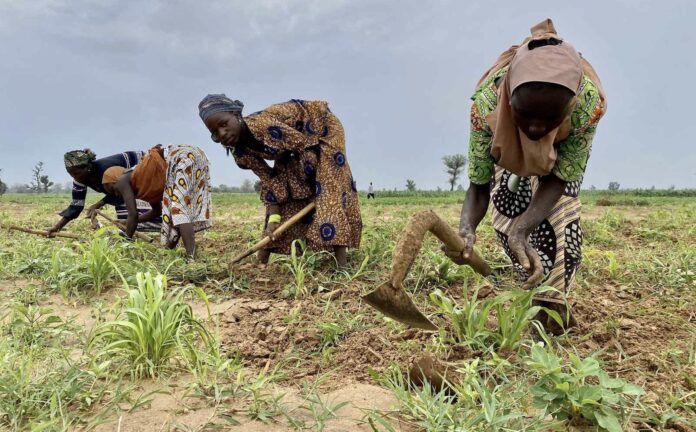
Farmers in Northern Nigeria say they are suffering heavy losses this harvest season due to the sharp drop in food prices across the country, despite rising production costs.
Speaking in an interview with The News Chronicle on Tuesday, a farmer, Ustaz Abubakar, from Babbagida in Yobe State, said many farmers are deeply unhappy with the current situation, as the income from their produce can no longer cover basic farming expenses.
According to him, the crash in prices has made farming unsustainable for many rural farmers.
“Farmers are not happy because of what is happening in Nigeria, especially in the North. We have cultivated our crops, but one bag of maize or guinea corn cannot even buy one bag of fertilizer. This is very unfortunate,” he said.
Ustaz Abubakar explained that although he has harvested crops such as sesame and other grains, he is reluctant to take them to the market because of the low prices.
“I have sesame and other crops now, but I am afraid to take them to the market because I know I won’t get much from them due to the falling prices of food items,” he added.
While acknowledging that cheaper food prices may benefit consumers, the farmer stressed that producers are bearing the burden.
“I cannot say I am not happy that food prices are coming down, because people need affordable food. But the government should also look at farmers. We are losing money and many of us are giving up. After all the hard work on our farms, we are not getting anything in return,” he said.
He appealed to the government to urgently support farmers through subsidies and improved access to farm inputs.
“What we need is for the government to subsidize fertilizer, tractors, and pesticides. If farmers are supported, we can produce more food, Nigerians can eat well, store surplus, and even export to other countries,” he said.
Following the interview, The News Chronicle gathered that many farmers across Northern Nigeria are struggling with the high cost of fertilizers and pesticides, despite the decline in food prices.
Farmers say without government intervention, the situation could discourage food production in future planting seasons.
Although the country is currently in the peak of the harvest period, food prices continue to fall nationwide, according to data from the National Bureau of Statistics (NBS).
Experts warn that while lower prices may ease pressure on consumers in the short term, sustained losses for farmers could threaten food security if producers reduce cultivation in the coming years.


