

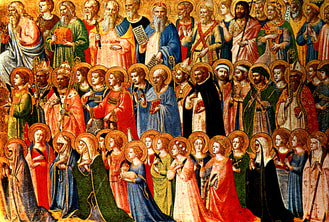
Shikrot Mpwi – Commemoration of All the Faithful Departed with Fr. Justine J. Dyikuk
Homily for All Souls Day, Year A – Nov. 2, 2023
Readings: Wisdom 3:1-9; Responsorial Psalm Ps 23:1-3A, 3B-4, 5, 6; Romans 6:3-9; Gospel Jn. 6:37-40.
Theme: Remembering those Precious Souls
Synopsis
The first reading states that the souls of the virtues are in the hands of God assuring that and no torment shall touch them. In the second reading, St. Paul reveals Jesus’ victory over sin and death by stating that all who were baptized into Christ Jesus were baptized into his death. The gospel discloses Jesus’ promise that he will not abandon anyone who comes to him. With assurances that anyone who believes will be raised on the last day, we are charged to pray for the dead while preparing for the great beyond.
Introduction
No other time is appropriate to remember the dead than around this time of the year in which Christian Catholics around the world traditionally dedicate the souls of the departed to God, whether they Christians or not. This pious act of charitable remembrance resonates with the spirit of our celebration. Two significant Catholic solemnities – All Saints and All Souls Day which are observed on 1st and 2nd November every year respectively are moments of grace and spiritual strengthening for the Church.
This tradition of praying for the dead is credited to St. Odilo, the abbot of the monastery of Cluny in Southern France who added it to Church celebrations in 998. This feast, soon spread from France to the rest of Europe. Around the 12th century, prayers were offered for the dead as indicated in many Christian literature of the time.
Background and summary of the readings
The first reading (Wisdom 3:1-9) states that the souls of the virtues are in the hands of God. It assures that and no torment shall touch them. The text surmises that grace and mercy await God’s holy ones because his care is with the elect.
In the second reading (Romans 6:3-9), St. Paul reveals Jesus’ victory over sin and death by stating that all who were baptized into Christ were baptized into his death. He further assures that just as Christ was raised from the dead, we too will relish newness of life in him.
The gospel (Jn. 6:37-40) discloses Jesus’ promise that he will not abandon anyone who comes to him. It warms our hearts with his assurance that or anyone who believes in will be raised on the last day and have eternal life.
Biblical reasons for praying for the dead
1. The practice of praying for the dead is deeply rooted in the Christian belief in the resurrection. The Catholic Church teaches that there are four last things: Death, judgement, heaven, and hell.
2. The first indication of the living offering prayers for the dead is found in 2 Maccabees 12:39-45. Therein, Judas and his men prayed that God would forgive the sins of soldiers who had fallen by the sword.
3. While Tobit (Tobit 4:17) counsels his son to give alms in honour of the dead as a way of interceding for them, Wisdom 3: 1 – 9 also lends credence to praying for the dead.
4. In the New Testament, Saint Paul prays for a man by name Onesiphorus who had died: “May the Lord grant him to find mercy from the Lord on that day” (II Timothy 1:18).
Praying for the dead: A catechetical exposition
In Catholic theology, praying for the dead is rooted in the understanding of the Church as a communion of the militant Church on earth, the suffering Church in purgatory and the triumphant Church in heaven. Cakelike tombs and catacombs in ancient Rome bear testimony to prayers being offered for the dead by family, friends, and the Christian community.
The Church in heaven intercedes for the Church on earth while the militant Church prays for the souls which tried to please God but because of some defects, were not able to make it straight to heaven. Catholics are expected to remember the dead after meals by saying: “May the souls of the faithful departed, through the mercy of God rest in peace, amen.” This a sign of solidarity or communion with the suffering Church.
If purgatory does not exist, it would appear impossible for anyone to enter heaven since nothing unclean shall see God (Rev. 21:27). If we pray for a dead person and the person is already in heaven, the prayer comes back to empower us because the saints in heaven also intercede for us. In praying for the dead, we pray for ourselves. The Catechism of the Catholic Church teaches: “All who die in God’s grace, but still imperfectly purified, are indeed assured of their eternal salvation; but after death they undergo purification, so as to achieve the holiness necessary to enter the joy of heaven” (CCC no. 1030).
If Matthew chapter 12:32 tells us that he who sins against the Holy Spirit will not be forgiven here and in the world to come, it means that there are some sins that could be forgiven after dead. Where else could that place be if not purgatory? Also, the bible says: “…truly I say to you, you will never get out till you have paid the last penny” (Matthew 5:25-26). The question is, where will that “last penny” be paid? Certainly not in hell but purgatory. St. Paul further teaches: “…If the work which any man has built on the foundation survives, he will receive a reward. If any man’s work is burned up, he will suffer loss, though he himself will be saved, but only as through fire” (I Corinthians 3:11-15). Where will a man’s work go through fire and suffer loss before he is safe if not in purgatory?
Pastoral lessons
1. Emulate the Saints: That the first reading says the souls of the virtues are in the hands of God urges us to emulate the holy souls in heaven by living holy lives.
2. Pray for the dead: Always keep the Catholic tradition of praying for the dead after meals and in the month of November as a cheque for the living to be lodged in the bank of eternity.
3. Visit a tomb: It is incumbent on us to always visit the tombs of our loved ones as this pious remembrance shows the relationship between the pilgrim Church and the triumphant Church.
4. Believe in the Good News: While we pray for the dead, the Church invites us to believe in the Good News mindful of the fact that in the gospel, Jesus asserts that anyone who believes will be raised on the last day.
5. Share the joy of the resurrection: St. Paul’s revelation about Jesus’ victory over sin and death invites all the baptized to share the joy of the resurrection.
Summary Lines
1. The first reading states that the souls of the virtues are in the hands of God assuring that and no torment shall touch them.
2. In the second reading, St. Paul reveals Jesus’ victory over sin and death by stating that all who were baptized into Christ Jesus were baptized into his death.
3. He further assures that just as Christ was raised from the dead, we too will relish newness of life in him.
4. The gospel discloses Jesus’ promise that he will not abandon anyone who comes to him.
5. It warms our hearts with his assurance that or anyone who believes in will be raised on the last day and have eternal life.
Conclusion
If “The People of the Book” do not believe in prayers for the dead, why do we say, “May his soul rest in peace” when we go for condolences? Why do we take corpses to the Church? Remember the scripture which says: “Whether we are alive or dead, we belong to the Lord” (Romans 14:8). To be sure, the Catholic Church dedicates the month of November as a period of prayer for our deceased members with the principal celebration on 2 November every year. It is the Church’s desire that God grants them a place of light, refreshment, and peace.
NB: May the souls of John Dyikuk, Martina John Dyikuk, Justina Dyikuk, Jesse Dyikuk, Jacinta Dyikuk, Janet Dyikuk, Stephen Dyikuk, Shendam Dyikuk, Esther Zang, Bishop John Moore, Bishop Malachy Goltok, Fr. Moses Go’ar, Fr. David Helon, Fr. Benedict Dogo, Mary John, Asabe Yakubu and the souls of all the faithful departed, through the mercy of God rest in peace. Amen.


