spot_img
spot_imgspot_img
October 8, 2026 - 1:59 AM

South Africa supports calls for global co-operation to boost trade and address economic challenges and climate change

—

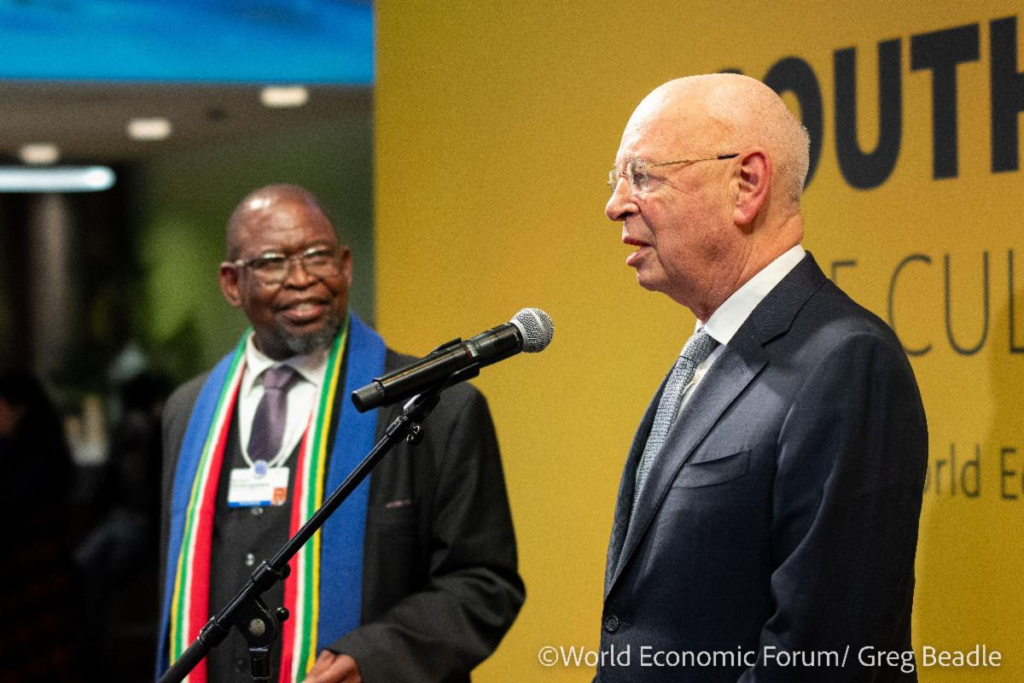
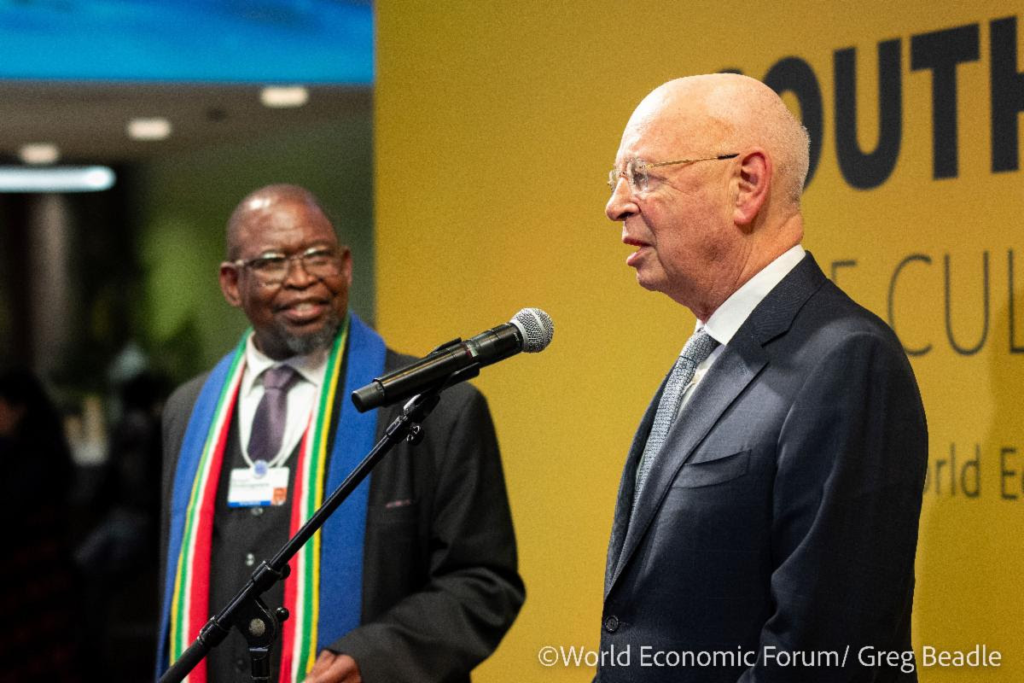
JOHANNESBURG, South Africa, 30 January 2022/ African Media Agency (AMA)/- The 53rd Annual Meeting of the World Economic Forum (WEF) in Davos, Switzerland, concluded on Friday, 20 January 2023. World leaders and corporate executives expressed hope that the looming recession facing the global economy could be avoided if countries collaborated to boost global trade and investment. 

A high-level South African government and business delegation has returned home from the meeting more upbeat than before that the current economic slowdown and rising inflation could be resolved if nations addressed global supply disruptions that are leading to commodity shortages and driving up energy and food prices. 

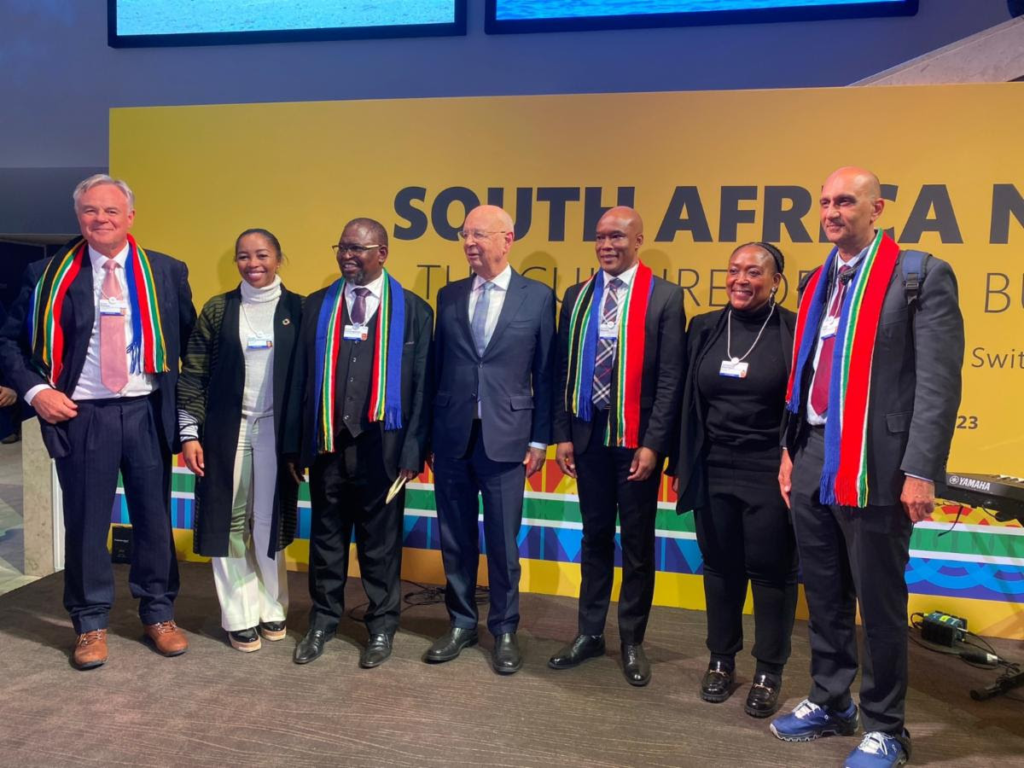
The delegation was led by Minister of Finance, Enoch Godongwana, who was accompanied by leaders of South Africa’s major corporations operating in various sectors of the economy. The delegation also included Minister of Trade, Industry and Competition, Ebrahim Patel; Minister of International Relations and Cooperation, Naledi Pandor; and Minister of Human Settlements, Mmamoloko Kubayi.

This year’s WEF Annual Meeting was held under the theme “Cooperation in a Fragmented World” and covered many interconnected topics including the impact of the ongoing Russia-Ukraine war on the commodity markets, skyrocketing cost of living caused by rising inflation and monetary policy tightening by central banks, climate change, and the growing impact of artificial intelligence (AI) on workplaces and labour markets. 

“The South African delegation did a fantastic job in Davos where it sold our country to global investors as a favourable market to do business and invest in. Notwithstanding the energy supply constraints that our country is currently grappling with, South Africa remains an attractive investment destination given its excellent infrastructure, sophisticated financial markets, and a skilled workforce,” says Sithembile Ntombela, Acting CEO of Brand South Africa.

The South African government is currently implementing structural reforms that have opened the energy sector to private investment to boost energy generation and bring an end to load-shedding that is constraining the economy.  

“The structural reforms that are currently being implemented by the government are making progress in removing investment bottlenecks and reducing the cost of doing business. These reforms will enable South Africa, a preferred destination by local investors and global multinationals looking to expand across Africa, to take advantage of the opportunities presented by the African Continental Free Trade Area (AfCFTA),” says Ntombela.

The AfCFTA, which officially launched in 2021, will create the world’s largest free trade area, stimulate intra-African trade, develop regional value chains, and promote industrialisation across the continent. 

The AfCFTA Secretariat and WEF revealed in a report unveiled at this year’s Davos meeting that AfCFTA is projected to create single market that will grow to 1.7 billion people and $6.7 trillion in consumer and business spending by 2030. 
By 2050, the continent is estimated to be home to 2.5 billion people and a market with a combined business and consumer spending of $16.12 trillion.


The report titled “A New Era for Global Business and Investment in Africa” lists four high-potential sectors that hold lucrative opportunities for companies looking to invest in Africa. 

These sectors are automotive, agriculture and agro-processing, pharmaceuticals, and transport and logistics, which are all expected to see rapid growth in terms of production and trade volumes under AfCFTA.

“Given that South Africa is the most industrialised and sophisticated economy in Africa, it is well positioned to take advantage of opportunities presented by AfCFTA. The development of the free trade area will require massive investment in logistics and telecommunications infrastructure to reduce the cost of doing business and enable free movement of people, goods and services,” explains Ntombela.

With the green energy transition and digital transition in full motion around the world, the delegation that represented South Africa at WEF2023 expressed support for calls to reskill and upskill workforces, particularly the youth, to prepare them for future workplaces and to mitigate job losses. 

The delegation is impressed by the progress made by the WEF’s Reskilling Revolution; an initiative launched in 2020 to empower 1 billion people. So far, the initiative has reached 350 million people.

Climate change also took centre stage at WEF with world leaders and business executives committing themselves to supporting the implementation of the Paris Agreement, which calls on all countries to cut carbon emissions to limit global warming to around 1.5 degrees celsius and strive towards attaining net zero emissions by 2050. 

This commitment requires countries and businesses to move away from using fossil fuel energy sources like coal and crude oil and adopting clean and environmentally friendly energy sources such as wind and solar power.

The launch of the new Coalition of Trade Ministers on Climate, which brings together over 50 countries, was also a highlight of this year’s WEF annual meeting. 

The coalition aims to tackle climate change by promoting trade and investment that encourages adoption of goods, services, and technologies that mitigate climate change in both developed and developing countries.

“However, the global challenges that were highlighted at WEF 2023 cannot be resolved in a fragmented world in which countries are pulling in different directions. These challenges require collaboration and unity by the nations of the world, where counties are working together to find solutions in an integrated global economy,” concludes Ntombela.

Distributed by African Media Agency (AMA) on behalf of Brand South Africa

Notes to the Editor:

Contact: Phindi Mathebula

Email:phindilem@brandsouthafrica.com

Mobile number: +27 64 890 7414 

About Brand South Africa

Brand South Africa is the official marketing agency of South Africa, with a mandate to build the country’s brand reputation, to improve its global competitiveness. Its aim is also to build pride and patriotism among South Africans, to contribute to social cohesion and nation brand ambassadorship.

The post South Africa supports calls for global co-operation to boost trade and address economic challenges and climate change appeared first on African Media Agency.

0 0 votes
Article Rating
Subscribe
Notify of
0 Comments
Oldest
Newest Most Voted

Share post:

Subscribe

Latest News

More like this
Related

BREAKING: 20 NYSC Prospective Corps Members Freed After Kidnappers Demand N50m Each

Twenty prospective members of the National Youth Service Corps...

Improve welfare of Nigerian Teachers 

I was and I am a teacher. I was a Parents Teachers Association hired teacher at Oba Akinbiyi High School (II), Mokola, Ibadan in 1997. Apart from that stint, I also taught briefly at a private secondary school during my National Youth Service at Asaba, Delta State as well as at another private secondary school at Akowonjo area of Lagos state around 2001 / 2002. My late father, Deacon Isaac Oyeniyi Ojo taught for about 40 years across several primary schools in Oyo and Osun sates and retired as a headmaster in 1995. At present, I don’t just teach but train people across various democratic institutions namely election management bodies (INEC and SIECs), political parties, media, national and state legislative assemblies, police, and civil society organisations. Information gleaned from the website of UNESCO says “World Teachers’ Day is held annually on 5 October to celebrate all teachers around the globe. It commemorates the anniversary of the adoption of the 1966 ILO/UNESCO Recommendation concerning the Status of Teachers, which sets benchmarks regarding the rights and responsibilities of teachers, and standards for their initial preparation and further education, recruitment, employment, and teaching and learning conditions. In 2026, the Day marks the 60th anniversary of the Recommendation concerning the Status of Teachers.” In Nigeria, this year's celebration focused on five interconnected pillars: innovation, mobility, Artificial Intelligence, inclusion, and professional excellence. The Minister of State for Education, Prof. Suwaiba Ahmad, announced that the selection process for the 2026 World Teachers' Day awards was digitised to promote transparency, accountability, and efficiency. The celebration includes a symposium, a march-past featuring state flags and cultural attire, and the recognition of 14 awardees, including the first, second, and third best teachers receiving prestigious car gifts, while the best Federal Unity College received a bus. Other prizes include laptops. In commemoration of the World Teachers Day, Dr. Akin Ayeni and I were guests on a breakfast programme on Ekiti 91.5 FM, Ado Ekiti last Monday where we dissected the plights of Nigerian teachers and proffered solutions to them. The host was Ademola Adeleke. I enumerated some of the plights of Nigerian teachers to include: Low wages, insecurity, quackery, inadequate classrooms, lecture theatres, libraries and laboratories, high turnover of staff especially in private schools, high workloads, disrespects from parents, students and even government. I made a proverb on the programme. Elo ni teacher ngba, ti o ntuto s’owo ka’wo osu (meaning, how much does a teacher earn that he or she needs to use saliva to count salary). This was a random joke even among teachers when they used to collect their salary in cash. This day, they receive their wages via online money transfer. The proverb however is meant to drive home the paltry nature of the salaries and wages of teachers cum lecturers. I recall the sticker produced by Academic Staff Union of Universities many years ago which has the inscription “My take home pay cannot take me home”. That’s very instructive. On issue of insecurity, according to Daily Trust of October 1, 2022, “The registrar of the Teachers Registration Council of Nigeria, Professor Josiah Ajiboye, said attacks on schools by insurgents have claimed the lives of more than 2,295 teachers in the North East between 2009 and 2022.” The PUNCH in its June 5, 2026 online edition reported that “An estimated 603 students and teachers have been kidnapped in seven mass abductions across schools in Nigeria between March 2024 and May 2026 under President Bola Tinubu, despite the N145bn Safe Schools Initiative.” Recall that on May 15, 2026, a total of 46 persons – seven teachers and 39 students – were abducted from Community High School Ahoro-Esinele and Yawota Baptist Nursery and Primary School in Oriire Local Government Area of Oyo State. Thankfully, most of them were rescued though two teachers were murdered by the bandits.  Michael Oyedokun, was reportedly beheaded, while John Olaleye, was shot dead during the attack. It is noteworthy that some university lecturers have also been abducted in the past. The heavy workloads and low wages have resulted into brain drain and high turnover of teaching staff across our academic institutions. Many education graduates don’t want to teach. The lecturers in tertiary institutions are leaving in droves for greener pasters abroad. Many teachers today take the job as a last resort when better options are not available. Many of the private schools recruit untrained teachers. They side step the federal government policy of having every teacher certified by Teachers Registration Council of Nigeria. Recall that the TRCN regulates the teaching profession in Nigeria by setting standards, accrediting teacher education programmes, registering qualified teachers, and enforcing professional ethics.  It establishes national minimum standards for teacher education and monitors teacher training institutions, including Colleges of Education, university faculties, polytechnic schools of education, and the National Teachers Institute. Unlike in the 20th century when teachers in Nigeria were widely respected and seen as mini-God, in contemporary times, there have been situation where pupils and students openly abuse teachers, bully them and even beat them up. Some irresponsible parents have even gone to school to harass and molest teachers for caning or meting out corporal punishments to their wards and children. Thus, many teachers now work in an atmosphere of fear. Mrs. Comfort Fasunwon is a multiple award-winning teacher in Ondo State, here is an excerpt from what she wrote on her Facebook wall in commemoration of the 2026 World Teachers Day “To my fellow teachers, today.  Teaching is not always easy. There are days when the workload is heavy, resources may be limited, and the results of our efforts may not be immediately visible. Yet we continue to show up, teach, encourage, correct, inspire and believe in our students. Sometimes, the greatest reward of a teacher is not a certificate or trophy. It is seeing a child who once struggled begin to understand. It is watching a student grow in confidence. It is meeting a former student years later and hearing the words, “Ma or sir, you made a difference in my life.” My plead to government at all level as well as private schools’ owners is to ensure that their schools are well resourced and staff welfare is made paramount. Professionalism should be their watchwords. Teachers’ rewards shouldn’t be in heaven; a foretaste of that should be here on earth. Best wishes to fellow teachers and nation builders. Remember the popular song that says “Anyone who hates teachers will homeschool his or her  child” I.G: @jideojong  

Over 22,000 Arms Recovered Across Nigeria in 10 Years – NCCSALW

The National Centre for the Control of Small Arms...

NBA Calls for End to Torture, Deaths in Nigeria’s Detention Centres

The Nigerian Bar Association (NBA) has called for tougher...
Join us on
For more updates, columns, opinions, etc.
WhatsApp
0
Would love your thoughts, please comment.x
()
x