spot_img
spot_imgspot_img
October 8, 2026 - 1:55 AM

With 200 Million Victims, UN Agencies Set Eyes on Eradicating Female Genital Mutilation by 2030

—

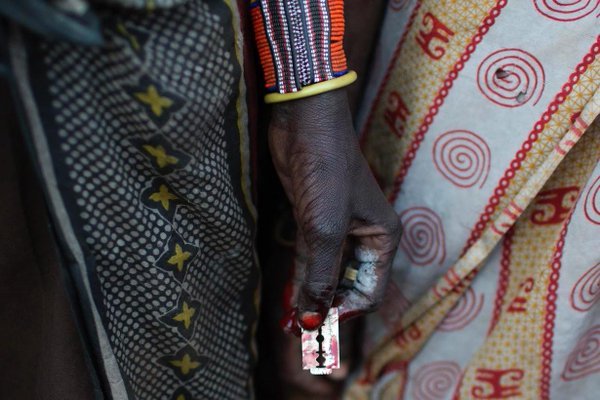
United Nations agencies are battling to eradicate the menace of Female Genital Mutilation (FGM) in the next eight years as part of the Sustainable Development Goals (SDGs) framework.

Since 2008, UN children’s agency, UNICEF, and the UN Population Fund (UNFPA) have led a joint programme that focuses on 17 countries in Africa and the Middle East, while also supporting regional and global initiatives.

Fourteen of these countries now have legal and policy frameworks banning FGM, with nearly 1,700 cases of legal enforcement and arrests.

Given the disruption caused by the COVID-19 pandemic, the joint programme has adapted interventions that ensure integration of FGM in humanitarian and post-crisis response.

But, it seems the COVID-19 pandemic is reversing decades of global progress in stamping out the menace.  Already, ahead of the International Day to eliminate the harmful practice, United Nations agencies started warning on the impact of the pandemic.

According to them, shuttered schools, lockdowns, and disruption to services that protect girls, have put millions worldwide at increased risk of being subjected to FGM.

This means an additional two million girls could be affected by 2030, according to UNICEF, resulting in a 33 per cent reduction in global efforts toward eradication.

Losing ground

UNICEF Senior Advisor, Prevention of Harmful Practices, Nankali Maksud, says “we are losing ground in the fight to end female genital mutilation, with dire consequences for millions of girls where the practice is most prevalent.

“When girls are not able to access vital services, schools and community networks, their risk of female genital mutilation significantly increases – threatening their health, education and future.”

In marking the International Day of Zero Tolerance for Female Genital Mutilation, observed annually on February 6, UN agencies are appealing for stronger action to uphold the human rights, health and integrity of women and girls.

At least 200 million across the world today have undergone FGM, which refers to all procedures that involve altering or injuring the female genitalia for non-medical reasons.

FGM is mostly carried out on young girls between infancy and age 15, according to the World Health Organisation (WHO), and for a variety of cultural and social reasons which vary from region to region.

For example, in some communities it is considered a necessary part of raising a girl and preparing her for adulthood and marriage.  In others, FGM is associated with cultural ideals of femininity and modesty.

Girls who undergo FGM, experience short-term complications such as severe pain, shock, excessive bleeding, infections, and difficulty in passing urine.  There are also long-term impacts on their sexual and reproductive health, and on mental health.

FGM is a global problem, according to the UN. Although primarily concentrated in 30 countries in Africa and the Middle East, it is also practiced in some countries in Asia and Latin America, and by immigrant populations in Western Europe, North America, Australia, and New Zealand.

In some countries it is still almost universal. UNICEF reports that roughly 90 per cent of girls in Djibouti, Guinea, Mali and Somalia are affected.

WHO has also pointed to an emerging alarming trend.  Roughly one in four girls who have been subjected to FGM, or 52 million worldwide, were cut by health personnel, which is known as medicalisation.

Urgent investment now

The UN believes FGM can be eradicated in a generation, highlighting that progress is possible through ensuring girls have access to education, healthcare and employment.

While girls today are a third less likely to be subjected to the practice compared to 30 years ago, UNICEF said action must now be accelerated tenfold due to the pandemic and other overlapping crises such as rising poverty, inequality and conflict.

In his message for the International Day, UN Secretary-General, Antonio Guterres, underscored that “this flagrant manifestation of gender inequality must be stopped”.

He urged people everywhere to join UN efforts to end FGM and uphold the human rights of all women and girls.

Said Guterres: “With urgent investments and timely action, we can meet the Sustainable Development Goals target of eliminating female genital mutilation by 2030 and build a world that respects women’s integrity and autonomy.”

0 0 votes
Article Rating
Subscribe
Notify of
0 Comments
Oldest
Newest Most Voted

Share post:

Subscribe

Latest News

More like this
Related

BREAKING: 20 NYSC Prospective Corps Members Freed After Kidnappers Demand N50m Each

Twenty prospective members of the National Youth Service Corps...

Improve welfare of Nigerian Teachers 

I was and I am a teacher. I was a Parents Teachers Association hired teacher at Oba Akinbiyi High School (II), Mokola, Ibadan in 1997. Apart from that stint, I also taught briefly at a private secondary school during my National Youth Service at Asaba, Delta State as well as at another private secondary school at Akowonjo area of Lagos state around 2001 / 2002. My late father, Deacon Isaac Oyeniyi Ojo taught for about 40 years across several primary schools in Oyo and Osun sates and retired as a headmaster in 1995. At present, I don’t just teach but train people across various democratic institutions namely election management bodies (INEC and SIECs), political parties, media, national and state legislative assemblies, police, and civil society organisations. Information gleaned from the website of UNESCO says “World Teachers’ Day is held annually on 5 October to celebrate all teachers around the globe. It commemorates the anniversary of the adoption of the 1966 ILO/UNESCO Recommendation concerning the Status of Teachers, which sets benchmarks regarding the rights and responsibilities of teachers, and standards for their initial preparation and further education, recruitment, employment, and teaching and learning conditions. In 2026, the Day marks the 60th anniversary of the Recommendation concerning the Status of Teachers.” In Nigeria, this year's celebration focused on five interconnected pillars: innovation, mobility, Artificial Intelligence, inclusion, and professional excellence. The Minister of State for Education, Prof. Suwaiba Ahmad, announced that the selection process for the 2026 World Teachers' Day awards was digitised to promote transparency, accountability, and efficiency. The celebration includes a symposium, a march-past featuring state flags and cultural attire, and the recognition of 14 awardees, including the first, second, and third best teachers receiving prestigious car gifts, while the best Federal Unity College received a bus. Other prizes include laptops. In commemoration of the World Teachers Day, Dr. Akin Ayeni and I were guests on a breakfast programme on Ekiti 91.5 FM, Ado Ekiti last Monday where we dissected the plights of Nigerian teachers and proffered solutions to them. The host was Ademola Adeleke. I enumerated some of the plights of Nigerian teachers to include: Low wages, insecurity, quackery, inadequate classrooms, lecture theatres, libraries and laboratories, high turnover of staff especially in private schools, high workloads, disrespects from parents, students and even government. I made a proverb on the programme. Elo ni teacher ngba, ti o ntuto s’owo ka’wo osu (meaning, how much does a teacher earn that he or she needs to use saliva to count salary). This was a random joke even among teachers when they used to collect their salary in cash. This day, they receive their wages via online money transfer. The proverb however is meant to drive home the paltry nature of the salaries and wages of teachers cum lecturers. I recall the sticker produced by Academic Staff Union of Universities many years ago which has the inscription “My take home pay cannot take me home”. That’s very instructive. On issue of insecurity, according to Daily Trust of October 1, 2022, “The registrar of the Teachers Registration Council of Nigeria, Professor Josiah Ajiboye, said attacks on schools by insurgents have claimed the lives of more than 2,295 teachers in the North East between 2009 and 2022.” The PUNCH in its June 5, 2026 online edition reported that “An estimated 603 students and teachers have been kidnapped in seven mass abductions across schools in Nigeria between March 2024 and May 2026 under President Bola Tinubu, despite the N145bn Safe Schools Initiative.” Recall that on May 15, 2026, a total of 46 persons – seven teachers and 39 students – were abducted from Community High School Ahoro-Esinele and Yawota Baptist Nursery and Primary School in Oriire Local Government Area of Oyo State. Thankfully, most of them were rescued though two teachers were murdered by the bandits.  Michael Oyedokun, was reportedly beheaded, while John Olaleye, was shot dead during the attack. It is noteworthy that some university lecturers have also been abducted in the past. The heavy workloads and low wages have resulted into brain drain and high turnover of teaching staff across our academic institutions. Many education graduates don’t want to teach. The lecturers in tertiary institutions are leaving in droves for greener pasters abroad. Many teachers today take the job as a last resort when better options are not available. Many of the private schools recruit untrained teachers. They side step the federal government policy of having every teacher certified by Teachers Registration Council of Nigeria. Recall that the TRCN regulates the teaching profession in Nigeria by setting standards, accrediting teacher education programmes, registering qualified teachers, and enforcing professional ethics.  It establishes national minimum standards for teacher education and monitors teacher training institutions, including Colleges of Education, university faculties, polytechnic schools of education, and the National Teachers Institute. Unlike in the 20th century when teachers in Nigeria were widely respected and seen as mini-God, in contemporary times, there have been situation where pupils and students openly abuse teachers, bully them and even beat them up. Some irresponsible parents have even gone to school to harass and molest teachers for caning or meting out corporal punishments to their wards and children. Thus, many teachers now work in an atmosphere of fear. Mrs. Comfort Fasunwon is a multiple award-winning teacher in Ondo State, here is an excerpt from what she wrote on her Facebook wall in commemoration of the 2026 World Teachers Day “To my fellow teachers, today.  Teaching is not always easy. There are days when the workload is heavy, resources may be limited, and the results of our efforts may not be immediately visible. Yet we continue to show up, teach, encourage, correct, inspire and believe in our students. Sometimes, the greatest reward of a teacher is not a certificate or trophy. It is seeing a child who once struggled begin to understand. It is watching a student grow in confidence. It is meeting a former student years later and hearing the words, “Ma or sir, you made a difference in my life.” My plead to government at all level as well as private schools’ owners is to ensure that their schools are well resourced and staff welfare is made paramount. Professionalism should be their watchwords. Teachers’ rewards shouldn’t be in heaven; a foretaste of that should be here on earth. Best wishes to fellow teachers and nation builders. Remember the popular song that says “Anyone who hates teachers will homeschool his or her  child” I.G: @jideojong  

Over 22,000 Arms Recovered Across Nigeria in 10 Years – NCCSALW

The National Centre for the Control of Small Arms...

NBA Calls for End to Torture, Deaths in Nigeria’s Detention Centres

The Nigerian Bar Association (NBA) has called for tougher...
Join us on
For more updates, columns, opinions, etc.
WhatsApp
0
Would love your thoughts, please comment.x
()
x