

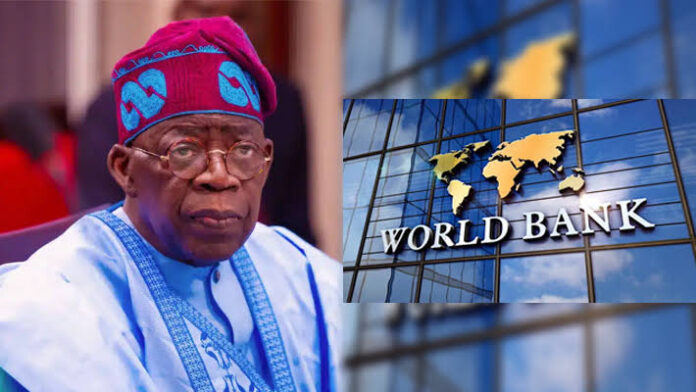
The World Bank has revealed that about 79 per cent of Nigerians remain poor or vulnerable to falling into poverty despite nearly three years of economic reforms introduced by President Bola Tinubu’s administration.
The findings were contained in the World Bank’s newly approved Country Partnership Framework for Nigeria (2026–2032) and its accompanying Streamlined Country Diagnostic, which assessed the country’s economic performance and development challenges.
According to the report, 61 per cent of Nigerians live below the poverty line, while 33 per cent are classified as ultra-poor and unable to meet their minimum food requirements.
The Bank acknowledged that reforms introduced since May 2023 including the removal of petrol subsidy, foreign exchange market liberalisation, tighter monetary policy, tax reforms and fiscal adjustments have helped stabilise the economy.
It noted that economic growth rose from 3.5 per cent in the first half of 2024 to 3.9 per cent in the corresponding period of 2025, while foreign reserves increased above $42 billion, fiscal deficits narrowed and investor confidence improved.
However, the report said these gains have not yet translated into better living standards for most Nigerians, citing persistent inflation, weak social protection and limited job opportunities as major challenges.
The World Bank estimated that about 139 million Nigerians currently live below the national poverty line, with over 86 million lacking access to electricity.
It also noted that between three and four million young Nigerians enter the labour market annually with limited employment opportunities.
The report identified large-scale job creation as the most effective strategy for reducing poverty, projecting that about 60 million young Nigerians will join the labour force over the next decade.
It also expressed concern over Nigeria’s weak social protection system, noting that only 8.5 per cent of poor Nigerians are covered by any social safety net, while public spending on social protection accounts for just 0.14 per cent of GDP.
The World Bank urged the Federal Government to sustain ongoing reforms, strengthen governance, accelerate private investment and expand social protection programmes to lift millions of Nigerians out of poverty.
President Bola Tinubu has continued to defend his administration’s reforms, maintaining that although they have caused short-term hardship, they are necessary to restore economic stability and deliver long-term prosperity.


