

On September 17, the Pew Research Center reported that in 34 of 37 countries, people tend to expect AI to lead to fewer jobs rather than more over the next 20 years. In the United States, 71% hold that view. In Australia and South Korea, 76% do. Nigeria was the exception.
In Nigeria, 27% of adults expect AI to create jobs, while 26% expect fewer jobs. Nigeria was the only country in which the share expecting more jobs exceeded the share expecting fewer. The gap is one percentage point.
Across all 37 countries, a median of 46% said AI will lead to fewer jobs and 9% said more jobs. Another 25% were unsure. A further 13% said it would make little difference.
Pew surveyed 42,151 adults in 36 countries between Feb. 8 and May 13. It added separate surveys of 8,607 adults in the United States, which made the total 37.
Australia and South Korea had the highest job-loss expectations, at 76% each. The United States followed at 71%. Across 18 high-income countries, the median was 55%.
Two other countries also broke from the pattern. In Thailand, 49% said they were not sure and 32% expected fewer jobs. In the Philippines, 54% were not sure, and 26% expected fewer jobs.
The share of adults who have heard a lot about AI rose in 11 of the 25 countries Pew also surveyed last year. Nigeria led with a 14-percentage-point rise. Pew said opinion on AI “may still be taking shape” in many places.
READ ALSO: Davido, Rema, Fally Ipupa to Headline Afro Nation Portugal 2027
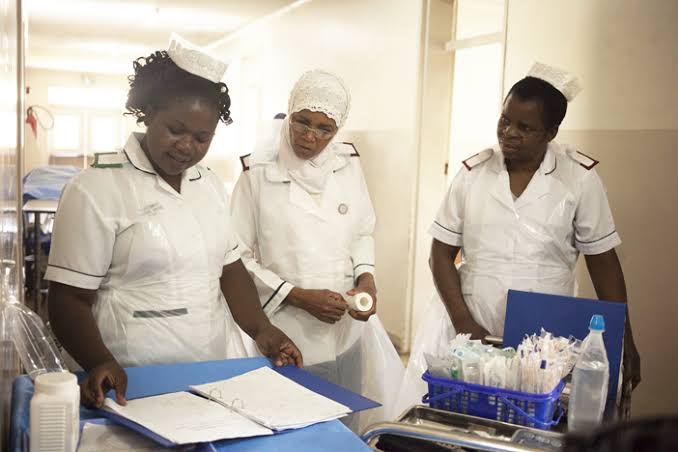
Technology leaders also gave views on the subject. Bill Gates, the Microsoft co-founder, warned on Aug. 26 that AI could affect law, customer service, medicine, software and manufacturing within 10 years. Alex Svanevik, CEO of blockchain analytics firm Nansen, said on Sept. 19 that some work stays hard to automate. Of nursing, he said, “you have to be in the room with the patient.”


