

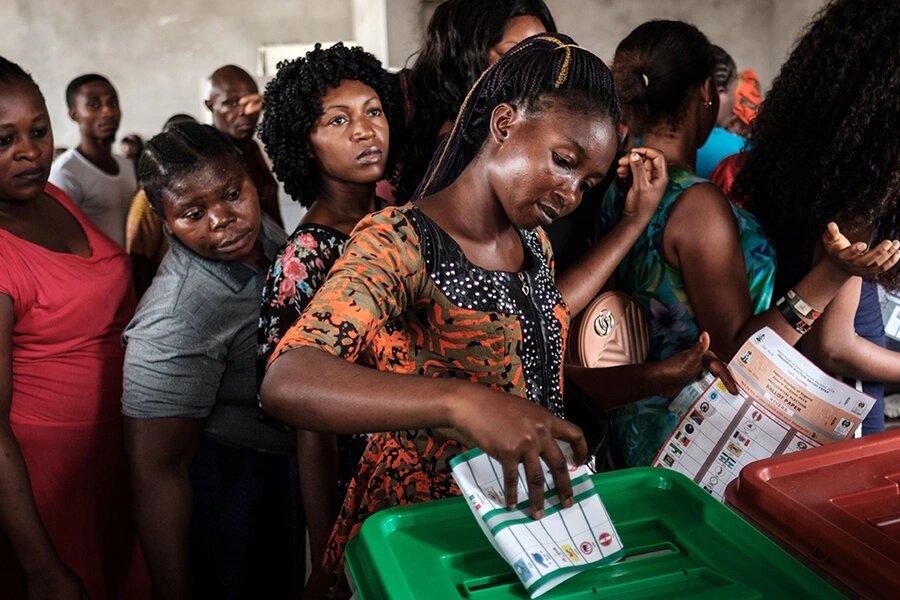
Where it flourishes, societies are strengthened by diversity, enriched by competing ideas, and stabilized by the inclusion of multiple voices in governance. Where it is weakened, democracy begins to suffocate, often yielding to authoritarian impulses disguised as efficiency, order, or national unity.
Nigeria’s approaching 2027 General Elections, therefore, invite a deeper question: Is authoritarianism becoming a credible threat to our democratic experiment?
Democracy and the Logic of Pluralism
At its philosophical core, democracy is not merely about elections; it is about the diffusion of power. It assumes that no single individual, party, ethnic bloc, religious group, or institutional elite possesses a monopoly of wisdom or legitimacy. Power must, therefore, remain contested, negotiated, and accountable.
This is why pluralism is indispensable. It creates a political environment where different interests coexist, compete peacefully, and contribute to nation-building. In a plural society such as Nigeria—composed of multiple ethnicities, faiths, regions, and social classes—pluralism is not optional; it is a structural necessity.
Indeed, many successful states and historical empires survived not by suppressing diversity but by managing it pragmatically. They understood that unity is strongest when it accommodates differences rather than denying them.
The Authoritarian Temptation
Yet pluralism has always had adversaries. The greatest of these is authoritarianism—the concentration of power in one leader, one party, one ideology, or one narrow ruling class.
Authoritarian tendencies often emerge gradually, not dramatically. They may appear in forms such as:
■Weakening of independent institutions
■Intimidation of opposition voices
■Manipulation of electoral processes
■Politicization of security agencies
■Suppression of dissenting media
■Weaponization of anti-corruption rhetoric
■Ethnic or sectional capture of state power
■Public normalization of fear and silence
When these patterns become entrenched, elections may still occur, but they lose their democratic substance. Ballots are cast, yet choices are constrained. Institutions remain visible, yet accountability disappears.
Nigeria’s Peculiar Vulnerability
Nigeria’s diversity is both its strength and its vulnerability. Properly managed, it is a reservoir of innovation, resilience, and broad legitimacy. Poorly managed, it can be exploited by authoritarian actors who present themselves as the only force capable of holding the country together.
This is the paradox: pluralism can produce tensions, but authoritarianism magnifies them. Suppressed grievances do not vanish; they deepen underground until they re-emerge in more dangerous forms.
Thus, while some may argue that Nigeria needs a “strong hand” rather than a messy democracy, history repeatedly shows that nations built on coercion may appear stable temporarily, but they seldom remain peaceful permanently
The Flip Side of Pluralism
To defend pluralism honestly, one must also acknowledge its imperfections. Diversity without civic discipline can degenerate into factionalism. Freedom without responsibility can descend into disinformation. Competitive politics without shared national values can become toxic polarization.
The danger is not pluralism itself, but unmanaged pluralism. When every disagreement becomes existential, when compromise is branded betrayal, and when identity replaces competence, democracy becomes fragile.
The answer, however, is not an authoritarian retreat. It is democratic maturation.
What Must Be Done Before 2027?
If Nigeria is to resist authoritarian drift and preserve democratic legitimacy, several imperatives stand out:
* Strengthen Electoral Integrity – Citizens must trust that votes count.
* Protect Institutional Independence – Courts, legislature, media, and electoral bodies must remain free from partisan capture.
* Promote Civic Education – Democracy survives when citizens understand both their rights and duties.
* Encourage Issue-Based Politics – Competence, policy, and character must outweigh ethnic arithmetic.
* Reject Politics of Fear – No society progresses when silence becomes safer than speech.
* Build Shared National Identity – Nigeria must be larger than its divisions.
Conclusion
The real contest in 2027 may not simply be between political parties or candidates. It may be between two governing philosophies:
a) Plural democracy where power is shared, questioned, and renewed through consent; or
b) Authoritarian centralism, where power is concentrated, and obedience replaces participation.
Nigeria must choose wisely. While pluralism can be noisy, frustrating, and imperfect, it remains far safer than the seductive calm of authoritarian rule.
Democracy is not preserved by slogans. It is preserved by vigilance, institutions, courage, and an informed citizenry.
Final Reflection
A nation as complex as Nigeria cannot be governed sustainably through domination. It can only be governed by inclusion. The future belongs not to those who silence diversity but to those who organize it into justice, stability, and progress.
@richardODUSANYA


