

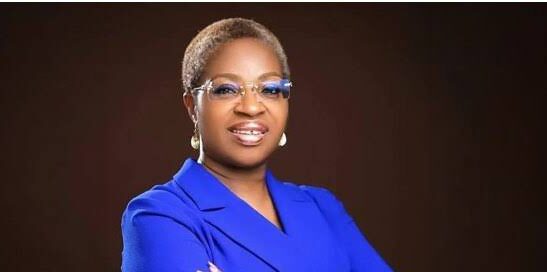
Senior Advocate of Nigeria (SAN), Oyinkansola Badejo-Okusanya, has been elected President of the Nigerian Bar Association (NBA), becoming only the second woman to lead the country’s foremost legal association in its 66-year history.
She defeated fellow Senior Advocates of Nigeria, Lateef Akangbe and Olumuyiwa Akinboro, in the 2026 NBA national election and is expected to succeed the incumbent president, Afam Osigwe, SAN, at the association’s Annual General Conference.
Beyond the historic victory, here are some facts about the incoming NBA president that many Nigerians may not know.
1. She is only the second woman to lead the NBA
Badejo-Okusanya’s election ends a gap of more than three decades since Priscilla Kuye became the first female NBA president in 1991. Her emergence is regarded as a major milestone for women’s leadership in Nigeria’s legal profession.
2. She comes from a family with deep legal roots
Although widely known for her own accomplishments, Badejo-Okusanya belongs to a family with a strong legal tradition. Her late father, Chief G.O.K. Ajayi, SAN, was one of Nigeria’s most celebrated legal luminaries and a recipient of the Commander of the Order of the Niger (CON). He appeared in several landmark constitutional and political cases and mentored generations of Nigerian lawyers.
3. She built her own legal reputation
Rather than relying on her family name, Badejo-Okusanya established herself as one of Nigeria’s leading commercial lawyers. She has advised major local and international companies on mergers and acquisitions, banking, energy, telecommunications, infrastructure, corporate governance and regulatory compliance.
4. She is a managing partner
She serves as the Managing Partner of the law firm Aluko & Oyebode, one of Nigeria’s leading commercial law firms. Under her leadership, the firm has strengthened its position in corporate and commercial legal practice while expanding its regional and international outlook.
5. She is recognised beyond Nigeria
Her expertise has earned her recognition in several respected international legal directories, where she has consistently been ranked among Nigeria’s leading lawyers in corporate and commercial practice.
She has advised multinational corporations, financial institutions, development partners and investors on complex cross-border transactions.
6. She has extensive experience within the NBA
Long before contesting for the presidency, Badejo-Okusanya served on several NBA committees and played active roles in policy development, professional regulation and continuing legal education.
Her experience within the association is considered one of the strengths she brings to the office.
7. She is expected to champion legal reforms
Many lawyers expect her administration to prioritise reforms in judicial independence, lawyers’ welfare, technology-driven legal practice, ethics, continuing legal education and access to justice.
Observers also expect the NBA under her leadership to maintain a strong voice on constitutional democracy, human rights and the rule of law.
8. Her election represents more than a psonal victory
Legal analysts say her emergence reflects a growing willingness within the Nigerian legal profession to embrace diversity in leadership while rewarding competence and experience.
Her victory is expected to encourage more women and younger lawyers to aspire to leadership positions within the Bar.
Profile at a glance
- Full name: Oyinkansola Badejo-Okusanya, SAN
- Profession: Legal practitioner and Senior Advocate of Nigeria
- Current position: Managing Partner, Aluko & Oyebode
- Specialisation: Corporate and commercial law, mergers and acquisitions, banking, energy, telecommunications, governance and dispute resolution
- NBA position: President-elect
- Historic feat: Second woman to be elected President of the Nigerian Bar Association
- Predecessor: Afam Osigwe, SAN
With decades of legal practice, leadership in one of Nigeria’s foremost commercial law firms and extensive involvement in NBA affairs, Badejo-Okusanya now assumes one of the most influential positions in Nigeria’s legal profession at a time when calls for judicial reforms, improved access to justice and stronger institutional accountability continue to dominate national discourse.


