

Yoruba Governors Are Ifa Priests
Onibara consulted the Oracle to know what the future held for him. Ifa warned him that a strange, but beautiful woman would approach him for marriage and that he should decline. To ward off the emergence of the strange woman, Onibara was asked to make sacrifices, which he bluntly refused to carry out. Shortly thereafter, a beautiful woman came to Ibara and declared her love for the king.
Palace functionaries who were privy to the Ifa divination, reminded the Oba and he refused all entreaties. He eventually married the woman. The problem with the new Olori was that she had only one meal. She ate only raw meat, which must also be fresh. She was too beautiful to eat yesterday’s leftovers. How would a king tell his subjects that he could not feed his Olori? Eewo (abomination)!
Onibara started by killing his livestock for his new wife. When he ran out of supply, he started buying. When he could no longer get the money to buy, the king formed a bandit group that started stealing goats, sheep, and other livestock for him. When tongues started wagging, and fingers pointed in the direction of the throne, Onibara went metaphysical. He turned to a wolf during the night, ravaged the town, killing the people’s livestock and then turned to human at daybreak.
This continued until the people devised a means of arresting the situation. Like the saying goes: the same Babalawo who prepares the disappearing charm for the cockroach, is the same man who prepares the charm of coincidence for the hen (Babalawo to se afeeri fu aayan, ohun na lo se arinako fun adiye). A sorcerer was approached, and he gave the headhunter a special arrow, which blade, he laced with poison; the type my people call “mafenukeje” (do not taste blood). One night, when the new queen demanded raw meat, Onibara turned to a wolf and went hunting. He grabbed one sheep. The sheep bleated. The bleating attracted the hunters waiting in ambush, and they came after the wolf with their bows and arrows. The headhunter released the bow, and the arrow came tumbling and hit the wolf, wounding it very badly. The king-turned wolf managed to escape and got to the palace ground before the poison reached his heart. He collapsed at the entrance and turned human, clutching the sheep. The first set of people that saw the king were the palace courtiers. They could not shout. They remembered that “ese agba re, o ya ju oju agba re” (here is the footprints of an elder is better than here is the face of an elder).
They saw the place where the arrow entered the king and removed the blade. The carcass of the sheep was too graphic an evidence. They took counsel together and secretly buried the king. The Queen was not spared either, as she was also immolated over the grave of the king. This, according to the legend, is why carcasses of wolves are secretly buried, till date, because they are regarded as royal. If only Onibara had listened to what Ifa said.
I remembered this story after reading the interview granted by Oba Abdulrasheed Akanbi, the Oluwo of Iwo, Osun State, published in the Saturday Tribune of June 17, 2023. Oba Akanbi claimed in that interview that his former Olori, Ms. Chanel Chin, the Jamaican, “coerced me to help her do some things, you know she is a Jamaican and she made me to believe she must smoke to survive”. The Oba spoke in reference to the video where the Oba was caught wrapping substance believed to be Indian hemp. He went ahead to add: “You can imagine a woman you don’t have problem with recording you in your own bedroom, it showed she had an agenda”, I asked what Ifa told the prince before he became the Oluwo. If he had consulted Ifa before marrying the Jamaican, since Oba Akanbi claimed that his kingship was predicted at his christening, he would probably have been told of the story of Onibara, stated above. When an Oba marries a woman who eats only raw meat, he must one day go-a-hunting in a wolf skin. How would a woman not ‘superglue’ marijuana and paper into the hands of a king and ask him to wrap it when the same king claims not to believe in the very tradition that would have insulated him from such dangerous influences from across the seas!
Oba Akanbi was crowned the Oluwo in November 2015. He is one traditional ruler who courts controversies the way a man courts a damsel. If you are a core Yoruba person who places premium on the sanctity of Yoruba cultures, customs, and traditions, you are not likely to be a fan of Oba Akanbi.
Iwo is not just a town in Yorubaland. It has a deep history that speaks to the essence of the Yoruba race. This is why anything coming from that ancient town should be of great interest to every Yoruba man and woman, and, also to historians and social scientists alike. I always pay attention to Iwo and his reigning king, Oba Akanbi. I personally don’t agree with the Oluwo, especially, his claims to be the custodian of the Yoruba culture, traditions, and customs.
There are many things one will find disagreeable with the king, ranging from his costumes, his gait, his predilections, and carriage. I have seen kings and have entered palaces. I know the candour of monarchs, and I can draw inferences. Oba Abdulrasheed Akanbi is in a class of his own. He had in the past done some things, which a former senior colleague dismissed as “learning curves”, making me wonder if indeed, Ifa spoke to the Iwo people before Oba Akanbi ascended the throne. But recently, the controversial monarch said something that I totally agreed with. The words of the Lord are forever settled in Heaven. The Holy Book, the Bible in 1Corinthians 1:27 says: “But God has chosen the foolish things of the world to confound the wise…” Hallelujah! What did Oluwo say?
Oba Akanbi, in the interview was asked: “Did Ifa pick you at that time?” His response was a statement no Oba has ever made since the beginning of time. Here is what he said: “Tell me one king that Ifa picked in Yoruba land. The person who is picked by the governor is the one God has ordained to be the king. There is no Oba in Yoruba land that will say Ifa picked him. It is after the governor picked you that you now become a king. Ifa doesn’t have any power over the governor. Maybe you watch too much Nollywood movies….” He alluded to the time of our forebears and told the two journalists that, in that period too, the most powerful would be made kings irrespective of what Ifa said. How true is this claim by the Oluwo?
Before we answer this, it is pertinent that we know the place of Ifa in the worldview of the Yoruba race, and particularly, in the selection of kings among the people. Ifa, history has shown that contrary to the general belief that it originated from the Old Oyo, is a transferred religion or belief that came to the Oyo Empire during the reign of Alaafin Onigbogi. In his world acclaimed authentic history of the Yoruba race, The Reverend Samuel Johnson, in his “The History of the Yorubas”, identified five Alaafin of Oyo that he termed “Historical Kings”. From Oganju, to Kori; Oluaso, the one known as “Osarewa s’akin (the handsome but valiant king), to Onigbogi and finally Ofinran, Johnson noted that Ifa came from an Ota woman, named Arugba-Ifa, who was Alaafin Oluaso’s Queen and mother of Alaafin Onigbogi. Arugba-Ifa, a very superstitious woman, was said to have left Oyo for her hometown, Ota, but on hearing that her son had succeeded his father, she returned to Oyo and introduced Ifa as a religion. The account stated that the Oyo people initially rejected the ‘strange’ religion, but one Oba from a vassal town called Ado, accepted her and her religion. When the Tapa people of Nupe attacked Oyo and made a mess of the city, the people looked for Arugba-Ifa and Ifa was established as a religion in Oyo, with the first priest being Alado, the Oba of Ado (see pages 118-189). That was how Ifa became the religion of the Oyo people, and by extension, the entire Yoruba race such that before any major decision is taken in the land, the Eleri Ipin (the one who witnessed destiny) is consulted, and its pronouncements adhered to. In the days of yore, no Oba was crowned if he was not the rightful candidate picked by Ifa.
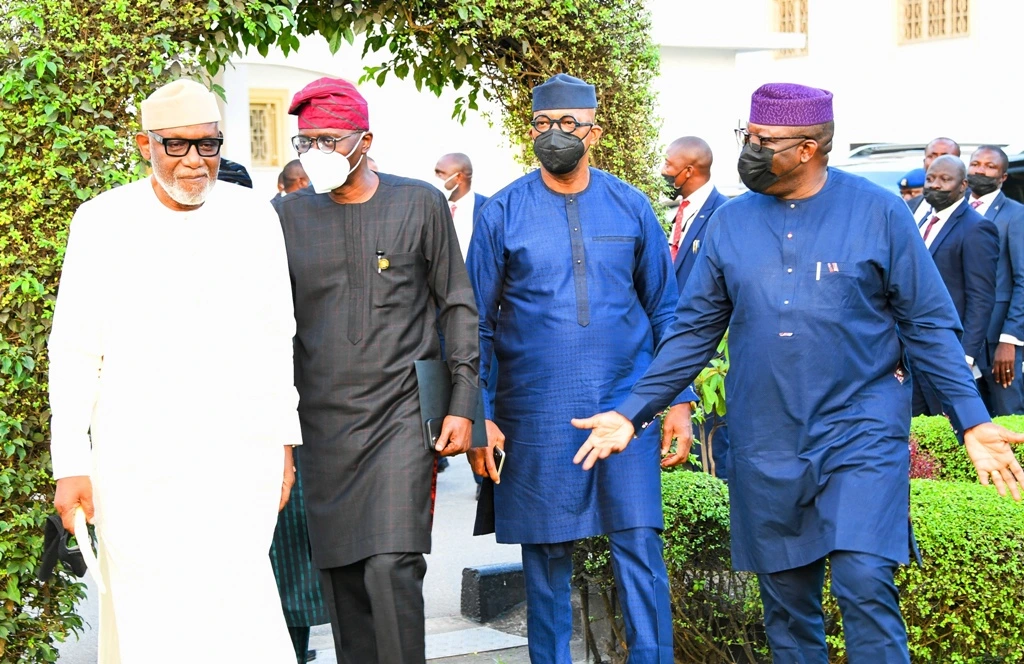
But Oluwo said such practice had changed and he challenged us to name any Oba who is a product of Ifa divination. What the popular king is saying is that governors have replaced Ifa in appointing kings in Yorubaland. Nowadays, the moment a governor approves a candidate as an Oba, Ifa does not say no.
You may be a prince and have the money, if you have the approval of Ifa and refuse to appease the governors, you have lost. In the time past, Ifa priests wielded the kinds of powers that the governors wield today. They had the power of life and death. They enthroned kings and dethroned kings. Where an oba combines the power of the king and the knowledge of Babalawo, they become dictators. (Oba to ba ti gbo ifa to tun loogun, ika lo ma n da). That is why Babalawos are not made kings in Yorubaland, till date.
Ifa priests in the past jointly ruled towns with the Obas. In fact, they were more powerful than most Obas because they are the ones who see what the future holds. Their words were laws, and they were revered by the old and the young. But the governors have taken over that esoteric function of the Ifa priests. It is akin to what my people say that when the Aare (the Generalissimo) summons you, you don’t consult the Oracle; because it is one thing for the Oracle to foretell good fortune and the Aare to effect misfortune (Aare n pe o, o nda Ifa; ti Ifa ba foo’re, ti Aare o foo’re nko). Lagos experienced the power of Ifa and that of a sitting governor not too long ago.
Otunba Adekunle Ojora is a rich man and a royalty from the Adele royal families of Lagos. He was the most favoured candidate for the Oba of Lagos throne in 2003, by Ifa and the kingmakers. His closest rival then, is the current Oba Riwan Akiolu. President Bola Tinubu was the governor of Lagos State at that time. Akiolu, many believed was, and is still appreciably close to Tinubu. On May 23, 2003, the Lagos kingmakers selected Akiolu as the next Oba of Lagos, and the following day, May 24, 2003, the then Governor Bola Tinubu confirmed him so, and he was eventually crowned on August 9, 2003, as the 21st Oba of Lagos. Whatever Ifa said and the kingmakers heard did not tally with what Alausa (seat of Lagos State governor) wanted. Today, Oba Akiolu rules over Lagos while Otunba Ojora rules his own home and business empire. Whether he would have been a more fantastic Oba instead of the current one that ceded the entire Lagos to Benin Kingdom is within the precincts of Opon Ifa and those in the esoteric enclave.
“Even during our forefathers(sic), they would make the most powerful person at that time king”, Oba Akanbi said, again, in the quoted interview above. He was right. The case of the Orangun of Ila succession battle between 1960-1967 confirms this claim by the Oluwo. Oba Adedapo Agboluaje II, was the Orangun of Ila from 1947 to 1960. For a period of seven years, after the demise of Oba Agboluaje II, the ancient town was without a successor. One of the two major contenders, Prince Isaac Adebayo was the private Secretary to the then Premier of Western Region, Chief Samuel Ladoke Akintola. His closest rival, who was crowned Oba Adetona Ayeni Ariwajoye I, in 1967, was said to be close to a powerful “potentate”, who himself was very close to the Military Governor of the Region, General Robert Adeyinka Adebayo. At the end of the day in 1967, it was still the Military Governor who had the honour and the privilege to approve then Prince Williams Adetona Ayeni as the Orangun. This case is very apposite because the majority of the citizens were behind Prince Adebayo, whom they said was the choice of Ifa, and he was the first university graduate from the town.
The story was that when the powerful “potentate” and friend to the Military Governor asked why his choice was not pronounced king, he was told that “he had no royal hair on his head”. The powerful “potentate” was said to have plucked one of the strands of hair on his own head and placed it on the head of his choice and ordered that he should be proclaimed king. Oba Ayeni Ariwajoye I reigned as the Orangun of Ila from 1967 to 1999. His era is regarded as golden by all in the town. (See “The Orangun Dynasty”, 1996, page 107), written by Oba Ayeni’s rival, Prince Isaac Adebayo).
I am not an Ifa priest. However, that I am not a hunter does not mean I cannot tell the path an animal did not take. Most of the problems we have in Yoruba palaces today can be traced to how the Obas were selected. Ifa does not lie, Opele does not deceive. The Olowo of Owo, Oba (Sir) Olateru Olagbegi II was appointed the Olowo of Owo in 1941 and ruled for a period of 25 years. In 1966, he was deposed and banished from Owo, and another Olowo in the person of Oba Adekola Ogunoye II was installed. 25 years later, Oba Olateru Olagbegi II was re-installed as the Olowo and he reigned for another five years before he joined his ancestors in October 1998. Historians and traditional bookkeepers said that Oba Olagbegi’s trajectory on the throne was predicted by Ifa. The revered monarch, they claimed had the foreknowledge of what happened and that was why, while he was away for a quarter of a century, he maintained his dignity and those responsible for his dethronement were at the forefront of the agitation for his reinstatement 25 years later, as predicted by Ifa.
Oba (Sir) Olateru Olagbegi II was not alone in that category. Oba Muhamadu Olanipekun was the Sarki of Arigidi Akoko, a town not too far from Owo. He suffered the same fate as his brother Oba, the Olowo. In August 1967, a rebellion broke out in Arigidi Akoko and Oba Olanipekun was forced to go into exile. An old Drum Magazine account of the story of the August 1967 event, that I read years back, stated that when Oba Olanipekun wanted to confront the rebels that stormed his place, he was held back by his wife, who reminded the monarch of the warnings given by Ifa at his coronation, to wit: “okiki ode a fi fila pa erin kii ju ojo meta lo” (the fame of a hunter who kills an elephant with his cap does not last more than three days). The Sarki listened to the voice of wisdom and left the town. Needless to say here that all attempts by the rebels to install a new Sarki outside the Olanipekun ruling house failed until 41 years later, when in 2008, an Olanipekun prince, Oba Yisa Olanipekun, was installed as the Sarki of Arigidi Akoko. Ifa again remained faithful to its cognomen as the Atun-ori-eni-ti-osunwon-se (the repairer of bad destiny).
Check the histories of Yoruba towns and communities that stay faithful to the words of Ifa on the enthronement of their kings. They have every reason to praise their diviners, while their diviners also praise Ifa in return. There are troubles in the Yoruba palaces because the cultures, customs and traditions of the people have been abandoned. But for public outcry, a popular motor park leader, who has no single drop of royal blood in his veins would have been installed as an Oba in Lagos all because he is close to the government of the day. We have cases where moneybags and close associates of politicians are traditional rulers today without any recourse to Ifa or the royal history of the people. Unless we make a detour and return to the paths set before us by our forebears, we will continue to have kings, who are not kingly, and royals bereft of royalty. The throne of Oduduwa, which every Yoruba palace represents cries for a renaissance of the Yoruba cultures, customs, and traditions. The question is: Who will lead the way?


