

In the high-stakes arena of democratic campaigning, the temptation to take the shortest path to power is immense. For decades, the most reliable shortcut for opportunistic politicians has been the deliberate weaponization of ethnicity and religion. It is a simple, cynical formula: find an existing social fault line, widen it with rhetoric of fear and exclusion, and consolidate a fiercely loyal voting bloc.
But while this strategy may deliver short-term electoral victories, its long-term cost is a price no sovereign nation can afford to pay. Playing politics with identity trades a country’s foundational stability for fleeting political leverage, replacing healthy policy debates with existential tribal warfare.
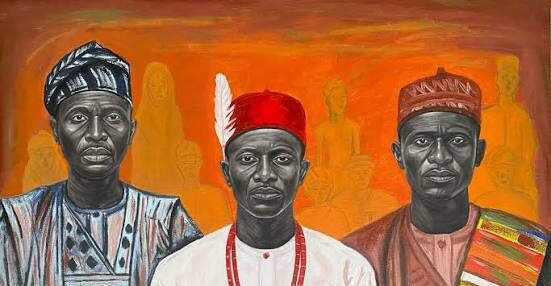
In a diverse nation like Nigeria, home to over 250 ethnic groups and balanced delicately between Christianity and Islam, this tactic is not just irresponsible; it is combustible. The nation’s history demonstrates that when leaders exploit identity, the resulting fractures run deep into the fabric of the state, threatening to tear it apart entirely.
The most immediate casualty of identity-based politics is issue-driven governance. When political campaigns are successfully reduced to a battle of “us versus them,” critical debates over economic revival, healthcare infrastructure, public education, and energy access vanish. Voters are manipulated into casting ballots based on a candidate’s birthplace, ethnic heritage, or faith, rather than their competence, integrity, or policy roadmap.
This creates a dangerous accountability vacuum. A politician who secures power purely by exploiting regional or religious sentiment feels little pressure to deliver tangible developmental results; they need only convince their base that the “other side” poses an existential threat. In Nigeria, this dynamic has historically entrenched systemic underdevelopment. Elections frequently pivot on regional balancing acts, such as northern versus southern candidacies or ethnic zoning, rather than rigorous scrutinies of candidate performance. As a result, critical issues like soaring inflation, food insecurity, and crumbling infrastructure remain unaddressed, hidden behind the smokescreen of identity politics.
Furthermore, identity politics introduces a toxic, zero-sum mentality into the democratic process. In a healthy democracy, political opponents are viewed as citizens with differing viewpoints, making compromise, cross-party consensus, and coalition-building possible. However, when politics is framed as a struggle for ethnic or religious survival, compromise is rebranded as treason. Every policy debate becomes a battleground for group dominance, and every election carries the weight of an existential crisis.
This deep polarization erodes the fundamental trust citizens must have in their neighbors and public institutions. When appointments to public office, judicial benches, or economic boards are viewed through the lens of tribal patronage, often referred to in Nigerian political discourse as “our turn” which in Yoruba language means “Awalokan”, in Hausa “Lokacinmu ne” and “Oge anyị ruru” in Igbo, and exploited for nepotism, the legitimacy of the state crumbles. Citizens cease to view public institutions as impartial arbiters of justice and come to see them as instruments of hegemony controlled by whichever ethnic or religious faction currently holds power.
Most alarmingly, the forces of ethnic and religious tribalism are notoriously easy to unleash but nearly impossible to tame. Politicians who stoke these fires for electoral gain often find themselves outpaced by the radicalized elements they helped create. History is littered with tragic examples of nations that allowed identity politics to fester, only to watch localized grievances rapidly escalate into widespread civil unrest, sectarian violence, and state collapse.
Nigeria’s own trajectory provides a stark warning. The tragic descent into the Nigerian Civil War (1967–1970) was paved by ethnic tensions, regional distrust, and incendiary rhetoric that cost over a million lives. Decades later, the residual scars of religious polarization continue to manifest in deadly sectarian conflicts in the Middle Belt, recurring ethno-religious clashes, and the persistent threat of extremist ideologies. When political actors exploit religious divisions for electoral leverage, they inadvertently validate the extremist narratives that undermine national security.
Beyond human tragedy, the economic consequences are severe. Sectoral violence and political instability destroy local economies, disrupt agriculture, and deter foreign direct investment. Investors seek predictable, stable environments governed by the rule of law; they flee states where ethnic or religious conflict threatens supply chains and property rights.
Truly put, sustainable leadership requires a completely different vision. If a heterogeneous nation is to prosper, its political class must pivot toward pluralism, civic nationalism, and issue-based platforms. Political parties must be structured to demand cross-regional and cross-cultural coalitions to achieve power, forcing candidates to speak directly to the shared aspirations of all citizens.
Campaigns must center on universal challenges, such as taming double-digit inflation, modernizing national infrastructure, improving power generation, creating youth employment, and ensuring equal justice under the law. These issues affect every citizen equally, regardless of how they worship or what native language they speak. A power outage does not discriminate between north and south, nor does rising food inflation affect one religious group while sparing another.
Using ethnicity and religion as political weapons is akin to burning down the house just to keep warm for a single night. It is a reckless gamble that compromises a nation’s future for immediate personal gain. For democracy to deliver on its promise of stability and progress, both leaders and citizens must reject the divisive politics of identity and demand a political landscape built on competence, mutual respect, and a unified national vision.


