

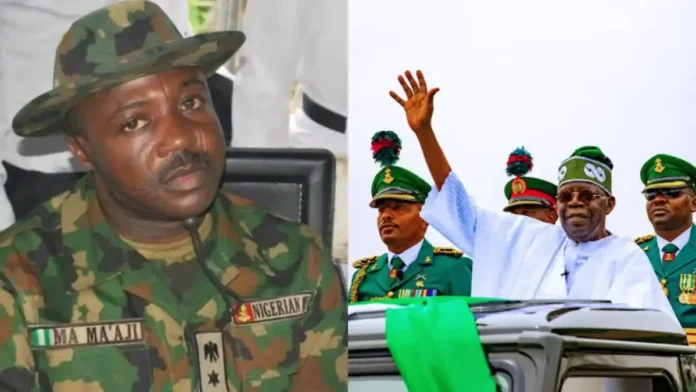
A Nigerian Army Colonel, Mohammed Ma’aji, has revealed that worsening insecurity, corruption and economic hardship were among the major reasons behind his alleged plan to overthrow President Bola Tinubu’s administration.
According to reports, Ma’aji said discussions about a possible military intervention began in 2023, towards the end of former President Muhammadu Buhari’s administration.
He said the deteriorating situation in the country, particularly what he described as increasing corruption and nepotism, prompted concerns among some military officers.
“Things particularly got out of control towards the end of Buhari’s administration when corruption and nepotism became the order of the day,” he stated.
Ma’aji said senior military authorities should have taken stronger action in response to the worsening security situation, adding that the group subsequently began identifying officers who shared their concerns.
“Most of the officers involved share the same sense of patriotism, love of country and genuine desire for positive change,” he wrote.
READ ALSO: PHOTOS: Shettima Begins Two-Week Leave, Dedicates Time to Reading, Reflection
According to him, the alleged plan was initially suspended because of inadequate funding, logistics and manpower. He claimed that he personally financed much of the early stages of the project.
He further alleged that one Army major contributed N1 million, while another officer provided dollar contributions on several occasions.
Ma’aji said the alleged plot was later revived after he was unsuccessful for a second time in securing promotion to the rank of Brigadier General in 2024.
However, he stressed that his failure to secure the promotion was not the primary reason for the alleged movement.
He cited dissatisfaction with the removal of fuel subsidy, exchange-rate reforms, taxation, electricity tariffs, corruption and insecurity as some of the issues that fuelled the grievances.
The Army Colonel also referenced the government’s handling of protests, including the #EndSARS and #EndBadGovernance demonstrations, claiming that unemployment and worsening economic hardship had left many young Nigerians frustrated.


