

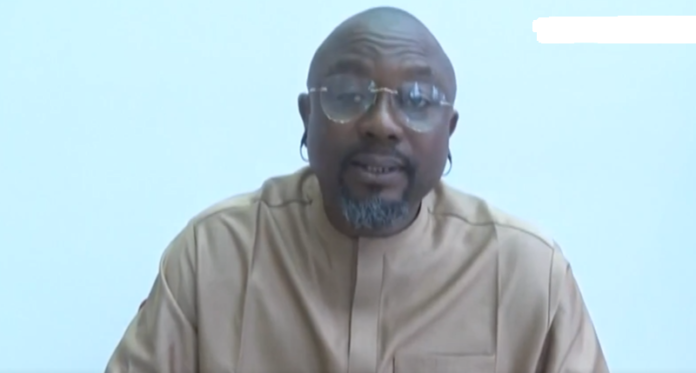
Oil and gas expert, Joe Uwakwue, has said Nigeria should not reverse the fuel subsidy reform introduced by the administration of President Bola Tinubu, describing the removal of the old subsidy regime as necessary.
Uwakwue, however, said the government could consider targeted subsidies to support manufacturers if rising energy costs threatened industrial production.
He stated this during an interview on ARISE NEWS, monitored by The News Chronicle, on Nigeria’s subsidy policy and its impact on the economy.
According to him, subsidies are not inherently bad but must be properly designed and implemented to achieve specific objectives.
“We cannot reverse, that would not be my position. Subsidies are necessary for sectors that are challenged to bring them back to optimal performance,” he said.

Uwakwue said the subsidy regime removed by the Tinubu administration had been introduced in the 1970s and had remained in place despite significant changes in the economy.
He described the failure to remove the scheme earlier as “almost irresponsible,” insisting that Nigeria should not return to the pre-2023 arrangement.
However, he noted that energy costs remained critical to Nigeria’s industrial competitiveness and trade policy, particularly because manufacturers relied heavily on diesel for power generation.
READ ALSO: INEC Announces Date for Udu Constituency By-Election in Delta
He said the government might need to intervene if diesel prices reached levels that made production uneconomical.
Uwakwue advocated a “smart subsidy scheme” targeted specifically at manufacturers rather than a return to the previous system, which he described as poorly designed, poorly implemented and corrupt.
“If diesel prices go to N3,000 per litre today, are we suggesting, for instance, that manufacturing will cope?” he asked.
He said any intervention should minimise the impact of extreme energy costs on manufacturers and consumers while remaining within the provisions of the Petroleum Industry Act.
“Subsidies cannot be open-ended. They have to be properly designed and implemented,” Uwakwue said.


