

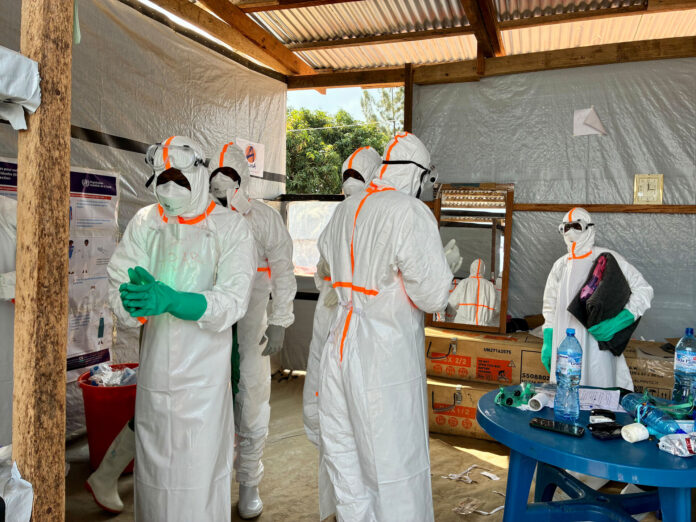
World Health Organization has decided against a wide use of the experimental Ebola vaccine Ervebo in the Democratic Republic of Congo due to the lack of evidence that it protects people against the Bundibugyo strain.
The decision of the WHO was made after their Strategic Adisory Group of Experts on Immunization had evaluated the evidence on the vaccine’s potential use in the outbreak of the disease.
The News Chronicle reports that the Bundibugyo outbreak has already infected more than 6,000 people and killed 2,911 people, making it the deadliest outbreak of Ebola in the country.
While animal studies suggested that the Ervebo vaccine may offer some protection, the WHO maintained that human evidence was insufficient to determine if it could prevent infection, severe disease or death caused by the strain.
Erveto, developed and licensed to protect against the Zaire Ebola virus, not the Bundibugyo virus, was said to be genetically and antigenically distinct.
The WHO therefore recommended that Ervebo should only be used against Bundibugyo Ebola as an investigational intervention, in a research protocol. The organization proposed that a ring randomized controlled trial would generate the best evidence on the effectiveness of Ervebo.
Meanwhile, efforts are being made to develop a new vaccine targeting Bundibugyo Ebola, with CEPI committing up to $8.5 million towards the acceleration of production of a vaccine candidate.
The outbreak of Bundibugyo has also seen increased international support, with global agencies offering funding for treatment, preparation and containment of the disease.


