

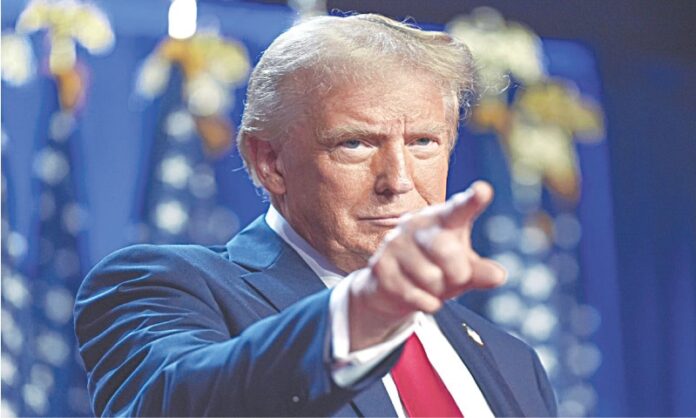
The United States government has expanded its travel restrictions, increasing the number of affected countries from 19 to 39, under a new order announced by the White House on Tuesday.
The policy, signed by President Donald Trump, is scheduled to take effect on 1 January 2026.
Under the order, citizens of five additional countries Burkina Faso, Mali, Niger, South Sudan, and Syria are now subject to a full ban on entry into the United States. The administration also moved Laos and Sierra Leone from partial to full restrictions. In addition, the U.S. imposed partial travel restrictions on 15 countries, including Nigeria, Tanzania, and Zimbabwe.
The announcement was published on the White House website and described as part of the administration’s broader effort to tighten immigration controls during President Trump’s second term.
Nigeria was placed under partial restrictions, meaning some categories of visas remain available, but others are limited or suspended.
According to U.S. officials, Nigeria was included due to concerns over:
High visa overstay rates
Unreliable or fraudulent civil and identity documents
Widespread corruption affecting record systems
Difficulties in verifying criminal histories
Insufficient cooperation in accepting deported nationals
“These issues make it difficult to properly screen and vet applicants,” the White House said in its statement.
Nigeria was among 36 countries identified in a State Department memo issued in June, which gave governments 60 days to meet new benchmarks or face restrictions. U.S. officials later concluded that Nigeria had not met the required standards.
In the announcement, President Trump said the restrictions were necessary to protect U.S. security.
“It is the policy of the United States to protect its citizens from foreign nationals who intend to commit terrorist attacks, threaten our national security and public safety, incite hate crimes, or otherwise exploit the immigration laws for malevolent purposes,” the statement said.
Officials also cited a recent incident in Washington, DC, where an Afghan immigrant allegedly shot and killed two National Guard troops, as a factor reinforcing the administration’s security concerns. Following that incident, the U.S. paused immigration processing from 19 countries and suspended most immigration-related requests from Afghan nationals.
Under the expanded order:
20 countries now face full entry bans
19 countries, including Nigeria, face partial restrictions
Individuals traveling on Palestinian Authority–issued or endorsed documents are subject to a full suspension of entry
Of the 20 countries newly affected, 16 are in Africa. All 39 countries on the list are majority non-White, and nearly half are Muslim-majority nations. With only three exceptions, all are classified by the World Bank as low- or middle-income economies.
The restrictions do not apply to:
Lawful permanent residents of the U.S.
Many existing visa holders
Diplomats
Athletes and officials traveling for major international sporting events
The administration said case-by-case waivers would be available where travel is deemed to be in the national interest.
Reactions and implications
While formal responses from Nigeria and other affected governments have not yet been announced, human rights organizations and immigration advocates have criticized the policy, arguing that it unfairly targets poorer nations and ordinary travelers rather than addressing systemic issues through cooperation.
For Nigeria, the partial ban is expected to:
Increase visa scrutiny and processing delays
Reduce access to U.S. educational and employment opportunities
Place diplomatic pressure on the government to improve identity management, data sharing, and deportation cooperation
The White House said the restrictions would remain in place until affected countries demonstrate “credible improvements” in screening systems and cooperation with U.S. immigration authorities.
This is the third major travel ban imposed by President Trump. A similar policy introduced during his first term in 2017 sparked protests and legal challenges but was ultimately upheld by the U.S. Supreme Court.


