

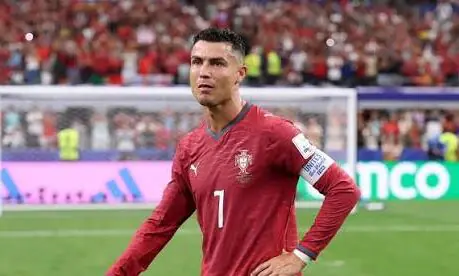
For twenty years, football defined itself through a single, relentless mirror: Lionel Messi on one side, Cristiano Ronaldo on the other. They pushed each other to rewrite scoring records, stretch physical limits and challenge every expectation of what a human being could carry for club and country. It only seemed natural that when the curtain finally came down on their international lives, the game would find a way to give both men the same dignified send-off.
But the autumn of 2026 offered two endings so starkly different that they became a commentary on how football institutions treat their greatest servants.
On October 6, Lionel Messi walked into Buenos Aires for his final appearance in Argentina’s colours. More than 85,000 supporters filled the Monumental Stadium. There were tears, applause, fireworks and a celebration befitting a man whose 21-year international career had delivered 208 appearances, 126 goals, two Copa América titles and the 2022 World Cup. He even scored and provided two assists in Argentina’s 3–0 victory over Benin. Argentina did not merely allow Messi to leave; it gave him the opportunity to feel what his service had meant to the country.
Cristiano Ronaldo’s ending was painfully different.
After 23 years representing Portugal, the 41-year-old announced his international retirement on November 5. He left with 234 appearances and 146 goals, world records for men’s international football, having captained his country to its first European Championship in 2016 and helped secure Nations League titles in 2019 and 2025. Yet the final chapter was overshadowed by a confrontation with Portugal’s manager, Jorge Jesus, which began with a disagreement over his role in the team and ended with Ronaldo leaving the national camp in September.
There was an almost biblical irony in the confrontation.For two decades, Portugal’s supporters had treated Ronaldo as their footballing god, only for a man named Jesus to challenge his place on the throne.
The joke is irresistible, but the consequences were serious. Ronaldo was not selected to start against Norway, became unhappy with how the situation was handled and left camp before the subsequent Denmark fixture. He later acknowledged that walking away was not the right way to handle the disagreement and apologised to his teammates. The Portuguese Football Federation subsequently imposed a suspension and fine.
That admission matters. Ronaldo was captain, and the armband carries responsibilities that do not disappear simply because its wearer is a global superstar. No player, however accomplished, is above the authority of a national team coach. Jesus had every right to make selection decisions, manage the squad and prepare for a future that would eventually exist without Ronaldo.
But the right to make those decisions does not remove the responsibility to handle a departing legend with dignity. There is a difference between managing a player’s decline and managing his legacy. Portugal had every right to begin planning for life after Ronaldo. It did not have to allow that transition to become a public rupture.
And there is another part of Ronaldo’s contribution that deserves far greater attention, his value to Portugal extended well beyond goals, trophies and the emotional pull of the number seven shirt.
Ronaldo became one of the country’s most powerful international commercial assets. His global following brought extraordinary visibility to the national team, strengthened the appeal of sponsorships and merchandising, and made Portugal’s matches attractive to audiences far beyond its borders. This was not simply a matter of selling shirts bearing his name. It was about the commercial attention his presence brought to the Portuguese football brand.
The director of Portugal’s Institute of Marketing Administration, Daniel Sá, described Ronaldo as a major financial source for the Portuguese Football Federation and said his departure presented a significant commercial challenge. The precise amount attributable to Ronaldo is not publicly known, because sponsorship, broadcasting and merchandising revenues are not separately accounted for in a way that establishes his individual contribution. But the commercial value of his presence was substantial enough to make the question of a post-Ronaldo identity a serious concern for the federation.
It would therefore be inaccurate to say Ronaldo personally sponsored Portugal’s national team or paid its running costs. That is not the argument. The point is that he helped make the national team a more valuable global proposition. His name attracted attention, his presence gave sponsors and broadcasters another reason to invest, and his fame carried Portugal’s football identity into places where the country might otherwise have struggled to command the same attention.
A country that benefits from a man’s extraordinary value should understand that its obligation to him is not exhausted by the final whistle.
This is why the comparison with Messi matters. It is not an argument over who was the greater footballer. That debate can continue in bars, living rooms and stadiums for another generation. It is a lesson in institutional memory and the delicate, often unforgiving tension between a federation’s right to evolve and its obligation to honour the pioneer who helped build the house everyone else now occupies.
Ronaldo was not asking to own Portugal’s future. He was asking, at least in the circumstances that led to his departure, not to have his past treated as an inconvenience.
The number seven was never just a number on his back. It became CR7, a sporting identity recognised across continents. It represented the young Madeira boy who arrived in the national team in 2003, the relentless competitor who endured criticism, the captain who lifted Portugal’s first major international trophy and the record-breaker who kept returning to serve his country long after most players would have walked away.
His international career was not without disappointment, controversy or difficult moments. But it would be an extraordinary failure of perspective to allow one disagreement with a coach to overshadow 23 years of service.
Then came November 14. Portugal faced Denmark in Braga in its first match since Ronaldo announced his retirement. The players wore shirts bearing his name and number seven, while supporters displayed tributes to their former captain. Yet Denmark won 4–1, turning an evening intended to celebrate Ronaldo into a sobering beginning to Portugal’s next chapter.
The defeat does not prove that Portugal cannot survive without him. No serious argument should suggest that one player, however magnificent, is indispensable to a national team. But the timing gave the evening an uncomfortable symbolism. Supporters leaving Braga could almost be forgiven for wondering if the footballing gods or perhaps the god of Ronaldo himself had quietly turned their backs on the squad in protest.
The Portuguese Football Federation has since expressed gratitude and promised a tribute worthy of his career. That is welcome, and Ronaldo deserves it. But a later ceremony cannot entirely erase the manner in which the relationship reached its breaking point.
There is a lesson here for every football federation. Great players eventually age. Their pace slows, their places become contestable and younger talents demand opportunities. That is the natural order of sport. But succession should not require humiliation, and authority should never be confused with the freedom to disregard history.
One was allowed to set his crown down gently while the world applauded. The other found himself in a public confrontation before the final chapter of his international career had even been properly written.
The difference between Messi’s farewell and Ronaldo’s departure is not that Argentina understood gratitude while Portugal understood only discipline. Portugal’s tribute demonstrated that its federation recognises the magnitude of Ronaldo’s contribution. The difference is that Argentina managed to give its captain a moment of collective closure, while Portugal’s final chapter became entangled in a disagreement that could have been handled with greater care.
Both men gave everything they had to the flags on their chests. One was allowed to set his crown down gently while the world applauded.
The other, after spending more than half his life carrying and defining his nation’s footballing identity, watched the next generation prepare to inherit his throne before his own chapter had received the farewell it deserved.
Ronaldo was not entitled to dictate Portugal’s team selection. He was entitled to have his extraordinary service remembered with respect. Those two things are not contradictory.
Football belongs to the future, but it must never become so obsessed with the next generation that it forgets the people who built its past. Messi received a farewell that reflected the affection of a grateful nation. Ronaldo deserved the same recognition, not because he was beyond criticism, but because 23 years, 234 appearances, 146 goals and two decades of carrying his country’s colours deserved better than a departure defined by conflict.
A nation does not have to keep a legend on the pitch forever. But it should know how to honour him when it is time to let him go.
Stephanie Shaakaa shaakaastephanie@yahoo.com
08034861434


