

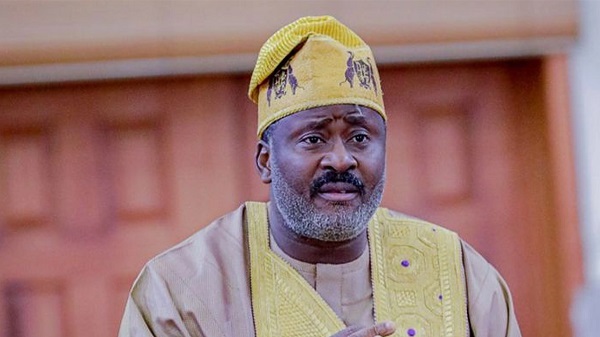
Politics in Lagos has never pretended to be a free market of ideas. It is a carefully managed ecosystem where loyalty, hierarchy and elite consensus often matter more than popularity. That is why the unfolding drama between Desmond Elliot and the political establishment in Surulere is attracting attention far beyond the constituency.
At the centre of the storm is a simple but important question: can a politician backed by grassroots support survive when the party structure has already chosen someone else?
For three consecutive terms, Desmond Elliot has represented Surulere Constituency 1 in the Lagos State House of Assembly. Since his emergence in 2015, he has largely been seen as a protégé of Femi Gbajabiamila, the Chief of Staff to President Bola Tinubu and arguably the most influential political figure in Surulere.
But politics changes quickly. Alliances shift. Loyalty is tested. And in Lagos APC politics, perception can become reality overnight.
Today, Elliot finds himself in open confrontation with the same establishment that helped him rise politically. Party leaders in Surulere, led by Gbajabiamila, have endorsed another aspirant, Barakat Odunuga Bakare, and asked Elliot to step down. Instead of yielding, the actor-turned-politician has chosen to fight on by contesting in the direct primaries scheduled for May 20.
What makes the situation more dramatic is the public fallout between Elliot and Gbajabiamila over the Lagos Assembly leadership crisis involving the Speaker, Mudashiru Obasa.
Gbajabiamila’s remarks at a stakeholders’ meeting were unusually blunt. According to him, President Tinubu personally confronted him during the Obasa saga over reports that Elliot twas part of the group that plotted the coup that culminated in Obasa’s removal. Gbajabiamila said he initially defended Elliot before later discovering that the lawmaker was allegedly involved in the political manoeuvring.
Whether Elliot actually played a central role in the crisis may no longer matter politically. In systems driven by trust and patronage, suspicion alone can damage relationships permanently. The real issue now appears to be loyalty, which is a central theme in the politics espoused by the Tinubu-led APC camp. In Lagos APC, it is 100 percent loyalty to the directives of the establishment and not the electorate.
And this is where the ghost of Akinwunmi Ambode enters the conversation.
What is happening to Desmond Elliot today bears striking resemblance to what happened to Ambode in 2019. Despite widespread public support and visible infrastructural achievements, Ambode was denied a second term ticket by the APC establishment in Lagos, especially the party elders in the Governance Advisory Council (GAC) where Tinubu calls the shot. The former governor attempted some resistance but eventually bowed to party supremacy after it became obvious that the structure had moved against him. The preferred choice of the GAC, Babajide Sanwo-Olu is the incumbent governor today.
That episode exposed the limits of popularity in Lagos politics. The message was clear: no matter how admired a politician may be by sections of the public, surviving without the backing of the power structure is extremely difficult. It may even send a supposedly ‘star boy’ into political oblivion.
However, Elliot’s current position also comes with a layer of irony that cannot be ignored. The same political system he is now criticising is the very system that sustained his rise for years. Elliot was not an outsider fighting against imposition in 2015, 2019 or 2023. He was one of its beneficiaries.
As someone who once lived on Anjorin Street in Surulere during the 2023 elections, I witnessed first-hand the intensity of that contest. On the streets and among many young voters, Adebayo Bode of the Labour Party appeared to enjoy more organic popularity. The Obidient movement was at its peak. There was palpable anger against the APC across many parts of Lagos. Some youths even campaigned on social media against Elliot and promised to pay him back for referring to #EndSARS protesters as ‘children’. Yet, when the dust settled, Desmond Elliot was returned for a third term.
To many residents, that outcome reinforced the long-held belief that Lagos politics is less about momentum on the streets and more about the strength of the establishment machinery behind a candidate.
That is why Elliot’s current rebellion feels politically symbolic. A man who once benefited from the structure is now discovering what happens when the structure no longer wants him.
And perhaps that is what makes this battle fascinating.
Unlike Ambode, Elliot is not being accused of non-performance. In fact, many constituents who once dismissed him as merely a celebrity politician now point to his constituency projects, empowerment schemes, support for widows, assistance to elderly residents and job opportunities facilitated for young people.
The problem, therefore, may not necessarily be performance but power.
In highly centralised political systems like Lagos APC, loyalty during moments of internal crisis matters immensely. The Obasa impeachment saga appears to have altered how sections of the establishment perceive Elliot. Once trust breaks down within such systems, political survival becomes difficult regardless of achievements.
Still, there remains a democratic concern that should worry every political observer.
If direct primaries are truly designed to test popularity, then aspirants should be allowed to compete freely without coercion, intimidation or institutional pressure. Otherwise, the process risks becoming political theatre intended merely to ratify decisions already taken by party leaders. However, that seems impossible in a system largely dominated by political thuggery, electoral manipulation, and power abuse by the ruling class.
At the same time, Elliot himself must be careful not to present himself as a martyr of a system he once embraced comfortably.
For years, opposition candidates and their supporters complained about imposition and establishment interference in Lagos politics. Many APC beneficiaries dismissed those complaints. It is only now, after finding himself on the receiving end, that Elliot appears to be speaking passionately about internal democracy and fairness.
Politics can be brutally ironic.
The larger question now is whether Elliot can actually do what Ambode could not: successfully resist the political establishment in Lagos.
Can a state lawmaker defy not just local party leaders but also the influence of the sitting president and his Chief of Staff and still survive politically within the APC?
Even more interesting is what happens if he loses the APC primary.
Will he accept defeat quietly and toe the party line like Ambode eventually did? Or will he seek another political platform to truly test his popularity at the polls?
That decision may ultimately determine whether this is merely a temporary disagreement within the APC or the beginning of a larger political realignment in Surulere.
Because if Elliot genuinely believes the people are with him, then leaving the comfort of the APC structure to face the electorate independently would be the ultimate political test.
But that route comes with enormous risks. Even now, the APC is already whipping Elliot’s loyalists into line. In a video, his campaign DG, one Blessing Koye said he is withdrawing support from Elliot and he is now backing the aspirant endorsed by Gbajabiamila. The embattled lawmaker even said his security aides have been withdrawn and his supporters working in Lagos councils and other agencies are being sacked and intimidated.
Will there be a free, fair and credible primary on Wednesday? Given what is happening now, can Elliot’s supporters come out boldly on Wednesday and queue to vote for him? Can Elliot actually win if he contests on another platform? Outside the APC structure, he would lose the institutional machinery that helped sustain his political career for over a decade. He would also discover whether his popularity is personal or largely tied to the party brand and establishment backing he once enjoyed.
For now, Surulere waits. And so does Lagos political history. Because the outcome of this battle will reveal whether grassroots popularity can truly overcome elite political resistance in modern Lagos politics — or whether, as has often been the case, the structure will once again prove stronger than the individual.
Akinsuyi, former group politics editor of the Daily Independent, writes from Abuja. He can be reached at shabydayo@gmail.com


