

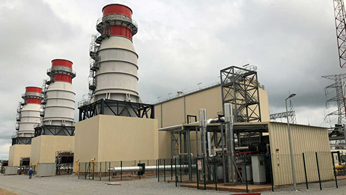
If the National Assembly and the Federal Government disregard the integrity of contracts, particularly the $1 billion investment by the Azura Edo Power plant, the Nigerian power sector could suffer in investment deficits and poor performance, energy experts warned yesterday.
The stakeholders asked the government to take the necessary action and upgrade the transmission and distribution network to enable the wheeling of electricity produced by power plants rather than scaring away investors from the country at a time when the $2 billion Siemens power project was still the subject of a game of wits.
The stakeholders charged the MPs with using the electricity industry as a political football, harming the economy, even as they battled to ease the difficult operating climate and entice international investment.
The House of Representatives Committee on Finance argued that the Nigeria Bulk Electricity Trading Company (NBET) had forced the nation into Power Purchase Agreements that were against its best interests, even though this isn’t the first time that lawmakers have brought up the Azura issue.
The Azura plants were constructed as the largest private sector investment in power generating in Nigeria with a current output of 461 megawatts, in contrast to the majority of power generation facilities in Nigeria, which are brownfields. Azura contributes more than 10% of the daily electricity generated on the grid, making it a crucial asset in the power sector.
The Federal Government and the company had a contract in place that required them to wheel all of the company’s generated energy out of the country, or else bear the risk associated with it. However, the imbalance in the nation’s transmission capacity has remained a major obstacle to the agreement, making the government the loser whenever it is unable to do so. Occasionally, the loss under the Put Call Option Agreement exceeds
Industry experts who spoke with The Guardian stressed that the National Assembly needs better understanding of the contract and how government should take responsibility for not providing needed wheeling capacity as envisaged. They noted that the bleak investment outlook in the power sector could worsen if government tampers with the pact it sealed with the investors.
Dr. Joy Ogaji, an energy specialist, emphasized that the implications of a negative reputation for not honoring contracts constitute a severe threat to the Nigerian economy, particularly at a time when the nation is already dealing with declining investment and an unfavorable operating climate.
Ogaji said: “The world has become one global market whereby trade and finance are done across borders, the effect of which is that there are direct linkages between markets. Once the market develops a bad reputation for not honouring obligations in contracts, that in itself could lead to immeasurable loss to the economy.
“As a result of the lack of sanctity of contract, most investors are burdened by the following questions when it comes to investing in the NESI: If an investor and the Government enters a contract or makes a commitment in writing, would it be respected? Can an investor enforce the terms in case of default? Would an investor have a remedy? And even where there is a remedy, would the Government honour the remedial measures?”
Ogaji added that the necessity for the government to uphold its own obligations under the contract remained a critical problem, raising the question of whether the previous administration’s pledges would be honored by the future administration in the event of a change in government.
Bode Fadipe, a participant in the sector, stated in his contribution that the sanctity of contract continues to be an essential safety valve for economic growth and development in any economy.
“If individuals, corporate bodies and nations do not respect agreements, it will be impossible to deal with them. Respect for contracts or the sanctity of contracts has grave implications for every part of a nation’s socio-economic and political wellbeing,” he stated.
Kunle Olubiyo, President of the Nigeria Consumer Protection Network and Member of the National Technical Investigative Panel on Power System Collapses, System Stability, and Reliability, stated that the current situation demonstrates the National Assembly’s lack of in-depth technical knowledge regarding the requirements of the energy economy, investment climates, and rules of international best practices.
According to Olubiyo, “In 2013, Nigerian Government practically went hand-in-cap to beg foreign investors to invest in the privatization exercise in the upstream and downstream sub-sector of the energy sector value chain.”
The concern of most investors is what is currently in play, he continued, adding that it’s possible that the NASS was misguided, ignorant, or sensational in its pursuit.


