

I am always fascinated by my educational trajectory, and the curiosity it instilled in me to keep digging into the basis of my disciplines (political science, public administration, public policy, etc.) and how they enable me to keep making sense of my contemporary realities. Readers are by now mostly familiar with my narration of the educational trajectory that I hoped would have taken me through philosophy as a discipline but which did not come to pass because Providence had a different course of action and study for me—political science. Which raises a crucial query as to whether it makes any pedagogical sense to differentiate philosophy from political science. To recapitulate: when I began my undergraduate studies in political science, I had not abandoned my abiding love for philosophy. The course system at the University of Ibadan allowed me to take critical electives from the Department of Philosophy in the Faculty of Arts. However, this system did not allow me to dive deep enough to take the full pedagogical benefits of what philosophy entails.
However, my first immersion in the Republic, that defining masterpiece of Plato, left an indelible memory on my mind that keeps feeding my institutional reform imagination, especially in terms of the urgent imperative of transforming the Nigerian institutional framework to make democratic governance work better for Nigerians. My line of inquiry in this piece serves two objectives. The first is to keep pushing the boundaries of the relevance of political science that resists all the sloganeering of the neoliberal capitalist worldview and its support for the STEM as the preeminent development enabling educational curriculum, without necessarily denying the seeming validity of the logic of that claim. Or the variant of the claim that adequately confronts our current yardsticks for employability. The second objective derives from a mentoring imperative that I think I owe younger and upcoming generations of political scientists and students. I believe I have made a solid personal and professional capital out of my being a political scientist. My continuing investment in my political science scholarship and professional calling holds a framework that could fuel the passion of those who wish to follow in my career footsteps. And this mentoring comes with the full implication of my awareness of some of the disciplinary pitfalls and shortcomings of political science, and what must be done to bolster its image as a discipline that has a lot to offer Nigeria’s nation-building and developmental efforts.
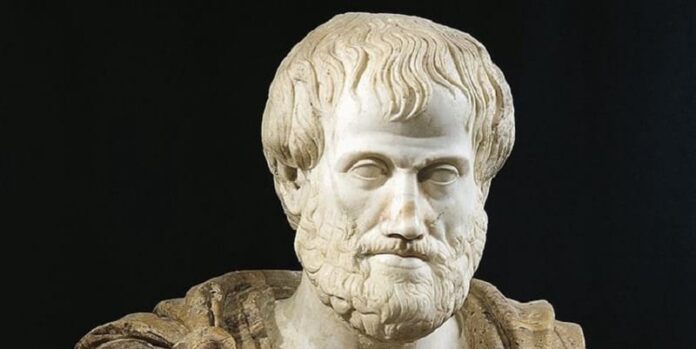
This piece was fueled by a seemingly academic curiosity: Why is Aristotle considered the first political scientist? However, this is more than an academic reflection for me. It is the basis of another deeper and more professional reflection—if I had been successful, against my parents’ wish, in studying philosophy rather than political science, what would have been my learning curve and professional trajectory as distinct from what political science had gifted me? This question turns full circle on what I considered my deference to a philosophical imagination that I derived from Plato. The Republic offered me a solid philosophical template that grounds my abiding aspiration, as an institutional reformer, to generate a blueprint for activating Nigeria’s sociopolitical reconstruction. What would have been the theoretical contour of my research, or my professional pathway as a bureaucrat, if I had stayed with philosophy?
Let me push these queries with the analysis of what makes Aristotle, and not Plato, the father of political science. Plato’s reflection on politics in the Republic is founded on an idealistic and utopian aspiration of what Athens could be. The entire Republic is an exercise in speculative philosophy; and the speculative analysis was founded on how Athens could be made more stable and just in ways that would not permit the kind of judicial process that led to the murder of Socrates. It was up to Aristotle, on the contrary, who switched the methodological dynamic away from idealism to a systematic analysis of political phenomena that stems from empirical observations. Thus, his famous research of analyzing and articulating the practical features of the constitutions of 158 city-states demonstrates a fascination with real-world dynamics of political matters. It also demonstrated the significance of comparative analyses in the understanding of political circumstances and subject matters.
Politics, for Aristotle, is the “master science.” It is the framework by which we measure the stability, harmony and flourishing of any human society. It is the basis for determining who gets what, when and how. Put simply, the dynamics of any society are grounded by the political structures that spell out the founding values and philosophies the society aspires to run by. And Aristotle insists that this master science is inevitable because humans are by nature political animals. We are so wired to live and flourish within the political communities and the parameters that these communities put in place. Political science therefore is concerned with the systematic interrogation of these political communities in order to scientifically determine how the governance frameworks is conditioned to achieve what he calls the “good life.” In methodological terms, therefore, political science got a more realistic, scientific and systematic treatment of politics and political matters from Aristotle. He firmed up the disciplinary boundaries of political science by focusing its attention of the empirical.
But political science, despite all the pioneering transformation of Aristotle, had to wait till the interventions of Niccolo Machiavelli and his radical and realist understanding of politics to begin the hardening of its disciplinary borders. Machiavelli’s starting point, contrary to Plato and Aristotle, is the rejection of political morality, or the requirement that politics must answer to morality, or in Aristotle’s framing, the good life. Indeed, he argues that the search for imaginary republics serves no purpose at all in the attempt to understand the dynamics of politics and the political life. The best methodological way to proceed is to study the way people live politically and how rulers facilitate the continuance of their regimes and safeguard their territories. In other words, Machiavelli articulates the understanding of politics as the management of political power. In his most famous and notorious work, The Prince, Machiavelli captures the very essence of a realist understanding of power in the hand of a ruler who, he insists, must learn to be both feared and loved, and mostly to be feared. The founding of a principality or a republic, according to Machiavelli, is not a matter of morality; many political communities often begin through illegal and immoral means and are often sustained by cruelty and violence. The actuality of politics, for Machiavelli, provides more useful insights for understanding the political community than when trading in how politics in such communities ought to be.
From the 19th century upward, political science firmed up its realist methodology, through the further influence of empiricism and positivism. By this period, it had clearly jettisoned its connection to political philosophy and history. Its disciplinary boundary was already set in favor of a descriptive, scientific and systematic investigation of clearly political subject matters: politics, power, government, policy, institutions, constitutions, political processes, citizenship, political behavior, election, protests, and so on. And yet, I doubt that political science can ever be free of the shadows of Aristotle. Or, more precisely, I do not think political science can ever be the same if there is any attempt to separate Aristotle from Machiavelli in terms of their different articulations of the essence of politics. Aristotle, for me, embodies the significance of a relationship between philosophy (specifically ethics) and politics (or political science). It is this relationship between the actuality of politics and the end of politics that fascinates me, and illustrates my enduring engagements with political and administrative matters in Nigeria’s political development. My initial question is therefore one of: if I had studied philosophy, I would eventually have gravitated to political theory which is almost the same thing. It possesses all the theoretical wherewithal to pursue my desire to making Nigeria better. I wager a hypothesis that it is the formidable nature of political science as a discipline that radically searches for a future that instigated the fear of the colonial administration and the early national elites in Nigeria of initially approving the establishment of political science as a discipline.
Nigeria is truly a political laboratory that would have fascinated and intrigued Aristotle and Machiavelli. The search for national integration and development since 1960 has generated a vast repertoire of illuminating materials and resources on the dynamics of realpolitik. Indeed, this is what informs my critical engagement with and interrogation of Awolowo’s blueprint—from Thoughts on the Nigerian Constitution to The Strategy and Tactics of the People’s Republic of Nigeria—for the reconstruction of Nigeria. In fact, this is what at some point drew me to the intellectual engagement between Awolowo’s political theorizing on the best ideology for the Nigerian state and Billy Dudley’s critique of that theorizing. And the national question in Nigeria implies that one must also genuinely, and outside of ethnic mindlessness, face the implication of what political avatars have in terms of their plans for managing governance in a plural Nigeria. And so, I have investigated the critical circumstances of political figures like Olusegun Obasanjo and Bola Ahmed Tinubu within their balancing of Yoruba and national politics. All these have, of course, been critical to my professional search for an institutional reform philosophy that would put the civil service system in place as an optimal institution for backstopping the emergence of Nigeria as a developmental state.
It stands to reason therefore that my deep sensibility as a political scientist would automatically make me to be concerned with the fate of political science as a discipline in a postcolonial context. In such a context, higher education is rightly set on the path of a search for meaning and relevance. And no discipline can survive if it fails to determine its own relevance either to a large body of students asking what the discipline can offer, or to a postcolonial state grappling with questions of national integration and national development in the midst of acute insecurity. This reflection therefore speaks to the need for a rigorous gatekeeping effort that monitors the practice of political science scholarship or learning. How, for instance, should the discipline in Nigeria attend to the growing hyper-specialization of political science, and the tendency to fragment the critical political knowledge necessarily to engage with the challenges of a struggling postcolonial state. It therefore falls on the National Political Science Association as a generational challenge to convoke a national summit that will focus on the future of the political science scholarship and discipline in Nigeria. A key question the association needs to put in focus is how to make political science scholarship more public-facing and more accessible to the public. I suspect it is the responsibility of political scientists to determine and define the agenda for public discourse and debates on Nigeria and her political challenges.
The political science of the future must be oriented towards connecting with new methodological orientations and research focus that allow new and aspiring political scientists to see clearly how to go about reforming Nigeria while making good on their professional and academic progress.


