

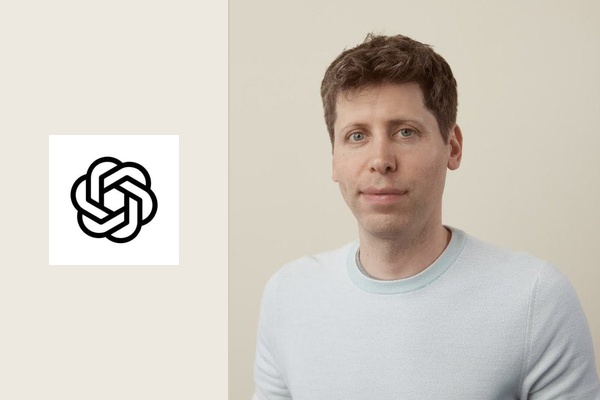
OpenAI chief executive Sam Altman said on September 13 that we could lose control of the future to AI, and so the artificial intelligence industry must “pace the frontier” of AI development.
Altman made the comments in a series of posts on X. He said there are two outcomes the industry must avoid. “First, we could lose control of the future to AI. This is unacceptable; we are unapologetically on Team Humanity, and AI must always serve people,” he wrote. He said the second risk is “too much concentration of power,” warning that an “extraordinarily powerful AI” controlled by one person, company, or country could produce results he described as “extremely dystopian.”

In a follow-up post, Altman said OpenAI would move from older safety tools, such as its Preparedness Framework, toward formal “safety cases” written before large reinforcement-learning training runs that are expected to significantly raise a model’s capabilities. He said OpenAI “welcomes a federal framework that sets consistent safety requirements for frontier AI” but does not believe the industry needs to wait for legislation to begin that work. “Pacing” the frontier, he added, does not mean stopping progress. “Progress has been rapid and will continue to be. But it should be slower than it otherwise could be,” he wrote.
Altman’s posts followed an essay published on September 12, 2026, by Amodei titled “We Must Pace the Frontier.” In it, Amodei proposed three measures: giving independent evaluators permanent, employee-level access within frontier AI labs; developing shared industry safety standards; and pursuing international coordination, including with China, to restrict the most dangerous AI capabilities. Anthropic committed unilaterally to the first measure.
Responding on X on September 12, Altman wrote: “I agree with Dario that we need to pace the frontier. This has been a primary topic of discussions we’ve had at OpenAI in recent weeks.” He committed OpenAI to the same evaluator-access measure, saying, “Committing to having independent evaluators with employee-like access is a great idea, and we will do the same. We’ll have more to share soon.”
Tesla and xAI chief executive Elon Musk responded to Amodei’s essay with a two-word post: “Dario is right.” Google DeepMind chief executive Demis Hassabis said the direction was “on the right track,” though he said implementation details still needed to be worked out, and linked the proposal to DeepMind’s earlier call for an industry standards body.
More than 1,300 employees across frontier AI companies, including senior OpenAI staff, have signed on to a related “Pacing the Frontier” initiative calling for US-led mechanisms to slow AI development when needed, according to CoinMarketCap.
In a separate interview published by Fortune on September 13, 2026, Altman said OpenAI will not pursue an initial public offering in 2026. “I actually think that, given everything happening with safety, right now would be an ill-advised moment to go public, and we don’t feel pressure on that,” he told Fortune. The comment pushes any potential OpenAI listing to 2027 at the earliest. Altman said the company’s priority is to meet safety and alignment demands and to work out how AI companies and governments can cooperate.
READ ALSO: ICT Expert Urges Schools to Introduce Digital Literacy Early
The posts drew a large volume of reaction on X, much of it skeptical. Several users argued that OpenAI, as the company building the technology, has an incentive to appear cautious while continuing to release new models. One post read: “Bro is building the car and warning us that we might lose control of it.” Others questioned whether the statements would be followed by concrete action, with one reply calling the posts “doomposting” and saying there was little to show for repeated warnings.


