

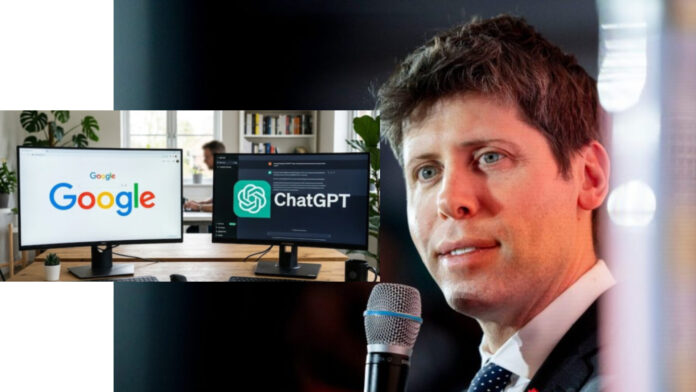
Sam Altman said younger generations are increasingly using OpenAI’s ChatGPT for personal guidance, decision-making, and daily organization, while older users mostly treat it like a search engine.
Speaking at Sequoia Capital’s AI Ascent event in May 2025, Altman said: “Older people use ChatGPT as a Google replacement. Maybe people in their 20s and 30s use it as a life advisor, and then, like people in college use it as an operating system.”
According to him, many college-aged users organize their lives around the chatbot by connecting it to files, saving detailed prompts, and relying on it before making important decisions.
“They don’t really make life decisions without asking ChatGPT what they should do,” Altman said.
He added that younger users benefit from ChatGPT’s memory feature, which stores context from previous conversations. “It has the full context on every person in their life and what they’ve talked about,” he said.
Altman compared the change to the early smartphone era, saying younger users adapt to new technology faster than older generations. “The difference is unbelievable,” he said, adding that the situation reminded him of when “every kid was able to use smartphones easily, while older people took years to adjust.
Reactions online were divided.
Some users agreed with Altman’s observations, saying younger people are becoming more skilled at using AI tools for study, work, and daily tasks. Others said ChatGPT can be useful for advice when used carefully.
One Reddit user wrote that ChatGPT’s advice was “often very helpful,” while another said younger users were becoming familiar with AI systems faster than older adults.
However, many critics expressed concern about people depending too heavily on AI for emotional support or major decisions.
Some commenters warned that treating ChatGPT as a “life advisor” could be dangerous because AI systems can provide inaccurate or overly agreeable responses. One Reddit user wrote: “A ‘life advisor’ who just says ‘yes’ to everything you say is dangerous.”
Others criticized Altman personally and questioned whether AI executives were overstating the technology’s importance. Some users also raised concerns about misinformation, mental health risks, and the environmental impact of large AI systems.
Some studies have warned that ChatGPT should be used cautiously for safety, medical or personal advice because users may overestimate its reliability.


