

Enhancing the lives of Nigerians, decreasing poverty, and boosting foreign direct investment (FDI) inflows are all made possible by the political, policy, and regulatory reforms that the Nigerian Economic Summit Group (NESG) has emphasized are necessary.
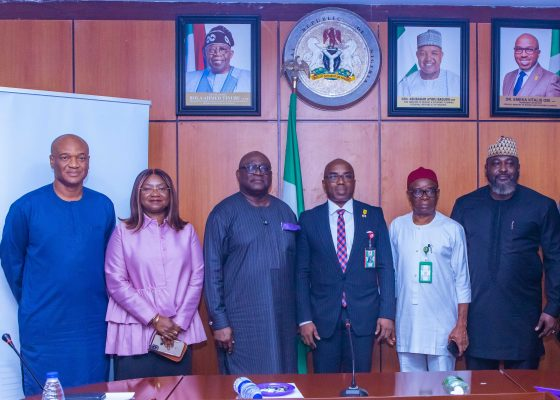
This was said by NESG Chairman Niyi Yusuf on Friday during the NES#30 news conference in Abuja. If the necessary reforms are implemented, he believes Nigeria has the potential to emerge as one of Africa’s major industrializing nations within the next five years.
He pointed out that in order for the nation to attain the needed growth and development, bold and decisive actions must be taken in light of regional instability, global instability, and socioeconomic uncertainty at home.
“This year’s Summit theme, ‘Collaborative Action for Growth, Competitiveness, and Stability,’ highlights the need that we adopt a novel approach to business, inventive governance, and transformative political leadership now more than ever. Only by concerted action by government, business, and civil society will we be able to realise Nigeria’s enormous potential. Despite these problems, our country’s promise is evident.”
“In the next five years, Nigeria has the potential to be Africa’s foremost industrializing nation. We can restructure our political, policy, and regulatory structures, enable local content development, promote subnational economic diversification, and build a globally competitive corporate climate. By doing this, we would enhance the lives of millions of Nigerians, eliminate poverty, and encourage foreign direct investment (FDI) inflows into the continent,” he stated.
The head of the 30th Nigerian Economic Summit (NES#30) Media and Publicity Subcommittee, Ufot Udeme, represented the chairman. He stated that Nigeria is currently facing unprecedented economic challenges and social discontent, highlighting the need for a thorough rethinking and redesign of its systems in order to address underlying structural issues.
He lamented that converting economic growth into better lives and livelihoods for all Nigerians is one of the country’s most urgent issues.
“Our businesses and citizens are under enormous strain from growing costs, inflation, and a faltering economy. We are also dealing with enormous security problems, exacerbated by the destructive consequences of climate change, which has resulted in humanitarian crises that have displaced millions,” he stated.
The Minister of Budget and Economic Planning, Abubakar Atiku Bagudu, stated in his remarks that the government’s 29-year partnership with NESG has become a model for Public-Private Partnerships (PPP) and offers a reputable and well-known platform for top policymakers and corporate leaders to interact and exchange ideas on current socio-economic challenges in order to propose long-lasting solutions for policy action.
He claims that throughout the previous twenty-nine years, the nation’s development aspiration and economic growth strategy have been shaped in large part by the annual economic summits.
He stated, “The theme of the 30th Nigerian Economic Summit, which will be held from October 14-16, 2024, is ‘Collaborative Action for Growth, Competitiveness, and Stability,’ which builds on the conversations from the 29th Summit. In order to realise Nigeria’s enormous potential, the theme was carefully chosen to discuss priorities for addressing the current economic challenges, stabilising the economy, and repositioning Nigeria on the regional and global stage, with a focus on product complexity and competitiveness.”
Additionally, Nigeria’s leadership in promoting institutional development, investment, integration, industry, and innovation across the continent will be highlighted. Five Sub-Themes—Fostering Inclusive Development; Unleashing Business Dynamism; Building a More Secure Society; Igniting Innovation and Digital Evolution; and Promoting Stakeholder Collaboration—will guide the Summit debates.
“People, Leadership, and Institutions are the three main theme pillars around which the Summit is organised. This will serve as the cornerstone of the NES #30 Agenda, guaranteeing that every session tackles the important matters that centre around the Summit Theme. This is congruent with the present administration’s eight priority areas, the National Development Plan 2021-2025, and the Nigeria Agenda 2050.”
The permanent secretary of the Ministry of Budget and Economic Planning, speaking on behalf of the minister, Emeka Vitalis Obi, stated that attaining steady growth was essential to ending poverty in the nation.
He continued by saying that the Tinubu-led administration is making brave and audacious choices that would guarantee macroeconomic stability, advance social inclusion, and boost competitiveness and productivity.
In his view, the government will enact laws and policies that foster a business-friendly atmosphere in order to attain high rates of savings and investment, while the private sector will drive economic growth.


