

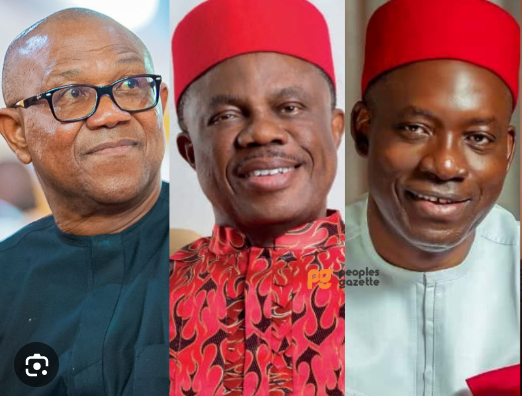
The Centre for Human Rights Advocacy and Wholesome Society (CEHRAWS) has called on the Anambra State Government to publish comprehensive records of loans it claims are still being serviced from the administrations of former governors Peter Obi and Willie Obiano.
The demand follows recent comments by the state’s Commissioner for Finance, Mr. Izuchukwu Okafor, who reportedly said deductions are still being made from Anambra State’s Federation Account Allocation Committee (FAAC) allocations to service loans inherited from previous administrations.
The commissioner also reportedly stated that Governor Chukwuma Soludo’s administration has reduced the state’s debt by more than 83 percent and has not taken any commercial bank loan since assuming office.
In a statement on Tuesday, signed by its Executive Director, Chuka Okoye, CEHRAWS said that while it welcomed efforts to reduce public debt and promote fiscal responsibility, such claims should be backed by verifiable public records rather than political narratives.

The group argued that although Debt Management Office (DMO) records indicate that Anambra had outstanding debt at the end of Peter Obi’s tenure, including domestic debt of about ₦3.026 billion and external debt of 30.324 million US dollars as of December 31, 2013, that alone does not prove that every loan currently being serviced was contracted during his administration.
According to CEHRAWS, the government should publish a facility-by-facility debt schedule identifying each loan, the date it was approved and drawn down, the lending institution, original amount, purpose, legislative approvals, repayment history, outstanding balance, and the administration under which it was contracted.
The organisation maintained that the same level of transparency should apply to loans contracted during the Willie Obiano administration as well as obligations inherited by the Soludo government.
CEHRAWS further stressed that state debt should not be presented as the personal liability of any governor, noting that loans lawfully contracted by a state government remain obligations of the state, regardless of changes in administration.
The group cited constitutional provisions on legislative oversight of public funds, auditing of state accounts, and the Fiscal Responsibility Act 2007, arguing that public borrowing must be lawful, traceable and accountable.
“CEHRAWS is also concerned about the timing of the government’s disclosure, because this issue emerged during the political season ahead of the 2027 presidential election, in which Peter Obi is expected to remain a prominent contender.
“While we are not alleging partisan motives, we think the timing made public accountability questions inevitable, including why the government had not released a comprehensive historical debt register showing what each administration borrowed, inherited, repaid and left outstanding,” the group said.
READ ALSO: Dangote Reveals Who Could Eventually Take Over His Business Empire
The group also pointed to DMO figures showing that Anambra’s domestic debt stood at about ₦28.685 billion as of December 31, 2024, saying this underscored the need to distinguish historical debt figures from specific loan facilities currently being discussed.
It urged the Anambra State Government to publish a consolidated Debt and Borrowing Accountability Statement covering the administrations of Peter Obi, Willie Obiano and Chukwuma Soludo, detailing each loan, its purpose, lender, amount, approvals, disbursement records, repayment status and outstanding balance.
CEHRAWS also called on the Anambra State House of Assembly, the Auditor-General and other oversight institutions to independently scrutinise the records and reconcile government claims with DMO data, audited financial statements, loan agreements, appropriation laws and FAAC deduction records.
The group insisted that its position was not in defence of any political figure but in support of the public’s right to know the financial obligations imposed on the state, declaring that “public debt is public business” and urging the government to “let the documents speak.”


