

The International Monetary Fund released a report on Tuesday, warning that Sub-Saharan Africa may miss most of the economic benefits of artificial intelligence (AI) unless governments urgently improve electricity supply, internet access and digital skills.
The report, titled “Unlocking the Potential: AI in Sub-Saharan Africa,” was prepared by an IMF team led by Martin Schindler and Andrew Tiffin.
According to them, “AI will reshape the global economy. The question for Africa is whether it rides the wave or gets left behind.”
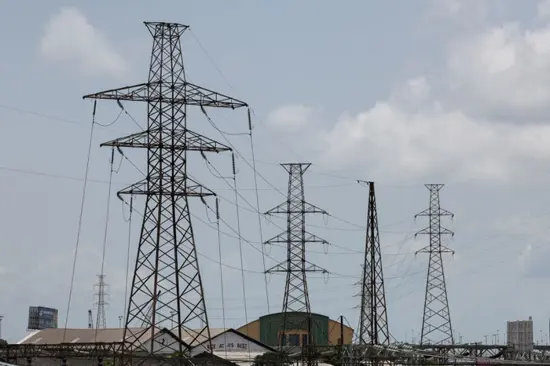
Electricity is the first problem. About half the region’s population lacks dependable power, the IMF found. The Fund recommended investment in national grids and mini-grids that can serve schools, clinics and other public institutions directly.
Internet access is the second. Only 38 percent of Africans used the internet in 2024, against a global average of 68 percent. The report called for expanded fiber-optic networks and open-access broadband to bring costs down.
Computing capacity is the third. Africa hosts about 160 data centers, roughly 5.5 percent of the world’s total, and nearly half of them sit in just three countries: South Africa, Nigeria and Kenya. The IMF warns this concentration could widen the gap between countries as global AI investment accelerates elsewhere.
On the Fund’s AI Preparedness Index, Sub-Saharan Africa ranks last among all regions except South Asia. Kenya and Rwanda lead within East Africa, Kenya through a strong private tech sector and Rwanda through coordinated government policy. Ethiopia sits among the lower performers, in the low-income country group that averages a score of 0.32, though the country has expanded telecom coverage, with 3G reaching 98.7 percent of the population and 4G reaching about 74 percent.
At current levels of readiness, the IMF projects AI will add just 0.2 percent to the region’s GDP over the next decade. Schindler, Spatafora and Tiffin call that figure “little more than a rounding error.”
If governments build the right foundations, the projected gain rises to about 4 percent over ten years, nearly half a percentage point of extra growth every year. They argued that the difference matters because Sub-Saharan Africa will supply roughly half of all new entrants to the global labor force by 2030.
The report argues that AI’s biggest value in Africa will not come from replacing office jobs, but from raising productivity in farming, teaching, healthcare and tax collection, the sectors where most people already work.
In agriculture, AI tools can tell farmers when to plant, how much fertilizer to use and how to spot pests early. Kenya’s Agricultural Observatory Platform already provides real-time weather and crop data to farmers. Trials in Ghana, Nigeria, Rwanda and Uganda show that this kind of advice can raise yields, especially when combined with better seeds and fertilizer.
In classrooms, AI tutors and simple SMS-based tools can support students in places where teachers are scarce. The authors point to pilot chatbot programs in Nigeria that produced measurable learning gains.
In healthcare, AI will not replace doctors and nurses, the report says, but it can help them manage triage, diagnosis and follow-up care in systems that are already overstretched.
In government offices, tax authorities in Kenya and South Africa are already using data analytics to identify compliance gaps and raise revenue.
The IMF compared AI’s potential to mobile money, which spread across Africa by using a technology people already owned, the mobile phone, instead of waiting for banks to build branches everywhere. They suggested AI could deliver a similar leap forward if it stays affordable and trusted at the local level.
Thus, the two priorities for governments are: first, building basic infrastructure, including power, broadband, and digital skills training. The second is building public trust through clear rules on data privacy, competition, cybersecurity and how the public sector itself uses AI.


 unless governments urgently improve electricity supply, internet access and digital skills.)