


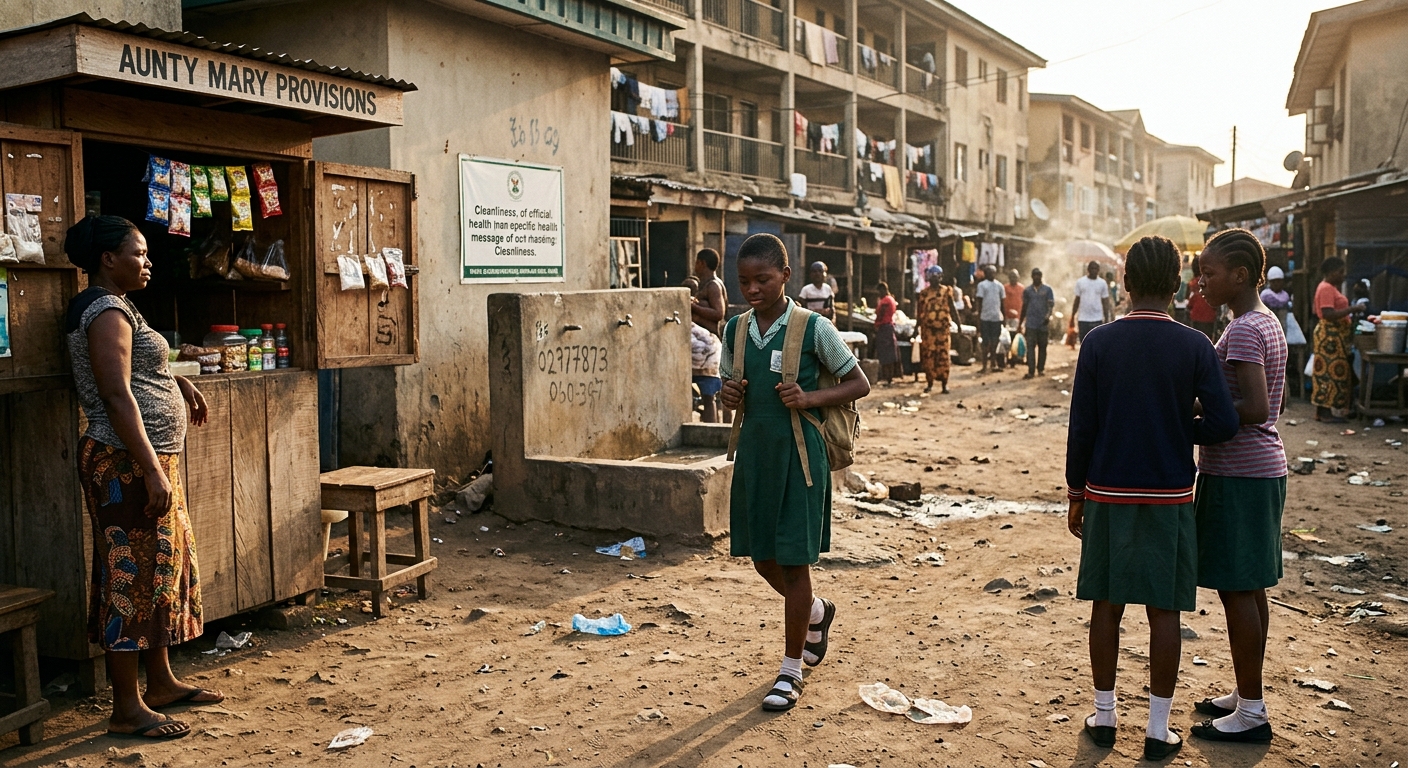
 In many poor homes, a girl’s monthly period brings sadness and resentment instead of a normal growth milestone.
This is because for many young schoolgirls, basic sanitary pads are too expensive, forcing them to use unhygienic old rags.
This lack of pads, clean water, and private toilets takes away their basic comfort and personal dignity.
Behind closed doors, period poverty affects school life, harming health, lowering confidence, and causing frequent missed classes.
Dr Chukwubundom Nwobodo, Obstetrics and Gynaecology Medical Officer at General Hospital, Ebutte-Meta, described period poverty as inadequate access to menstrual products, hygiene facilities, waste disposal and education needed to manage menstruation safely, hygienically and with dignity.He said it arose from poverty, poor infrastructure, including clean water and private toilets, expensive products, taxes on menstrual items and social stigma surrounding menstruation.
According to him, period poverty affects hundreds of millions of girls and women worldwide, particularly those in low-income communities, rural areas and humanitarian settings.
“Period poverty increases physical health risks, including infections, untreated reproductive health issues and discomfort from prolonged use of inadequate menstrual materials.”
He said it affected mental wellbeing through anxiety over leaking or odour, shame, embarrassment and stress from managing menstruation secretly.
“Over time, this can contribute to lowered self-esteem and, in some cases, depression or social withdrawal,” he said.
He said girls’ dignity was affected when they beg, trade or go without products, cannot manage periods privately or face ridicule over leaks and stains.
“These experiences erode a girl’s sense of self-worth and autonomy,” he said.
Nwobodo said girls often missed school during menstruation because of inadequate products, pain or fear of leaks, resulting in significant loss of instructional time.
He said even when present, girls could become distracted, disengaged or reluctant to participate, including avoiding standing at the board because of fear of visible stains.
According to him, repeated absences and reduced concentration contribute to falling grades, while severe cases could result in girls dropping out after menstruation begins.
He said inadequate private, clean toilets with water and disposal bins further compounded the problem, preventing discreet menstrual management during school hours.
Nwobodo said girls without proper menstrual products often resorted to rags, tissue, newspapers, leaves, cotton wool or reused, unwashed cloth.
He said such materials could cause reproductive and urinary tract infections through prolonged contact with unsanitary materials.
He listed vaginal irritation, rashes, sores, fungal infections and risks associated with damp or unclean materials among possible health consequences.
He also warned of toxic shock syndrome if materials were left in place too long or are unsafe for internal use.
According to him, long-term untreated infections could affect fertility and overall reproductive health.
Suggesting solutions, Nwobodo called for Water, Sanitation and Hygiene (WASH) infrastructure, including private toilets, clean water, soap and disposal facilities, particularly in schools.
He advocated menstrual health education for girls and boys, covering anatomy, hygiene and myth-busting, ideally beginning before girls experience their first period.
He recommended trained counsellors or nurses to support girls with pain management and emotional concerns.
Nwobodo urged policy support through removal of taxes on menstrual products, subsidisation or free distribution and inclusion of menstrual health in school health programmes.
He also called for teacher training to enable staff respond supportively rather than reinforce shame, alongside community engagement to change harmful cultural norms.
Nwobodo said menstruation was often treated as shameful or impure, discouraging open conversations and leaving some girls fearful and confused during their first period.
He said that cultural taboos in some communities which restricted menstruating girls and women from cooking, attending religious functions or entering public spaces, reinforcing exclusion, should be discontinued.
He also advised that silence around menstruation, which also left boys and men uninformed, potentially resulting in teasing or lack of empathy, should be stopped.
“Without accurate education, myths about hygiene practices and restrictions can spread, sometimes worsening health risks,” he said.
According to him, stigma also discourages girls from seeking help or menstrual products, even when available, because of embarrassment.
To mitigate the generally unaffordable cost of sanitary products, Nwobodo urged government to remove taxes on menstrual products, subsidise or provide free products in public schools and health centres.
He called for funding of WASH infrastructure improvements in schools, especially rural schools, and integration of menstrual health into national health and education curricula.
For schools, he recommended free or low-cost pads in accessible locations, including school clinics and restrooms.
He also urged schools to provide private, clean toilets with water and disposal bins, train teachers to discuss menstruation sensitively and educate all students.
Nwobodo advocated flexibility for pain-related absences without penalty and encouraged parents to discuss menstruation openly with daughters and sons before it begins.
He urged families to normalise periods as a healthy, natural process rather than something shameful.
For organisations and NGOs, he recommended distributing reusable pads or menstrual cups as sustainable, cost-effective solutions.
He also called for community education campaigns to reduce stigma and partnerships with local governments and schools to identify and reach vulnerable girls.
Source: NAN


