


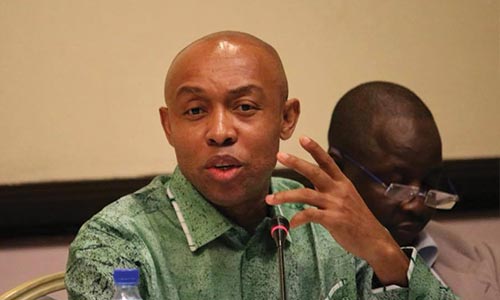
Human rights activist and legal scholar, Professor Chidi Odinkalu, has accused the Chief Judge of the Federal High Court, Justice John Tsoho, and another judge of the court, Justice Peter Lifu, of alleged partisanship in handling cases involving the African Democratic Congress, ADC.
Odinkalu, in a post on his LinkedIn page, questioned the handling and assignment of politically sensitive cases involving the opposition party, alleging that the judicial process had favoured the political interests of the Minister of the Federal Capital Territory, Nyesom Wike.
He specifically faulted the assignment of a case seeking to nullify the entire list of ADC candidates for the 2027 general elections to Justice Lifu on May 19, 2026, despite the judge already handling another suit seeking the party’s deregistration.
The activist alleged that Justice Lifu proceeded to deliver judgment deregistering the ADC on June 15, despite a May 25 Court of Appeal order directing him to stay proceedings in the matter.
He further recalled that the appellate court, on July 28, overturned the judgment and reportedly criticised the judge’s conduct, describing it as the highest level of judicial impertinence and referring to him as a misfit on the bench.
READ ALSO: NANS Reject N10,000 Drug Test Fee, Challenge NDLEA Over Charges
Odinkalu also questioned why Justice Lifu continued handling the second case after the appellate court’s intervention and the ADC’s request for his recusal.
He alleged that the Chief Judge, Justice Tsoho, who exercises authority over the assignment of cases at the Federal High Court, failed to address the concerns surrounding the judge’s continued involvement.
The activist’s comments followed Justice Lifu’s November 5 judgment nullifying the ADC’s entire list of candidates, an outcome he described as part of what he called partisan politics dressed in judicial apparel.
Odinkalu also made reference to the controversy surrounding a lawyer who described Justice Lifu as a “Coconut Judge” during a television appearance, prompting the Nigerian Bar Association to refer the lawyer for disciplinary proceedings.
He questioned the apparent disparity between the disciplinary attention given to the lawyer and the concerns raised over the conduct of the judges.