

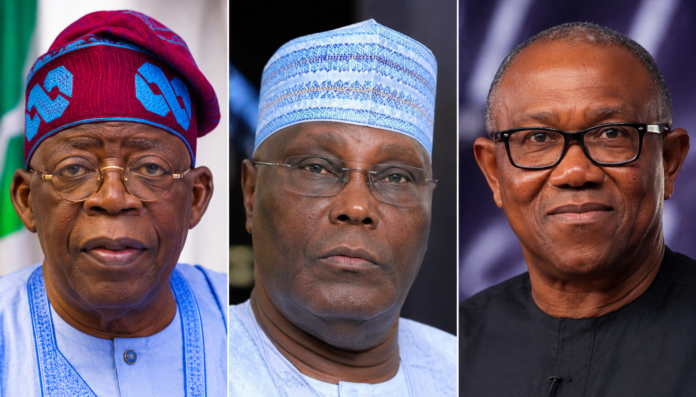
As Nigeria approaches the 2027 presidential election, attention is increasingly shifting towards the Middle Belt, a politically strategic region whose electoral choices could significantly influence the outcome of the contest.
Often regarded as a swing region in Nigeria’s political calculations, the Middle Belt occupies a unique position in the country’s electoral landscape. Its ethnic and religious diversity, geographical spread and competing political interests make it a constituency no serious presidential candidate can afford to ignore.
Beyond its voting strength, the region represents a critical battleground where issues of insecurity, marginalisation, economic hardship and political inclusion could determine the direction of voters.
The big question ahead of 2027 is not simply which party will win the Middle Belt, but which presidential candidate can convince its people that their lives, interests and future will be better protected under his leadership.
For years, communities across Plateau, Benue, Nasarawa, Niger, Kogi and other parts of the Middle Belt have grappled with persistent insecurity, including killings, kidnappings, displacement and destruction of livelihoods.
In several communities, attacks have disrupted farming activities, displaced families and heightened fears over the safety of ancestral lands.
Consequently, security is expected to feature prominently in the region’s political calculations. Voters will be looking beyond campaign promises to candidates who can demonstrate a credible commitment to protecting lives, restoring displaced communities and ensuring justice for victims of violence.
For many, the 2027 election is an opportunity to demand a government that treats their security as a priority rather than an occasional campaign issue.
President Bola Tinubu’s ambition to secure a second term places the Middle Belt at the centre of an important electoral calculation.
Although the region contributed to the coalition that secured his victory in 2023, his administration faces growing questions over insecurity, economic hardship and the welfare of affected communities.
READ ALSO: Tinubu and the rude water of Aso Rock
The emergence of competing political endorsements within the region also suggests that support for the president cannot be taken for granted.
Some Middle Belt stakeholders have questioned the legitimacy of endorsements announced in favour of Tinubu, insisting that the views of ordinary citizens, youths, women and affected communities must be considered.
This highlights an important political reality: endorsements by influential individuals do not automatically translate into grassroots support.
For Tinubu, the challenge will be to convince voters that his administration deserves another mandate and that the concerns of the region will receive greater attention in a second term.
For opposition figures, including Peter Obi, Atiku Abubakar and Rabiu Kwankwaso, the Middle Belt presents an opportunity to challenge the ruling party’s influence and build a stronger national coalition.
Peter Obi could particularly benefit from growing demands for accountability, improved security and a different approach to governance. However, public sympathy and political popularity alone may not be enough to secure the region’s support.
He and other opposition candidates must present practical solutions to insecurity, unemployment, agricultural challenges, poverty and infrastructure deficits.
Atiku’s experience in national politics could also feature in the contest, while Kwankwaso and other contenders will have to demonstrate how their policies can address the region’s peculiar challenges.
Ultimately, the opposition’s appeal will depend on its ability to offer a credible alternative rather than simply capitalising on dissatisfaction with the incumbent.
Another important consideration is the question of power rotation and political inclusion.
Some Middle Belt leaders have maintained that the presidency should remain in Southern Nigeria after 2027, linking their position to fairness, political balance and national stability.
There is also an emerging conversation about the region’s own presidential prospects in 2031, with some stakeholders arguing that its political contributions should translate into greater national recognition.
However, future political calculations may not be enough to overshadow the immediate concerns of voters.
For communities battling insecurity and economic difficulties, the urgent question is who can address their present challenges, not merely who might occupy the presidency in another election cycle.
Despite its strategic importance, the Middle Belt should not be treated as a politically uniform constituency.
Its communities have different ethnic identities, religious affiliations, political interests and local concerns. While security may dominate conversations in some areas, others may prioritise employment, education, infrastructure, agriculture and economic opportunities.
This diversity means that political endorsements by a few leaders cannot accurately represent the collective sentiment of the region.
Candidates must engage directly with communities, understand their grievances and demonstrate a genuine commitment to addressing them.
As the 2027 election approaches, the Middle Belt faces a defining political decision.
Tinubu wants to consolidate his support and secure another four years, while opposition candidates see the region as an opportunity to weaken the ruling party’s electoral advantage.
But beyond these political ambitions, voters must consider which candidate offers the strongest vision for security, economic recovery, justice and inclusion.
The region’s eventual choice could have consequences far beyond its geographical boundaries, particularly in an election expected to be shaped by competing regional interests and national coalitions.
The Middle Belt must therefore look beyond political endorsements, ethnic sentiments and campaign promises. Its decision should reflect the realities of its people and the future they want for the next generation.
In 2027, the battle for Nigeria’s presidency may well be influenced by a region that has long demanded to be heard. The question is whether the Middle Belt will reward the incumbent, embrace an opposition alternative or demand a new political direction.
Pius Kadon is journalist and public affairs analyst.
He can be reached:
Pkabido2@gmail.com
08068606491


