

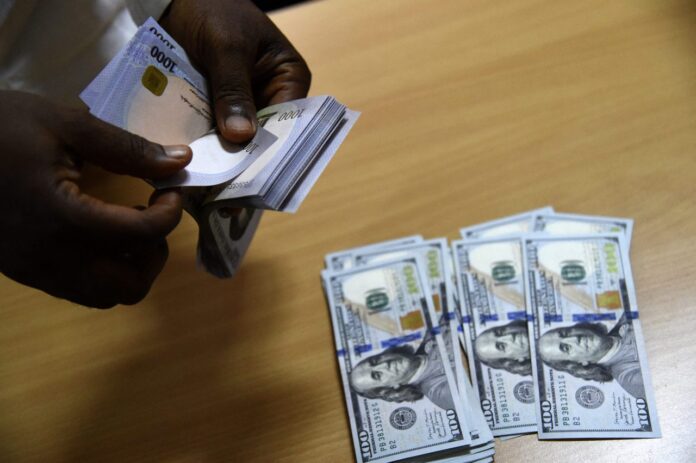
The amount of cash held by Nigerians outside the banking system climbed to N4.47 trillion in September 2025, even as the country’s overall money supply declined, according to new data released by the Central Bank of Nigeria (CBN).
The figures reveal that broad money supply (M3) slipped by N1.91 trillion to N117.78 trillion in September, marking a 1.6 percent month-on-month decrease from August’s N119.69 trillion.
Despite this contraction, cash outside banks rose by N14.7 billion, or 0.3 percent, within the same period. On a yearly scale, the trend becomes more striking — while total money supply increased by 7.6 percent from N109.41 trillion in September 2024, cash held outside banks grew by 11.2 percent, suggesting that Nigerians are increasingly keeping physical money rather than depositing it.
The News Chronicle learnt that the CBN’s data shows over 90 percent of Nigeria’s cash circulation remains outside the formal banking sector. Out of the N4.95 trillion total currency in circulation as of September 2025, N4.47 trillion was outside the banks, leaving just 9.8 percent in vaults.
This ratio has remained relatively unchanged through the year, pointing to entrenched distrust in financial institutions, high transaction charges, poor digital infrastructure, and the dominance of informal economic activities.
Cash hoarding has fluctuated slightly throughout 2025, with Nigerians holding N4.74 trillion in January, N4.52 trillion in February, and peaking at N4.63 trillion in May. Though minor drops occurred midyear, September saw renewed increases. The persistence of this pattern indicates that liquidity preferences and behavioural factors outweigh short-term monetary adjustments.
Analysts suggest the trend may have been reinforced by the CBN’s mixed monetary approach. While the apex bank recently lowered the Monetary Policy Rate to 27 percent—the first cut in five years—it simultaneously tightened liquidity by setting a 45 percent Cash Reserve Requirement for commercial banks and 75 percent for non-TSA public deposits.
This policy blend limited banks’ lending capacity and pushed households and businesses to hold on to cash. Economists warn that such high volumes of money outside banks could reduce the CBN’s control over monetary policy, expand the informal economy, and weaken revenue collection efforts.


