

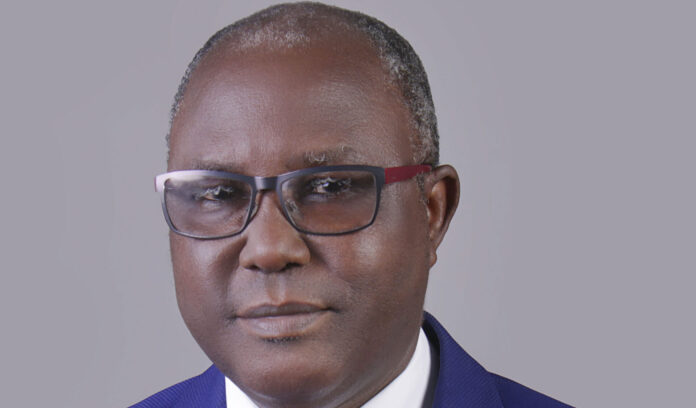
Since assuming office as Nigeria’s Minister of Education on October 23, 2024, Dr. Tunji Alausa has demonstrated his capacity to formulate and implement new policies across the educational pipeline – primary, secondary, and tertiary levels. A highly policy-conscious and oriented minister, his first major action after assumption of office was the reversal of the highly controversial 18-year admission policy into tertiary institutions by his predecessor, Prof. Tahir Mamman. For many parents, the reversal to the previous 16-year age limit was a welcome relief.
In less than two years, Dr Alausa has turned out many developmental policies including but not limited to: (a) Dual Mandate Policy that allows Federal Colleges of Education to award both the National Certificate of Education (NCE) and undergraduate degree certificate; (b) Reusable Textbook Policy to reduce the exploitative yearly purchase of textbooks by parents; (c) National Policy on Almajiri Education which works towards integrating millions of out-of-school children into the formal education system; (d) National Anti-Bullying Policy for ensuring safe school environments; (e) National Implementation Guidelines against Drug and Substance Use, for safe guiding secondary and tertiary schools from the alarming rate of drug abuse in the country; and lastly, National Teachers Policy, that aims at teacher professional development and welfare improvement. All these policies show that the minister is working and is highly sensitive to finding solutions to the myriad problems confronting the education sector.
Now comes the new National Tertiary Education Ranking policy to the list of these policies. But I am a bit confused about this policy, particularly its essence and implementation. Before the launch of the policy, there existed the Nigerian university ranking system and the Nigerian University Ranking Advisory Committee (NURAC) chaired by Emeritus Prof. Peter Okebukola. The establishment of this committee was perfectly in order because a separate ranking of universities is the global norm.
My confusion set in when the minister announced that the scope of NURAC has been expanded to cover polytechnics and colleges of education, which he said led to the change of NURAC to the Nigerian Tertiary Education Ranking Advisory Committee (NTERAC). It was not expressly clear if the committee is to carry out the ranking of these three distinct tertiary institution levels in a single league table or to rank them separately (each with its own league table) under the expanded scope of its functions. If they are to be separately ranked, there is no problem, but if they are to be ranked in a single league table, then it is clearly a pure case of an apple-and-orange comparison.
First, the missions of these three tertiary institution levels are different, even if some polytechnics and colleges of education award degrees. This point does not need further clarification or to be over-emphasized, as the separate levels are expected to maximize their strength in their missions. Second, the metrics of measurement and comparison are different regardless of the existence of what appears to be generic metrics for measuring performance. But the specifics of generic metrics would without doubt distort the comparison and conclusions based on them. For example, a generic metric such as quality of faculty appears to apply across the three distinct levels, but comparison becomes inapplicable when a specific indicator of say the number of academic staff of an institution winning the Nobel Prizes, is measured across the three levels. In what way is this applicable to polytechnics and colleges of education? Yet, it is a good basis of comparison among universities across the world. The conclusion here, therefore, is that data to be used for the three levels to produce a common league table would be incompatible. If we take, again, such measuring indicators like international composition of faculty or even international composition of students, both of which apply to the ranking of universities across the world, how would these be applied to these two other levels? This will be another inapplicable data to them, and if used, would be an unfair comparison and a flawed conclusion. And I am sure that the idea of applying one-size-fits-all criteria for the three levels is not conceivable.
It is not clear to one how the chairman of NURAC, Prof. Okebukola, welcomed the idea of the expansion of the committee’s scope in this regard. But according to the Punch newspaper, he was reported to have said that the minister’s ‘response went beyond the committee’s initial proposal by expanding NURAC’s mandate to cover polytechnics and colleges of education.’ (Quoting Punch, not necessarily Prof. Okebukola’s words). Personally, I will be surprised if he feels comfortable with a ranking exercise that would contain in a single league table, universities, polytechnics and colleges in Nigeria. I hereby respectfully suggest that the minister should be offered the right professional advice on this matter by the eminent professor.
This article is simply saying, therefore, that any ranking comprising the three tertiary-level institutions in one league table is like carrying out a comparison between apples and oranges, as the saying goes. But let me clearly state that the idea of carrying out a ranking system of educational institutions in Nigeria is a commendable one. The idea of making the ranking compulsory for all the institutions is also a good one. This will over time help to improve the effectiveness and efficiency of our universities, polytechnics and colleges of education.
Again, the reasons given by the minister for commencing the ranking exercise across tertiary institutions are very persuasive. All the institutions should be up and running towards accomplishing their missions. Take the case of data generation and safe storage (for easy retrieval) for a simple thing such as student enrolment (in aggregated and disaggregated forms); many of these institutions do not take this important duty seriously as they should. A mandatory requirement for the generation of student enrolment data, for instance, would therefore make them more responsible. And this would make the task of generating accurate data on student enrolment in Nigerian tertiary institutions possible. However, one hopes that universities or the other institutions would not start having two lists of student enrolment data because of accreditation purposes, especially for those exceeding their carrying capacity.
Prof. Obasi, a public policy expert and analyst, is formerly of the Department of Public Administration, University of Abuja. He ran a column on higher education policy and management for many years. Email: nnamdizik@gmail.com; Cell: 07065692668
Prof. Obasi, a public policy expert and analyst, is formerly of the Department of Public Administration, University of Abuja.


