

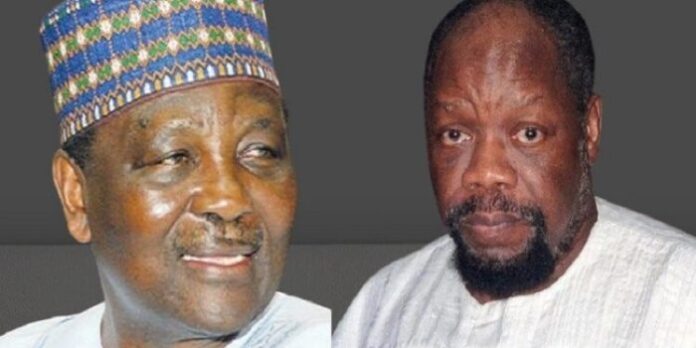
Former Head of State, Gen. Yakubu Gowon, has reignited debate over one of Nigeria’s most defining historical events, alleging that the late Biafran leader, Chukwuemeka Odumegwu Ojukwu, frustrated several peace initiatives that could have prevented the 1967–1970 civil war.
In his autobiography, My Life of Service and Allegiance, Gowon revisits the political turmoil that followed the 1966 coups, which ultimately escalated into a full-blown conflict.
He argued that repeated attempts at reconciliation between the Federal Military Government and the Eastern Region failed because Ojukwu allegedly rejected or reinterpreted agreements reached during negotiations.
Gowon placed particular emphasis on the January 1967 Aburi meeting in Ghana, mediated by then Ghanaian Head of State, Lt. Gen. Joseph Arthur Ankrah, which was convened to halt the deepening crisis and preserve Nigeria’s unity.
According to him, both sides returned from Aburi with fundamentally different interpretations of what was agreed, with Ojukwu allegedly advancing positions that would have significantly weakened federal authority.
He maintained that while the Federal Government remained committed to national unity, it could not accept proposals it believed would effectively amount to the dissolution of the country.
Gowon further noted that, despite rising tensions and growing mistrust, diplomatic efforts continued but eventually broke down amid deteriorating communication between the two sides.
Defending his creation of 12 states in 1967, Gowon said the decision was intended to address minority fears of domination and to strengthen the federal structure to prevent further fragmentation.
He described the restructuring as a stabilizing measure designed to preserve the country’s unity amid mounting pressure.
Gowon insisted that the declaration of Biafra on May 30, 1967, left the Federal Government with no viable alternative but to respond militarily.
He argued that the war was not initiated out of aggression, but became unavoidable once secession was formally declared.
Reflecting on the aftermath, Gowon defended his post-war policy of reconciliation, “No Victor, No Vanquished,” saying it was intended to heal wounds and rebuild national cohesion.
He also acknowledged the immense human cost of the conflict, describing it as one of the most painful and challenging periods in Nigeria’s history.
While Ojukwu had consistently maintained that Biafra was a response to insecurity and political exclusion, Gowon’s account presents a sharply contrasting narrative, placing greater responsibility for the collapse of peace efforts on the former Eastern leader.


