

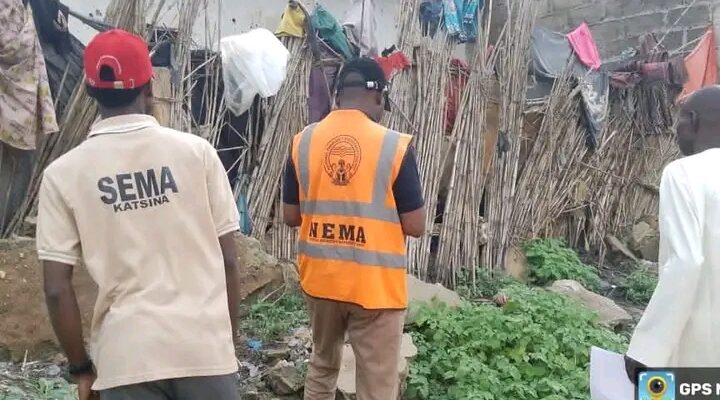
The National Emergency Management Agency (NEMA) North West Zone, along with the State Emergency Management Agency (SEMA) and other relevant authorities, conducted a comprehensive assessment of the flood disaster that has recently affected several communities in Katsina Central, Katsina State on Monday.
The assessment followed two significant flooding incidents that occurred within the span of a month. The first flood struck in late August 2024, followed by a second round of flooding at the end of September.
These natural disasters were the result of heavy rainfall and strong winds, which led to widespread destruction across the region.
Tragically, the floods claimed the lives of nine individuals, while no fewer than 74 others were reported to have sustained varying degrees of injuries.
The injured have been receiving medical attention in local health centers, and efforts are underway to provide further assistance.
The destructive impact of the floods was most evident in the numerous buildings that were severely damaged or destroyed.
Many homes, businesses, and other structures could not withstand the combined effects of the torrential downpours and powerful winds, leaving hundreds of residents displaced and in need of immediate shelter and aid.
The affected communities include Kofar Sauri, Kukar Gesa, Tudun Yar Lida, Saulawa, Sabuwar Unguwa, Kofar Kaura, Rahamawa, Masanawa, Kofar Marusa, and Tudun Katsira.
All of these communities are located within Katsina Central, a densely populated region that has seen significant damage to infrastructure.
Local authorities, together with NEMA and SEMA, are working tirelessly to assess the full scale of the disaster and provide relief to the affected populations.
This includes the distribution of essential supplies such as food, clean water, and temporary shelter materials.
Plans are also being developed to prevent future incidents, as weather patterns in the region suggest that similar occurrences could continue if preventive measures are not put in place.
The floods in Katsina Central serve as a reminder of the growing risks posed by climate related disasters, and the need for enhanced preparedness and response systems to protect vulnerable communities in the future.


