

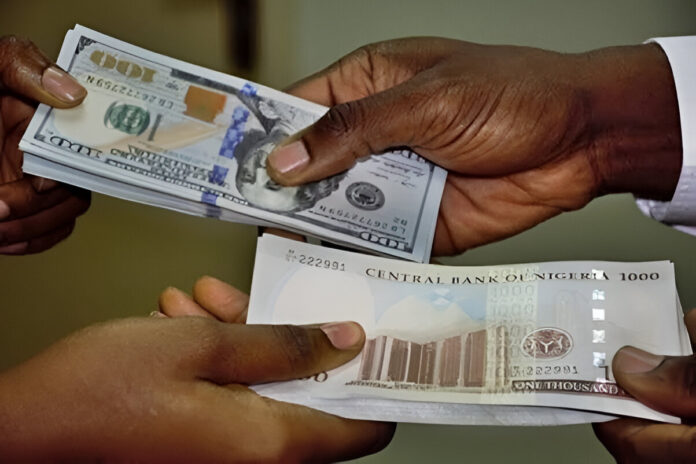
The naira slipped further in the official market on Tuesday, closing at N1,383 to the dollar as pressure in Nigeria’s foreign exchange space continued to build.
Central Bank of Nigeria figures show the currency dropped from N1,369 reported a day before, therefore extending its recent downward trend. With an average rate settling marginally lower, intraday trading saw the naira oscillate between N1,367.50 and N1,385.
The newest movement corresponds with another fall in Nigeria’s external reserves, which fell to roughly 48.38 billion dollars as of April 27. The decline shows continuous FX market interference and increasing foreign commitments, both of which keep bearing down on the nation’s dollar buffer.
The News Chronicle reports that, although global conditions offer little help, the naira’s weakness is still mostly driven by constant demand for foreign currency, especially from importers and investors.
Supported by safe-haven demand related to geopolitical tensions, the dollar was strong on the world scene ahead of a critical policy decision by the US Federal Reserve. This situation has piled on more stress on emerging market currencies, including the naira.
Though financial authorities have promised that reserve levels are still under control, experts claim the combination of depleting buffers and limited liquidity could strain near-term stability.
For now, the direction of the naira will likely depend on improved dollar inflows, oil revenue performance, and the Central Bank’s ability to sustain its intervention strategy.


