


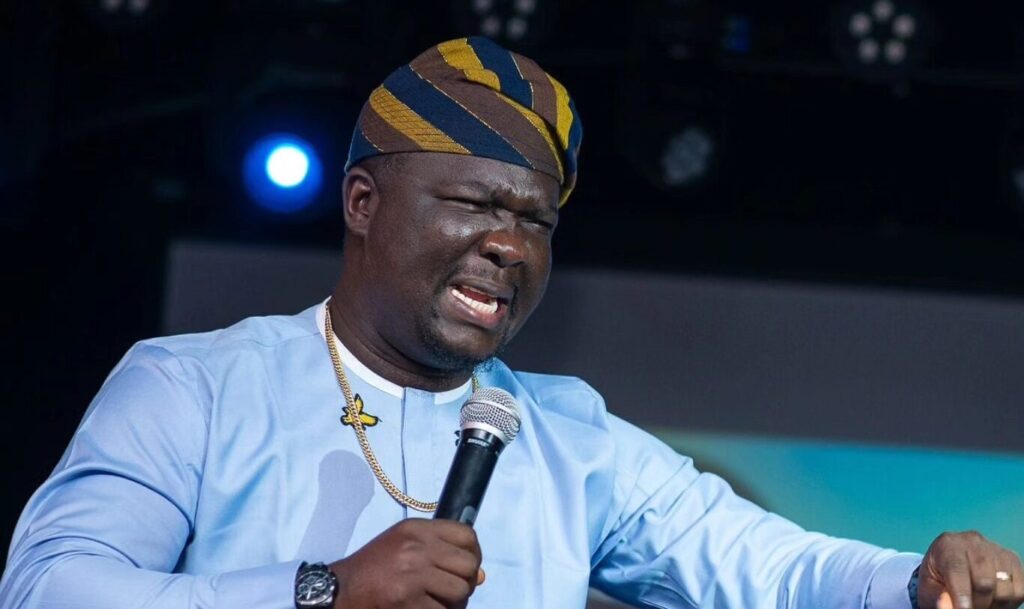
Nigerian actor and comedian Oluwaseyitan Aletile, popularly known as Seyi Law, has said his personal finances have worsened under the administration of President Bola Tinubu, disclosing that the amount he spends on his family’s upkeep has more than doubled.
Seyi Law said he now spends between N4m and N5m every other month to support his family in the United Kingdom, compared with about N2m before the current administration came into office.
He made this disclosure during an interview on the Clarity Zone podcast on Thursday, while discussing the economic situation in the country and his support for the Tinubu administration.
“My finances was better before this government came in,” he said.
Explaining the increase in his family’s expenses, the comedian said the amount that previously covered their needs was no longer sufficient.
“My family are in the UK, for example, with N2m every other month. They were okay. Now I’ve had to double that to about N4m, N5m every other month,” he said.
He added that the rising cost of maintaining his family’s standard of living had forced him to work harder.
“And now I work double to make life better, to make life easier for them,” he said.
Despite acknowledging the financial strain, Seyi Law defended the economic reforms introduced by the Tinubu administration, arguing that Nigerians might have to endure short-term hardship for the policies to deliver long-term benefits.
He, however, admitted that many Nigerians were struggling to afford basic necessities, describing it as hypocritical to deny the reality of hunger in the country.
READ ALSO: Needless Distractions — Fashola Reacts to Tinubu’s Academic Records Controversy
“People are hungry. Are people not hungry? They are hungry.
“I will be a hypocrite. I will be a bad person to say people are not hungry,” he said.
The comedian maintained that the immediate effects of economic policies should not be the only basis for judging their success, arguing that significant reforms could take years to produce sustainable results.
“You must feel the pain of the policies to reap the benefit of it,” he said.
“Every good policy that becomes good stabilises after 10 to 12 years.”
Citing the development experiences of China and Singapore, Seyi Law argued that their current economic progress was achieved through years of difficult reforms.
He urged Nigerians to assess the Tinubu administration’s policies with patience rather than judge them solely by their immediate impact on household finances.
The comedian also called on Nigerians to hold state and local governments accountable for public funds, arguing that criticism over the economic situation should not be directed exclusively at the Federal Government.
He urged citizens to pay closer attention to how allocations to local government areas were spent, particularly on basic infrastructure and public services.
“We need to know where we should channel our anger,” he said, warning that Nigerians could end up holding the wrong authorities responsible for failures in governance.
Seyi Law alleged that some local government chairmen did not have full control over their allocations, claiming that governors in some states continued to influence how the funds were spent.
He cited an account involving a local government chairman in an unnamed state, alleging that the governor collected nearly 70 per cent of the council’s allocation.
“Do you know that the governor of that state collects almost 70 per cent of that money?” he asked.
He further alleged that some local government chairmen were required to pay kickbacks to governors who facilitated their emergence.
The comedian called on residents to demand accountability from their local government officials, particularly over the use of public funds allocated to their councils.
He also defended Tinubu’s support for local government financial autonomy, arguing that the policy was intended to allow councils to receive and manage their allocations directly.
He urged Nigerians to monitor whether local government officials were using the funds to provide essential services, including roads and healthcare.
His comments come amid continuing public debate over the impact of the Tinubu administration’s economic reforms, particularly the removal of the petrol subsidy and changes to the foreign exchange regime.
While the reforms have attracted criticism from Nigerians grappling with rising living costs, supporters of the administration maintain that they are necessary to address longstanding economic challenges and improve public finances.