

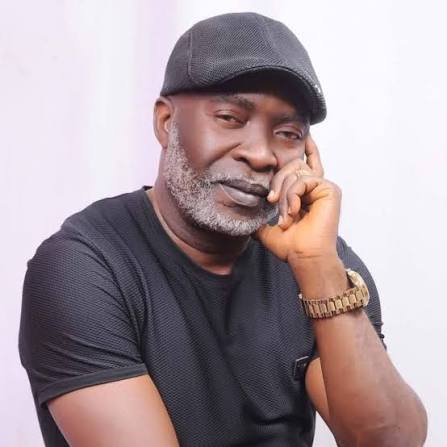
Many Nigerians were caught between disbelief and confusion when news broke that a cleric, and later, a Nollywood actor was among those arrested in connection with an alleged coup plot. For a public accustomed to associating coups almost exclusively with soldiers and barracks politics, the involvement of figures from religion and entertainment unsettled familiar assumptions. The same question echoed across conversations and timelines: what possible role could such civilians play in a military conspiracy?
In reflecting on this matter, which has become a subject of national intrigue, I must first state clearly that I do not presume the guilt of any of the accused. I lack both the authority and the professional expertise in security or military affairs to make such determinations. What follows is not an assertion of guilt, but an attempt to think through the issue as a concerned citizen trying to make sense of unfolding events in the public space.
One of the few rights universally shared is the freedom to think, interpret, and judge occurrences within our environment. Intellectual engagement is rarely driven by certainty alone; it is often propelled by the courage to express views, wether right or wrong and subjecting them to public scrutiny. In that sense, public discourse becomes a laboratory where ideas are tested, refined, or discarded.
The first report concerned Sheikh Sani Khalifa, a well-known Islamic cleric from Zaria, who was reportedly detained for over three weeks over alleged links to a coup plot against President Bola Ahmed Tinubu. His arrest was said to be connected to a ₦2 million transfer from a soldier suspected to be involved in the plot. According to his family, however, there was no political relationship between the cleric and the soldier, and the money was received merely as a gift for prayers and blessings. What deepened the controversy was the claim that although security officials internally acknowledged that his name was not on any suspect list and that he had been “cleared,” he remained in custody.
Shortly after, another layer was added to the unfolding drama. A report by The Punch revealed that Stanley Amandi, a Nollywood actor, filmmaker, and former chairperson of the Enugu State chapter of the Actors Guild of Nigeria, had been arrested alongside serving military officers over alleged links to the same failed coup plot. Initially, his family believed he had been picked up by the Department of State Services, only to later receive official confirmation that he was in the custody of the Defence Intelligence Agency. Concerns were also raised about his health, as his family sought access for his wife, lawyer, and medical doctor.
According to investigations cited by Premium Times, the actor was allegedly linked to the media and messaging aspect of the plot. Authorities reportedly suspect that he was positioned to help shape public narratives that could justify or promote an unconstitutional takeover, thereby casting him as a civilian collaborator in what has been described as a grave national security breach. Further reports suggested that the alleged plot was uncovered after concerned officers alerted senior military leadership to suspicious meetings and conversations. What began as quiet internal arrests later evolved into a broader investigation, with allegations extending to plans targeting top political figures.
As legal processes continue, public attention has been drawn not only by the gravity of the allegations but by the unusual presence of an entertainment figure in a matter traditionally dominated by military actors. It is this confusion, the difficulty in reconciling familiar images with unfamiliar accusations that inspired this reflection. My initial reaction to reports of sixteen soldiers, a cleric, a retired general, and now a Nollywood actor being linked to a coup was skepticism about the seriousness of the alleged attempt. Instinctively, the profile, numerical strength, and apparent spread of those mentioned seemed insufficient for an operation of such magnitude.
While I acknowledge that many names may remain unknown to the public, the visible elements appeared driven more by daring ambition, moral bravado, and perhaps fantasy than by a realistic appreciation of what such an undertaking entails.
My imagination of a military coup has always been shaped by the belief that it is not entirely different, in structural logic, from how civilians organize to win elections. Where politicians rely on persuasion, symbolism, and emotional appeal,. Soldiers rely on force, but both require legitimacy, loyalty, and narrative control. The civilian names publicly mentioned so far are few, while the military figures appear concentrated within limited circles, suggesting an underestimation of the complexity and chaos such an action would generate.
Nigeria is vast, demographically and institutionally. Even officers with troops under their command must still secure layers of loyalty, consent, and cooperation. Just as in civilian political mobilization, success if such a word can even be used here would demand extensive human and material resources. This is where faith, symbolism, and emotional intelligence enter the picture.
I have long argued that while prayers must be backed by action, they remain one of the most powerful sources of emotional strength and courage. This may explain why the military, historically, has rarely dismissed matters of faith. Belief in divine backing can elevate morale, embolden risk-taking, and suppress fear. Scholars of political psychology have long noted that faith can produce effects comparable to chemical stimulants, sometimes with greater precision and endurance by reinforcing conviction and reducing doubt.
At the same time, it is important to recognize that many suspects in such cases may also be victims of circumstance. I am reminded of a prayer my mother often says: that one may not meet the wrong person or find oneself in the wrong situation. In an atmosphere of suspicion, even innocent interactions can be retroactively reframed as complicity.
There is a popular saying that to know what someone is capable of, one only needs to know their friends. While this proverb carries some truth, it is also deeply subjective. If a conspirator confides in a friend, every possible response is risky. Agreement makes one an accomplice; refusal turns one into a potential threat. Even reporting such information can backfire, as history is replete with cases where whistleblowers end up entangled as suspects themselves. This reality helps explain why many people choose silence over exposure, especially when the stakes involve powerful actors and irreversible consequences.
Reflecting further, the alleged use of a Nollywood actor recalls how the Tinubu administration itself has embraced entertainers, creatives, and cultural figures in governance and public engagement. This reflects a growing recognition that emotional appeal, familiarity, and symbolic presence often matter as much as technical competence in shaping public perception. Political support is frequently driven not by objective performance alone, but by feelings such as seeing familiar faces, trusted voices, and relatable figures within power structures.
Actors, musicians, and clerics possess what sociologists call symbolic capital: the ability to command attention, shape narratives, and influence emotions. Religious leaders, in particular, often combine celebrity-like influence with spiritual authority, offering reassurance, hope, and meaning in uncertain times. This helps explain the rise of what might be called political prophecy, where divine predictions about electoral outcomes flourish regardless of accuracy, because they meet an emotional need rather than an empirical one.
From this perspective, it becomes easier to see how individuals can be caught in the web of suspicion simply by association, being present, accessible, or familiar. Literature on coups consistently emphasizes their complexity and the multiplicity of roles involved. Yet what is often underexplored is the symbolic and emotional dimension: the effort to capture minds, legitimize narratives, and manage perception.
For these reasons, I remain unconvinced that what has been described constitutes a serious, well-coordinated coup attempt. It appears, at least from what is publicly known, more like a convergence of ambition, courage, curiosity, emotion, and imagination taken too far. History teaches that successful power seizures are rarely improvised; they are cold, calculated, and expansive. What we see here, instead, feels fragmented, more a cautionary tale about proximity, perception, and the dangers of being in the wrong place at the wrong time.
Bagudu can be reached at bagudumohammed15197@gmail.com or on 0703 494 3575.


