

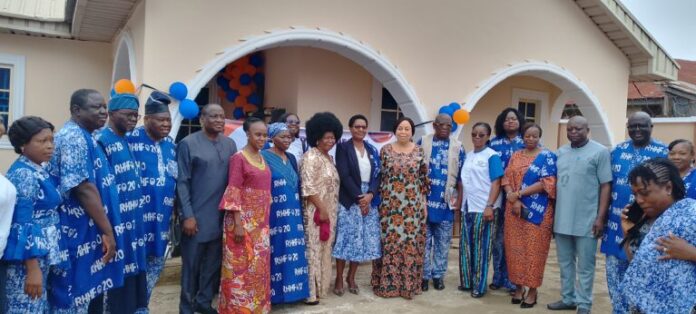
The United Nations Population Fund (UNFPA) Resident Representative in Nigeria, Muriel Mafico, has called for increased local production of essential commodities as part of efforts to address the country’s socio-economic challenges.
Mafico made the call on Thursday in Ilorin during the inauguration of a reusable sanitary pad factory established by the Royal Heritage Health Foundation (RHHF).
She described the project as a laudable initiative aimed at addressing period poverty and improving menstrual hygiene among adolescent girls and women.
Mafico said Nigeria must look inward and invest in homegrown solutions capable of creating jobs, empowering women and girls, and reducing dependence on imported products.
According to her, addressing the country’s socio-economic challenges requires greater investment in locally produced goods.
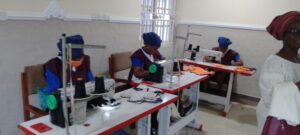
“When we produce locally, we create jobs, empower women, keep girls in school and build dignity,” she said.
The UNFPA representative said the establishment of the factory demonstrated what Nigerians could achieve through local innovation.
She added that the facility would help address menstrual health challenges while reducing the country’s dependence on imported sanitary pads.
Mafico commended the RHHF for the initiative, describing it as “culturally sensitive, community-owned and aligned with UNFPA’s mandate to ensure no woman or girl is left behind.”
Earlier, the Chief Executive Officer of RHHF, Elijah Sogunro, said the project was not only about producing sanitary pads but also about promoting health, dignity, education and economic empowerment.
READ ALSO: Court Martial Admits Detention Facility for 36 Nigerian Soldiers Is Unsuitable
Sogunro commended UNFPA for supporting the initiative and training factory workers for six months, noting that the training had significantly improved their capacity.
He disclosed that the project would be replicated in other parts of the country.
According to him, the factory produces low-cost, washable and reusable sanitary pads for distribution to schools, health centres and internally displaced persons’ camps across Kwara State.
He added that young women would be trained in the production and distribution of reusable pads to create livelihood opportunities.
A pharmacist with RHHF, Peter Oluwaseun, said the sanitary pad materials were skin-compatible and highly absorbent.
He explained that the products were exposed to ultraviolet light and sterilised to eliminate impurities and microorganisms, describing them as safe and durable for repeated use.
(NAN)


