

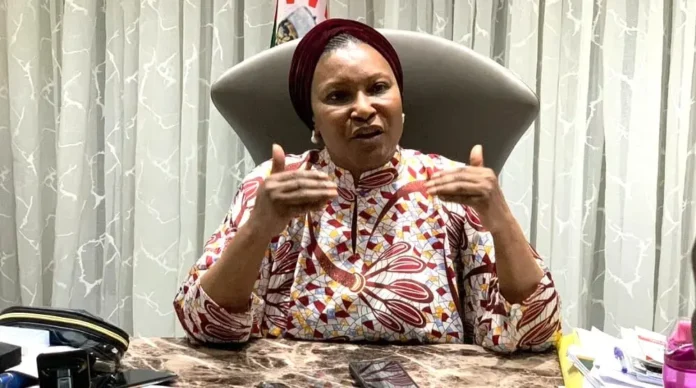
A dispute over land ownership, urban expansion and institutional autonomy has intensified in the Federal Capital Territory (FCT), as Senator Ireti Kingibe has expressed solidarity with protesting students and staff of the University of Abuja (UniAbuja) over the alleged revocation of about 7,000 hectares of the institution’s original 11,000-hectare landholding.
The dispute pits the university community and its representative in the Senate against the Federal Capital Territory Administration (FCTA), raising questions about whether undeveloped institutional land in a rapidly expanding city should be preserved for long-term academic and research purposes or allocated for urban and commercial development.
In a statement issued on Wednesday, November 18, 2026, Kingibe declared her solidarity with UniAbuja’s management, lecturers, workers and students, who have staged protests against what they described as the unlawful takeover and reallocation of university land to private individuals.
Kingibe warned that the loss of nearly two-thirds of the university’s original landholding could undermine its capacity for agricultural research, specialised engineering facilities, recreational spaces and student accommodation.

She noted that the development was particularly concerning given the shortage of hostel accommodation, which reportedly forces several students to share rooms designed for two occupants.
“At a time when students are reportedly compelled to share rooms designed for two occupants with as many as six or ten people, the priority of government should be to support the university’s expansion, not diminish the land available for its future growth,” Kingibe stated.
She added that the rocky and mountainous terrain of parts of the campus already limits the amount of land suitable for development.
The senator recalled raising the issue on the floor of the National Assembly in 2025, arguing that reallocating public institutional land to private individuals violates legal principles, particularly amid allegations that demolitions and reallocations were carried out despite pending court injunctions.
“No government authority should act above the law,” she said.
Kingibe called on the FCT Minister, Nyesom Wike, and the Federal Capital Development Authority (FCDA) to suspend further reallocations, review the revocation and prioritise investment in student hostels and other university infrastructure.
However, the FCTA has rejected the characterisation of the exercise as an unlawful land grab.
According to the administration, a joint committee comprising five representatives of the university had previously concluded that its 11,000-hectare landholding exceeded the standards of the National Universities Commission (NUC).
The committee reportedly recommended reducing the university’s allocation to 100 hectares before the FCT Minister approved the retention of 4,519.80 hectares for the institution.
FCTA officials have also accused the university of leaving large portions of its land undeveloped for 38 years while allegedly allocating plots to third parties without ministerial approval.
With legal proceedings ongoing at the FCT High Court and campus protests continuing, Kingibe has urged the Federal Government to intervene, warning against sacrificing the long-term development of a national university for short-term commercial interests.


