

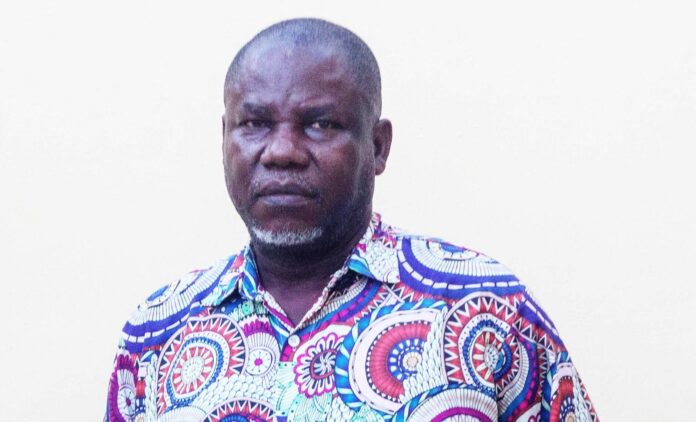
The arrest of popular socialite and businessman Afolabi Kazeem Micheal, popularly known as Kaycee Luxury, by the National Drug Law Enforcement Agency (NDLEA) should provoke a conversation that goes far beyond the alleged drug trafficking case now before the authorities. It should force Nigeria to ask a much bigger question: “How seriously does the country investigate the sources of extraordinary wealth?”
Kaycee’s arrest followed the interception of 184.5 kilogrammes of an illicit white powder consignment allegedly destined for the United Kingdom. NDLEA Chairman, Brig. Gen. Mohamed Buba Marwa (rtd.), said investigators subsequently arrested Kaycee, whom the agency described as an alleged Nigerian coordinator of an international cartel. Reports also said a search of his Banana Island residence led to the recovery of exotic vehicles. Those allegations are serious, but they must remain allegations until established by a competent court. Arrest is not conviction, and a flashy lifestyle is certainly not proof of criminality. Yet there is a legitimate public-interest question that the episode has brought back to the front burner. “Where does the money come from?”
This is a question Nigeria’s law-enforcement and financial-intelligence architecture should be asking far more frequently, not only after somebody is arrested for an alleged crime, but long before.
Nigeria has become a country where spectacular wealth can appear almost overnight. People who were virtually unknown yesterday suddenly begin displaying fleets of expensive cars, luxury properties, designer accessories, private jets, exotic holidays and businesses whose actual economic activities are difficult to establish.
And the usual reaction is often admiration. Social media turns unexplained wealth into entertainment. Young Nigerians are encouraged to admire the lifestyle without asking the uncomfortable question: “What legitimate economic activity produced this level of wealth?” That attitude needs to change.
In fact, wealth should be explainable. After all, there is nothing wrong with being rich. There is nothing wrong with owning a Rolls-Royce, living in Banana Island, flying first class, wearing expensive jewelry or building a multimillion-naira business. The issue is not wealth. Rather, the issue is “unexplained wealth”.
If somebody legitimately earns billions of naira, there should be a trail: companies, investments, contracts, intellectual property, professional services, inheritance, dividends, property transactions, financial records, or other lawful sources capable of explaining the fortune.
The responsibility of the state should therefore not be to punish people for being successful. Rather, it should develop the capacity to identify cases where wealth appears grossly disproportionate to known legitimate income and then ask the necessary questions. That is not persecution. It is responsible financial regulation.
The United States provides an instructive example, not because its system is perfect, but because American law-enforcement agencies have developed sophisticated mechanisms for tracing money, investigating financial crimes and pursuing assets suspected of being connected to criminal activity.
The U.S. Department of Justice explicitly recognizes unexplained wealth as potentially relevant evidence in criminal investigations, particularly where there is evidence that a person’s legitimate income cannot account for substantial wealth. It also operates an extensive asset-forfeiture framework targeting proceeds and property connected to crime. But there is an important distinction Nigerians should understand. America does not simply arrest every wealthy person and demand that they prove they deserve their money. Nor should Nigeria.
The lesson is that a modern state must have the financial intelligence, tax records, banking information, corporate databases and investigative capacity required to follow the money when legitimate grounds for suspicion arise.
Without a doubt, Nigeria needs to follow the money. The Kaycee episode demonstrates the importance of connecting the dots. When an individual suddenly acquires assets worth hundreds of millions or billions of naira, the question should not necessarily be, “Is this person a criminal?” The first question should be: “What is the economic explanation for this wealth?” If the person operates a legitimate business, fine. If the money comes from investments, fine. If it is inheritance, fine. If it comes from entertainment, sports, technology, international business or professional services, fine. But if the explanation does not add up, financial investigators should have the tools to dig deeper.
That is how serious societies fight money laundering, tax evasion, corruption, organized crime and the proceeds of illicit activities. And this should apply across the board. It should apply to social media influencers. It should apply to businessmen. It should apply to politicians and politically exposed persons. It should apply to public officials. It should apply to contractors. It should apply to individuals whose businesses appear incapable of generating the extraordinary wealth they display. It should apply without regard to tribe, religion, political party or social connections.
In fact, there is danger inherent in celebrating unexplained wealth. One of Nigeria’s biggest problems is that society sometimes celebrates wealth without investigating its provenance. A person appears online with several luxury cars and millions of naira in cash, and thousands of followers celebrate. Someone builds an enormous mansion with no publicly identifiable source of income, and the response is admiration. Another person starts throwing money around at parties, sponsoring celebrities and displaying expensive jewelry, and suddenly becomes a “big boy.” This culture is dangerous. It creates an environment in which legitimate entrepreneurs and criminals can be placed on the same pedestal.
For the sake of clarity, it is germane to opine that the legitimate entrepreneur builds wealth by creating value, taking risks, employing people and paying taxes. The criminal builds wealth by exploiting loopholes, trafficking illicit goods, defrauding people, laundering money or engaging in other unlawful activities. If society treats both as identical, criminal wealth acquires social legitimacy. And once criminal wealth becomes socially respectable, the battle against crime becomes much harder.
Nevertheless, the government must investigate intelligently, not arbitrarily. There is also a danger in the opposite direction. Nigeria must not turn the legitimate pursuit of unexplained wealth into harassment of successful citizens. The country has already suffered from arbitrary enforcement and selective justice. Nobody should be targeted merely because he or she is wealthy. There must be clear thresholds, due process, judicial oversight and evidence.
Again, financial investigations should be intelligence-led. Banks, tax authorities, corporate registries, customs, immigration, property registries, anti-graft agencies, the NDLEA, the EFCC and other relevant institutions should be capable of sharing information within the law.
If someone’s declared income is N20 million a year but his financial activities suggest the acquisition of assets worth several billions of naira, that discrepancy should trigger questions. It should not automatically trigger imprisonment. It should trigger investigation. If the wealth is legitimate, the person has nothing to fear from a transparent investigation. If it is not, the state should be able to trace it, freeze it where legally justified, prosecute the underlying offence and recover the proceeds through due process. That is how the principle of “follow the money” becomes more than a slogan.
The temptation will be to reduce the current story to another celebrity arrest. It should not be. The real issue is whether Nigeria has the institutional courage and technical capacity to investigate the financial origins of conspicuous wealth before it becomes connected to a major criminal investigation.
If the allegations against Kaycee are eventually proved in court, the country would have seen another example of how apparently glamorous lifestyles can conceal serious criminal enterprises. If the allegations are not proved, that too should be respected. But either way, the larger question remains. “How many fortunes in Nigeria have never been subjected to serious scrutiny because nobody bothered to ask where the money came from?” That is the question government should confront.
Nigeria cannot continue to fight corruption, drug trafficking, money laundering and organized crime principally from the point of arrest. By then, enormous amounts of money may already have been moved, converted into property, invested through front companies or transferred across borders.
The smarter approach is to follow financial footprints. Ask questions early. Trace suspicious transactions. Examine beneficial ownership. Strengthen tax intelligence. Investigate disproportionate wealth where credible red flags exist. And, most importantly, apply the rules equally.
The objective should not be to criminalize wealth. It should be to make “legitimate wealth explainable and illicit wealth traceable”. Kaycee’s arrest, therefore, should not merely generate another round of social-media jokes about “big boys” and flashy lifestyles. It should force Nigeria to look into the mirror.
A country serious about fighting organized crime must eventually learn to ask one deceptively simple question whenever the numbers do not add up: “Where did the money come from?”


