

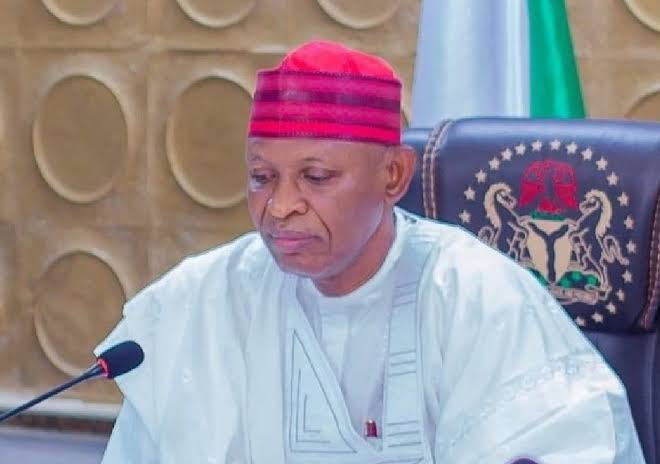
The recent mass wedding bankrolled sponsored by the Kano State Government like the previous ones has generated public debate on the appropriate utilisation of scarce public financial resources. The government earmarked N1.5bn for the annual event which saw 1,500 couples joined in wedlock. The package covers financial support, medicals and counselling, dowries, household items, food, clothing and financial support. The initiative can be viewed from two different perspectives.
One is looking at it as a compassionate social intervention designed to assist the poor establish families. Two, in a state faced with deep economic and social challenges, N1.5bn could have been ploughed into more sustainable public benefits like education, healthcare, employment, small businesses, infrastructure or poverty reduction. The important question, however, is whether spending N1.5bn is the best way to attain the wider social objectives argued for the programme. Is it a priority for Kano now?
Government has limited resources and every naira spent on one programme cannot simultaneously be applied on another. This is the basis for opportunity cost. If N1.5bn is spent on mass weddings, citizens are entitled to ask what alternative social outcomes that same amount could have generated. Kano, like many parts of Nigeria, faces challenges of unemployment, poverty, inadequate healthcare, educational deficits, insecurity, youth vulnerability and limited access to productive capital. A government therefore has to prove not only that a programme is necessary, but that it represents judicious use of public fund.
Marriage itself does not remove poverty. Getting 1,500 couples married does not certainly create jobs. It does not construct schools. It does not deliver electricity. It does not improve agricultural productivity. It does not build hospitals. It does not even guarantee sustainable incomes for the newly married couples. As a matter of fact, if a couple receives wedding assistance today without reliable income tomorrow, the fundamental economic challenges remain unresolved. This does not mean government should not support marriage.
Rather, the strongest version of the programme would be one in which marriage assistance is connected to a much larger economic empowerment strategy. What could N1.5bn do for Kano’s businesses? This is perhaps the most important economic question. The government says part of the money goes towards financial support for beneficiaries. But the larger question is whether the money can generate productive economic activity beyond the wedding ceremony itself. Imagine, for example, that a substantial portion of the money were channeled into a transparent revolving micro-enterprise fund.
Small businesses could receive affordable loans or grants for tailoring, food processing, agriculture, transportation, digital services, petty trading, livestock, beauty services, repairs and other locally viable enterprises. Instead of merely helping people start married life, government could help them start economically productive lives. There is also an important point in defence of the wedding expenditure: weddings themselves generate economic activity.
Money spent on furniture, clothing, food, transportation, tailoring, catering and other services goes to businesses. The programme supports Kano’s local economy indirectly. But there is a crucial distinction between economic circulation and economic transformation. If government spends money once, businesses receive temporary orders. When the event ends, that economic activity largely disappears. If the same money creates thousands of sustainable micro-enterprises, those enterprises can generate income repeatedly for years, employ other people, pay taxes and contribute to household welfare.
That is the difference between consumption stimulus and productive investment. Could the sum have solved Kano’s societal problems? No! And it would be unrealistic to claim that any single N1.5bn intervention could solve Kano’s enormous social problems. But government programmes should be judged by the problems they are designed to address. If the objective is to assist vulnerable people who cannot afford marriage, the programme can reasonably claim some success. If the objective is to reduce poverty, unemployment, insecurity, illiteracy and economic deprivation across Kano, however, a mass wedding programme by itself is clearly insufficient.
There is also a potential unintended consequence. A government-sponsored wedding may create the impression that marriage is the solution to social dysfunction, when many of the underlying problems are economic. Young people need skills, jobs, affordable education, access to finance, healthcare, housing and opportunities to participate meaningfully in the economy. Marriage can contribute to social stability, but stable families require stable livelihoods. The most effective policy would therefore combine the two: family support plus economic empowerment.
The conversation surrounding the initiative and the role of religious personalities deserves careful attention. A government-funded programme should ideally be presented as a public social intervention, not as a contest between two religious groups. Therefore, Sheikh Yahaya Jingir’s introduction of foul language which framed the programme through religious confrontation should not have been imported into a social welfare programme.
The issue should be more about policy effectiveness, accountability and inclusion, not whether one religion is superior to another. Religious leaders can make valuable contributions through counselling, family education, moral instruction and conflict resolution. But public expenditure should ultimately be evaluated through universal principles of transparency, fairness, measurable outcomes and value for money.
The mass wedding could actually become much more valuable if it were redesigned as the beginning of a broader Family Economic Empowerment Programme – where every beneficiary could receive marriage assistance, vocational or entrepreneurship training, a business grant or low-interest loan, financial literacy training, health insurance, reproductive and family counselling, access to agricultural or employment opportunities, follow-up monitoring for two or three years.
Government could then measure how many businesses survive, how many jobs are created, household incomes, school attendance among children and the economic condition of beneficiaries. That would turn a one-day social event into a long-term development intervention. Government should also publish the programme’s full expenditure breakdown. If N1.5bn has been appropriated, citizens should know how much goes to dowries, furniture, food, clothing, logistics, administration, medical screening and direct empowerment. Public confidence increases when government demonstrates precisely where the money went and what it achieved.
Is marriage good? Of course it is important to those who choose it. The better question is: “Does this particular expenditure provide the greatest possible social and economic return for the people of Kano?” If the answer is to be convincingly affirmative, the programme must go beyond wedding ceremonies. It must create sustainable livelihoods for the couples it supports. A government that gives someone the means to marry has provided immediate assistance. A government which gives that same person the means to earn a sustainable income has provided something much more enduring: economic independence.
Ultimately, Kano does not have to choose between family values and economic development. It should pursue both. And public discourse around such programmes should remain above religious and ethnic confrontation. Kano’s citizens – Muslim, Christian and others – are taxpayers, residents and stakeholders in the same state. The proper debate is therefore not about whose religion wins, but about how every naira of public money can produce the greatest possible improvement in human welfare. That is the standard by which the N1.5bn mass wedding should ultimately be judged.
Sunday Onyemaechi Eze is a lecturer, Department of Mass Communication and Head, Internationalisation and Partnerships, Coal City University, Enugu


