

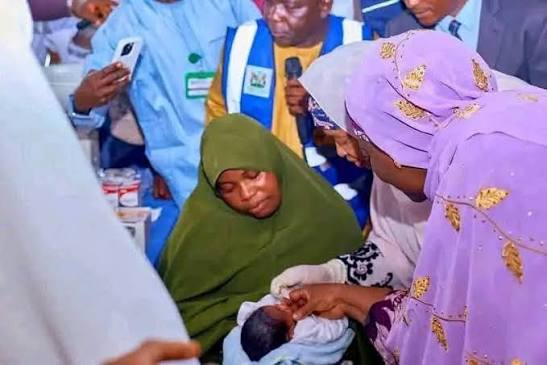
Fathers in Igabi Local Government Area of Kaduna State have been mobilised to help improve childhood immunisation coverage and ensure more eligible children receive life-saving vaccines.
The mobilisation followed a recent vaccination exercise that achieved 98 per cent coverage of settlements and 86 per cent of households in the local government, but reached only 78 per cent of targeted children.
The News Agency of Nigeria (NAN) reports that the initiative was launched under Fathers for Good Health (FGH), also known as Male Majalisa, which seeks to involve fathers and male household heads in decisions affecting children’s health.
The Kaduna State Primary Health Care Board is implementing the programme with support from the United States Government through UNICEF.
Speaking at a one-day orientation and inauguration of the initiative on Wednesday, Dr Ibrahim Yisa of the National Emergency Operations Centre (EOC), Kaduna, said the high settlement and household coverage did not translate into adequate coverage among eligible children.
Yisa said the gap prompted health authorities to strengthen community mobilisation and vaccination efforts, particularly by engaging fathers and other influential community members.
He disclosed that 73 per cent of children vaccinated during the March and April exercises received their vaccines outside conventional vaccination points, while 27 per cent were reached through regular channels.
According to him, the figures showed the need to take vaccination services closer to families and communities to ensure that no child is missed.
Yisa said health authorities introduced “in-between round” vaccination activities in July to identify and vaccinate children who missed previous exercises.
He warned that children repeatedly missed during vaccination campaigns remained vulnerable to vaccine-preventable diseases.
The EOC official also disclosed that Igabi was the only local government in Kaduna State to record a poliovirus case between January and June 2026, highlighting the need for stronger community participation in immunisation activities.
He, however, commended the local government for recording one of the highest settlement and household coverage rates in the state, noting that the achievement had attracted national attention.
Yisa urged the 40 fathers selected from Igabi, Turunku, Panshanu and Gwaraji wards to use their influence to mobilise other parents and ensure that eligible children received vaccines during subsequent rounds.
He also called for stronger support from the local government and other stakeholders, including counterpart funding and active participation in immunisation campaigns.
The Chairman of Igabi Local Government, Alhaji Sani Abdul, said involving fathers would help improve immunisation coverage because male household heads often influence healthcare decisions.
He noted that although many mothers were willing to vaccinate their children, some required the support and approval of their husbands.
A UNICEF facilitator, Jamila Shehu, said the FGH initiative would engage fathers, traditional rulers and other community influencers through dialogue and advocacy to promote immunisation and child health.
One of the participants, Mr Jamilu Alkali, a father of four from Gadan-Gayan in Panshanu Ward, pledged to mobilise other fathers in his community to support vaccination against polio and other childhood diseases.
He said the orientation had improved his understanding of the importance of ensuring that children receive all recommended vaccines.


