

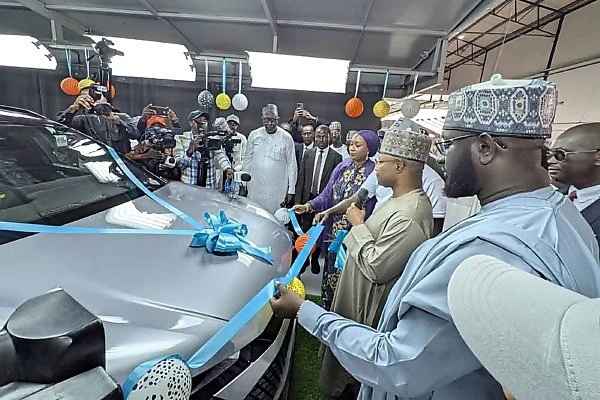
Kaduna State Governor, Uba Sani, has unveiled the new 2026 Peugeot 3008 and 5008 SUVs at the Dangote Peugeot Automobiles Nigeria Limited (DPAN) assembly plant in Kaduna, reaffirming his administration’s commitment to promoting local vehicle manufacturing in Nigeria.
The unveiling ceremony, held on Friday, September 4, marked another milestone in Peugeot’s renewed return to local vehicle assembly, with DPAN having commenced the assembly of its latest models earlier this year.
Speaking at the event, Governor Sani pledged stronger support for DPAN and called on governments at both the federal and state levels to patronise vehicles assembled locally.
The governor announced that Kaduna State Government would purchase some vehicles from the company as part of efforts to lead by example.
“As a government, Kaduna State will order some of the vehicles, so that we can show the example for others to follow by patronising this very important company,” Sani said.»
He further disclosed that he would make a strong presentation at the National Economic Council, urging federal and state governments to patronise DPAN products to support the long-term survival and expansion of the automotive manufacturing company.
“I will make a strong presentation at the National Economic Council, urging both the federal and state governments to patronise the products of this company because that is the only way they can survive,” he added.»
DPAN was established through a joint venture involving Dangote Industries Limited, Peugeot, a flagship brand under Stellantis, Kebbi State and Kaduna State. The Kaduna State Government holds approximately 11.7 per cent equity in the company.
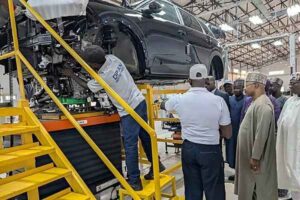
Governor Sani had previously stated that the state’s investment in DPAN was one of the reasons his administration remained committed to supporting the company and protecting the jobs and economic opportunities generated by its operations.
DPAN’s greenfield assembly plant is designed to produce several Peugeot models, including the Peugeot 301, Landtrek, 3008, 5008 and 508.
The facility has the capacity to assemble up to 120 vehicles per day across two shifts and employs about 1,000 workers, highlighting its potential contribution to Nigeria’s automotive industry and local economic development.


