

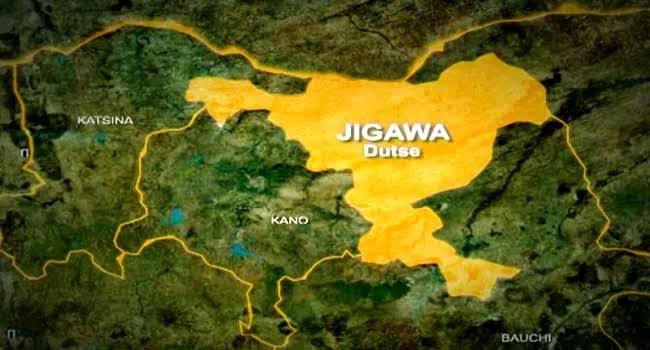
Currently, what is the biggest concern of all education stakeholders in Jigawa State? Of course, it is the lingering crisis of learning poverty bedeviling both the basic and post basic levels of learning processes. This deepening dilemma obstructs the foundational pillars of the education domain.
The World Bank defines learning poverty as the inability of a 10-year-old child to read and comprehend a short, simple and appropriate text. This hinders the kid from attaining the required academic achievement that will prepare him or her for the next level of education. UNICEF reports that around 70% of Nigerian children in school suffer from learning poverty. Here, it encompasses basic schools and all schools below tertiary level.
Learning poverty is caused by many factors which include socioeconomic status that has to do with poverty, inequality and instability. Others are poor quality teaching, shortage of teachers, lack of resources and outdated curriculum. Also worthy of mentioning are cultural and social barriers which promote social isolation and lack of parental education. Ineffective leadership and management should also be a source of worry. These are by no means exhaustive. However, the greatest question is: How do we eradicate this cancer and save our children from the risk of being consumed by functional illiteracy?
Undoubtedly, Jigawa State is severely afflicted by this global endemic ravaging education. Consequently, learners’ reserved potentialities are jeopardized at an alarming rate. That notwithstanding, it is amazing to know that a country like Philippines has a high percentage of 91% 10- year-old children who are unable to read and grasp the content of a simple text. Pakistan has about 77% learning poverty rate while India records 55%. In Finland, it is an impressive narrative that only 3-4% children are unable to read and understand a simple text. What is the secret behind this marvelous feat? Finland spends humongous amount of money on teachers’ professional development and it is achieving the desired result of attaining quality education.
At the basic level of learning experiences in Jigawa, it is unfortunate that by the end of primary 6, most learners lack foundational skills for permanent literacy as well as numeracy. Going by quality standards, an average learner is supposed to have a lifelong foundation for literacy and numeracy by the end of primary 3. This is largely possible through teachers’ uncontrollable passion for practical professionalism and the effective utilization of learning resources and materials for academic achievements.
While the state is saddled with this uncommon setback, it is mandatory to explore some practical problems obstructing the functions of the system with a view to proffering effective remedies. These desirable efforts will go a long way in justifying the capital investment of the government in education to produce human capital that can serve the future needs of the society.
We need to have a realistic commitment to appointing Head Teachers at the basic and post-basic levels based on merit to deliver quality services. This entails that school leadership is the engine room for quality provision that will produce good learning outcomes. It is incumbent upon every Head Teacher to know how well the school is doing, what needs to be done for continuous improvements. It is suggestive that a reporting system involving the stakeholders should be adopted for ongoing improvements. The primary objective is for the Head Teacher to set, attain, maintain, and improve on quality standards.
Sadly, most teachers turn themselves into lazy and unprofessional as they intentionally discard the use of lesson plans, instructional materials, and giving assignments. These three core components of teaching and learning process must be inculcated in the minds of teachers to make teaching interesting. Our teachers at both basic and schools below tertiary level need to have a clear and professionally defined vision for their role as teachers whose primary objective is ensuring personal development of learners.
The pathetic situation reveals that these teachers should undergo training on the significance of lesson plans, instructional materials, and giving assignments. This will ginger them to make teaching very professional to improve on learning outcomes. Accordingly, School Support Officers( SSOs)and Zonal Education Officers must be tasked to engage in regular supervision and monitoring of schools to make sure that teachers teach what they are supposed to teach, and in the end, learning poverty will be reduced to the barest minimum. The School-Based Management Committee( SBMC) should also be part of this noble activity of supervision.
Aligning with achieving quality standards means getting effective schools nurtured by related elements functioning together to attain defined goals to move the society forward. Youth organizations can play a paramount role in the war against learning poverty by ensuring learners’ regular attendance to school. Also, decongestion of classes will go a long way in creating a conducive learning atmosphere for effective teaching and learning, thereby enhancing learners’ engagement and exploring their academic potentialities as human capital. Moreover, the quality provision of infrastructure will attract children to school and minimize the rate of out-of-school children. In essence, a well-articulated synergy should be put in place for continuous collaboration amongst the stakeholders to achieve the goals of education.
Eventually, we ought to establish a strong connection between learning poverty and external examination performance of learners. To get better results in the next year’s NECO examinations, a special evaluation should be conducted across the senior secondary schools in the state with the SSIII learners as the focal point. Quality Assurance conducts are essential for this category of learners. When the needful is done at the basic level in relation to learning poverty, it is optimistic that learners who will proceed to senior secondary schools in the next few years will perform better in external examinations.
For continuous improvements, our senior secondary schools must fundamentally function based on the reality and execution of the School Development Plan( SDP) as a catalyst for success in relation to external examinations. Of course, SDP covers four areas of inspection categories, which include quality education, behavior and attitude, personal development, and leadership and management. The SDP, when fully implemented, answers the imperative question, ‘ What do we do next’? Responsible agencies and departments of the education sector should devise means of tracking progress in terms of academic achievement as enshrined in the SDP.
In a nutshell, a well-coordinated project encompassing all education stakeholders can effectively address the learning poverty predicament existing in Jigawa state.
Abdu Abdullahi
aaringim68@gmail.com
07036207998


